
血压盐敏感性的衰老和性别差异。
Aging and sex differences in salt sensitivity of blood pressure.
作者信息
Demirci Mert, Afolabi Jeremiah M, Kirabo Annet
机构信息
Department of Medicine, Division of Nephrology and Hypertension, Vanderbilt University Medical Center, Nashville, TN, U.S.A.
Department of Medicine, Division of Clinical Pharmacology, Vanderbilt University Medical Center, Nashville, TN, U.S.A.
出版信息
Clin Sci (Lond). 2025 Jan 28;139(2):199-212. doi: 10.1042/CS20240788.
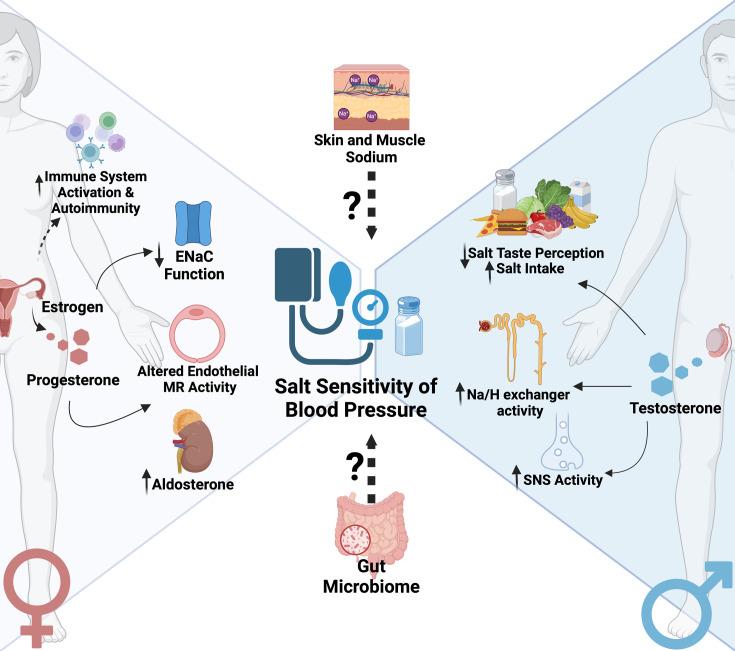
Salt sensitivity of blood pressure (SSBP) is a complex physiological trait characterized by changes in blood pressure in response to dietary salt intake. Aging introduces an additional layer of complexity to the pathophysiology of SSBP, with mitochondrial dysfunction, epigenetic modifications, and alterations in gut microbiota emerging as critical factors. Despite advancements in understanding these mechanisms, the processes driving increased salt sensitivity with age and their differential impacts across sexes remain unclear. This review explores the current understanding of salt sensitivity, delving into its underlying mechanisms, the role of inflammation, and the influence of aging and sex differences on these processes. We also aim to provide insights into the multifaceted nature of salt sensitivity and its implications for personalized treatment strategies in hypertension management.
血压盐敏感性(SSBP)是一种复杂的生理特征,其特点是血压会随着饮食中盐摄入量的变化而改变。衰老给SSBP的病理生理学增添了另一层复杂性,线粒体功能障碍、表观遗传修饰以及肠道微生物群的改变成为关键因素。尽管在理解这些机制方面取得了进展,但随着年龄增长导致盐敏感性增加的驱动过程及其在不同性别中的差异影响仍不明确。本综述探讨了目前对盐敏感性的理解,深入研究其潜在机制、炎症的作用以及衰老和性别差异对这些过程的影响。我们还旨在深入了解盐敏感性的多方面性质及其对高血压管理中个性化治疗策略的意义。

 Zotero 插件