
部分键合晶体:通往孔隙率和多晶型的途径。
Partially Bonded Crystals: A Pathway to Porosity and Polymorphism.
作者信息
Karner Carina, Bianchi Emanuela
机构信息
Institut für Theoretische Physik, TU Wien, Wiedner Hauptstraße 8-10, A-1040 Wien, Austria.
CNR-ISC, Uos Sapienza, Piazzale A. Moro 2, 00185 Roma, Italy.
出版信息
ACS Nano. 2025 Feb 11;19(5):5146-5157. doi: 10.1021/acsnano.4c06489. Epub 2025 Jan 28.
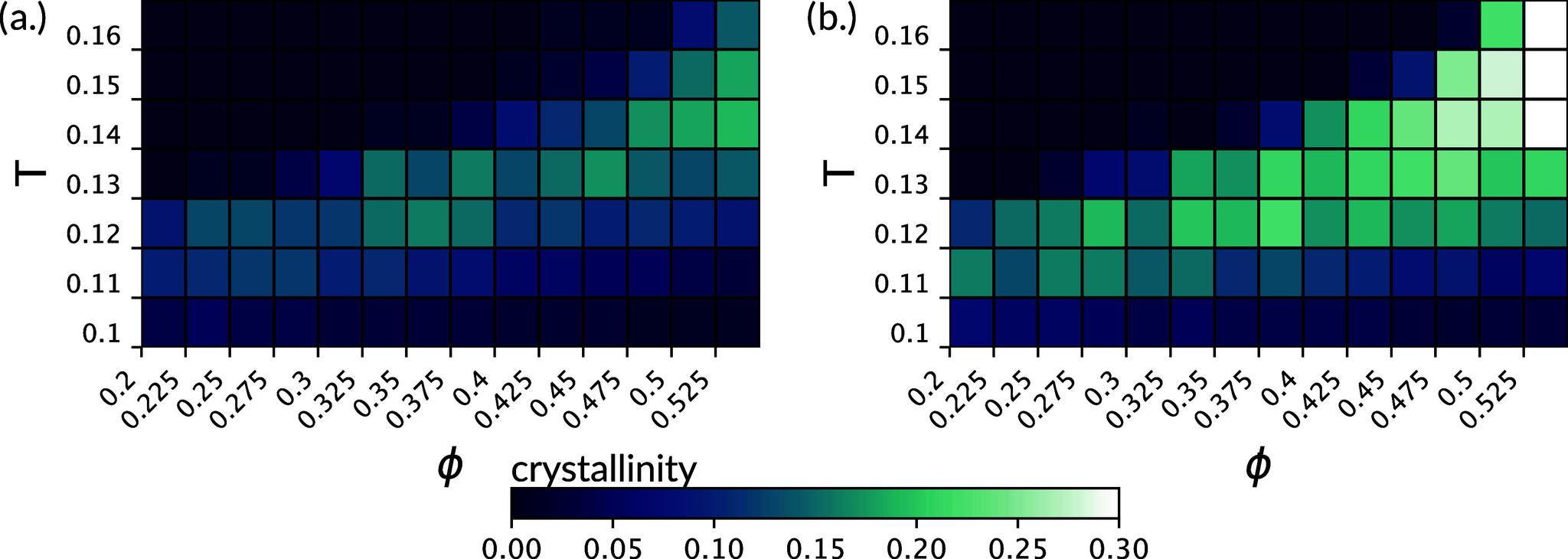
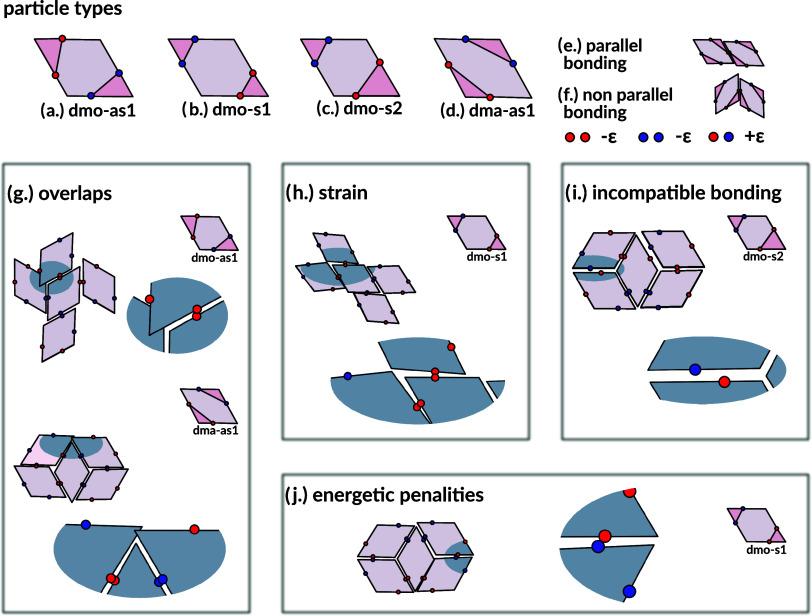
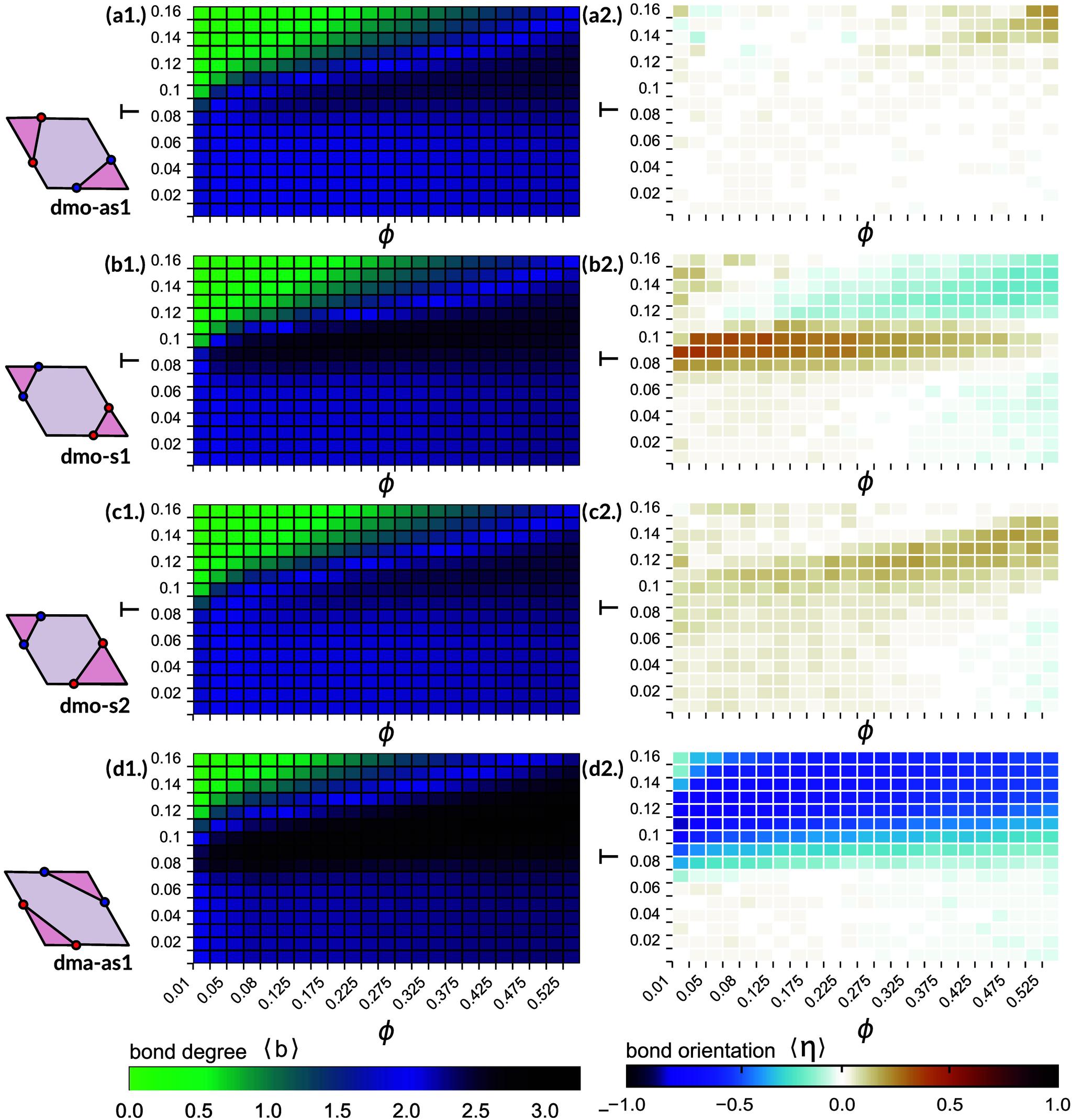
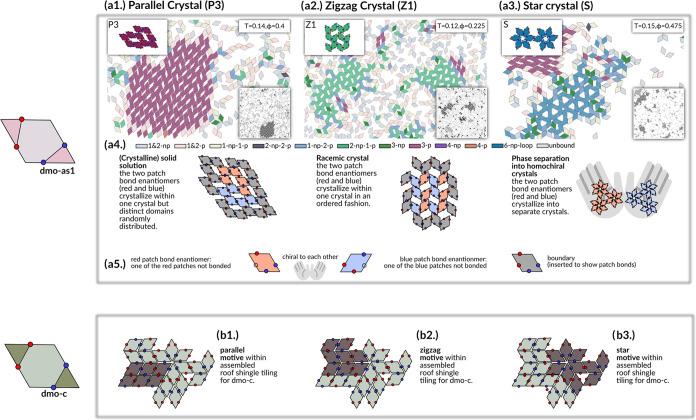
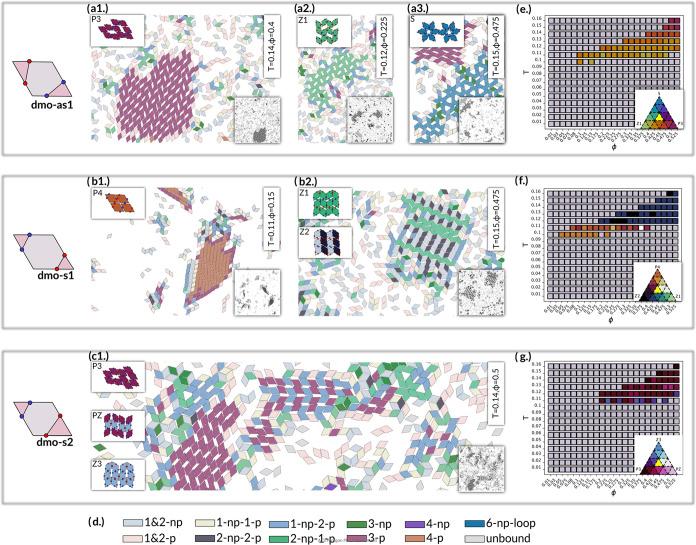
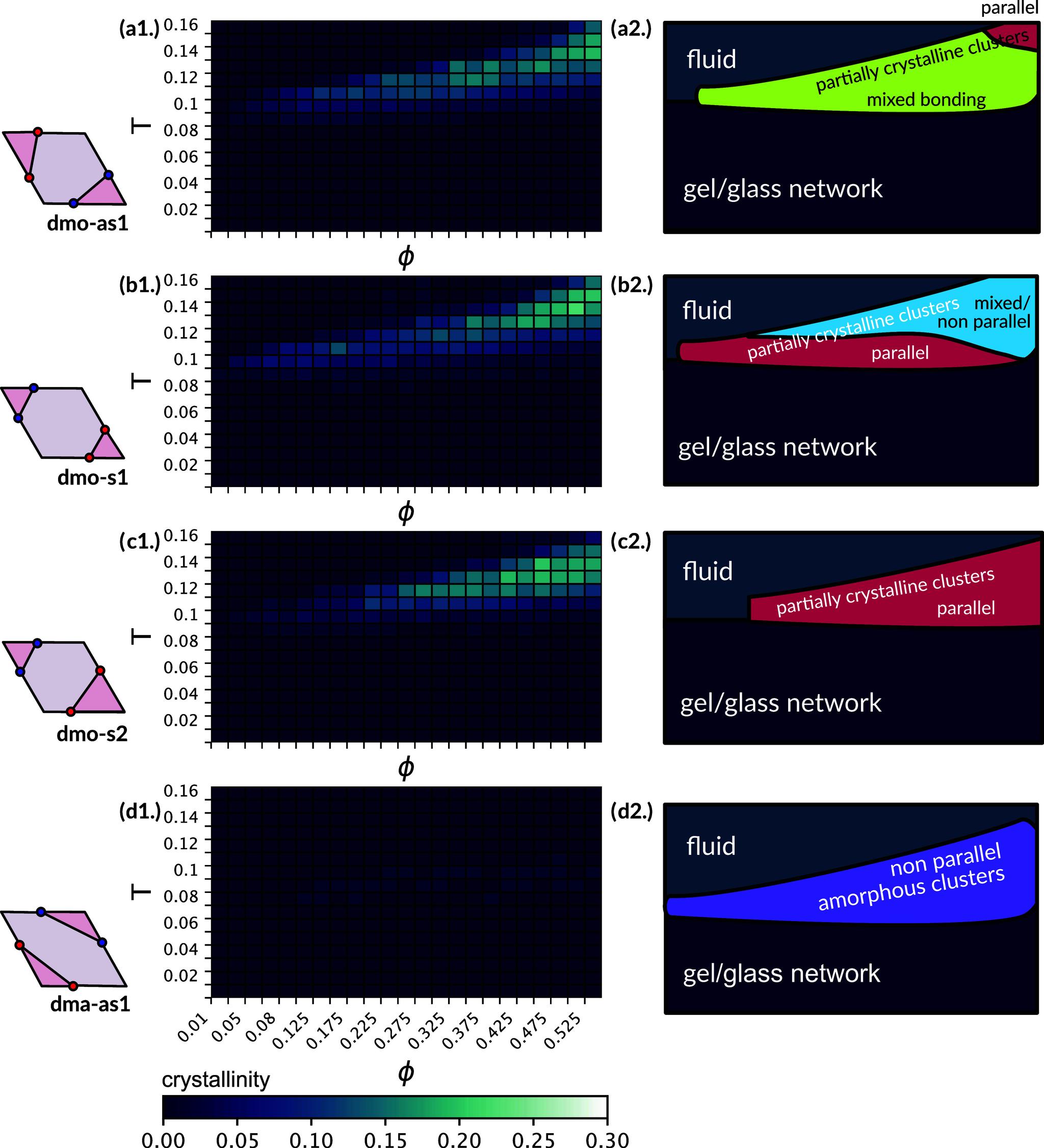
In recent years, experimental and theoretical investigations have shown that anisotropic colloids can self-organize into ordered porous monolayers, where the interplay of localized bonding sites, so-called patches, with the particle's shape is responsible for driving the systems away from close-packing and toward porosity. Until now it has been assumed that patchy particles have to be fully bonded with their neighboring particles for crystals to form, and that, if full bonding cannot be achieved due to the choice of patch placement, disordered assemblies will form instead. In contrast, we show that by deliberately displacing the patches such that full bonding is disfavored, a different route to porous crystalline monolayers emerges, where geometric frustration and partial bonding are decisive process. The resulting dangling bonds lead to the emergence of effectively chiral units which then act as building blocks for energetically equivalent crystal polymorphs.
近年来,实验和理论研究表明,各向异性胶体能够自组装成有序的多孔单分子层,其中局部结合位点(即所谓的斑块)与粒子形状之间的相互作用促使系统从紧密堆积状态转变为多孔状态。到目前为止,人们一直认为,为了形成晶体,斑块粒子必须与其相邻粒子完全结合,并且,如果由于斑块位置的选择而无法实现完全结合,那么将形成无序聚集体。相比之下,我们发现,通过有意地移动斑块,使得完全结合不受青睐,会出现一条通往多孔晶体单分子层的不同途径,其中几何阻挫和部分结合是决定性过程。由此产生的悬键导致有效手性单元的出现,这些手性单元随后充当能量等效晶体多晶型物的构建块。
 Zotero 插件