
提高塑料降解角质酶与聚对苯二甲酸乙二酯(PET)和聚氨酯(PU)的结合亲和力;一项计算机模拟研究。
Improving the binding affinity of plastic degrading cutinase with polyethylene terephthalate (PET) and polyurethane (PU); an in-silico study.
作者信息
Sabari V L Deves, Rajmohan Gokulnath, S B Roshine, S Srivaishnavi, Nagasubramanian Kishore, G Senthil Kumar, Venkatachalam Ponnusami
机构信息
School of Chemical & Biotechnology, SASTRA Deemed to be University, Thanjavur, Tamil Nadu, India.
Biomass Conversion and Bioproducts Laboratory, Center for Bioenergy, School of Chemical & Biotechnology, SASTRA Deemed University, Thirumalaisamudram, Tamil Nadu, India.
出版信息
Heliyon. 2025 Jan 7;11(2):e41640. doi: 10.1016/j.heliyon.2025.e41640. eCollection 2025 Jan 30.
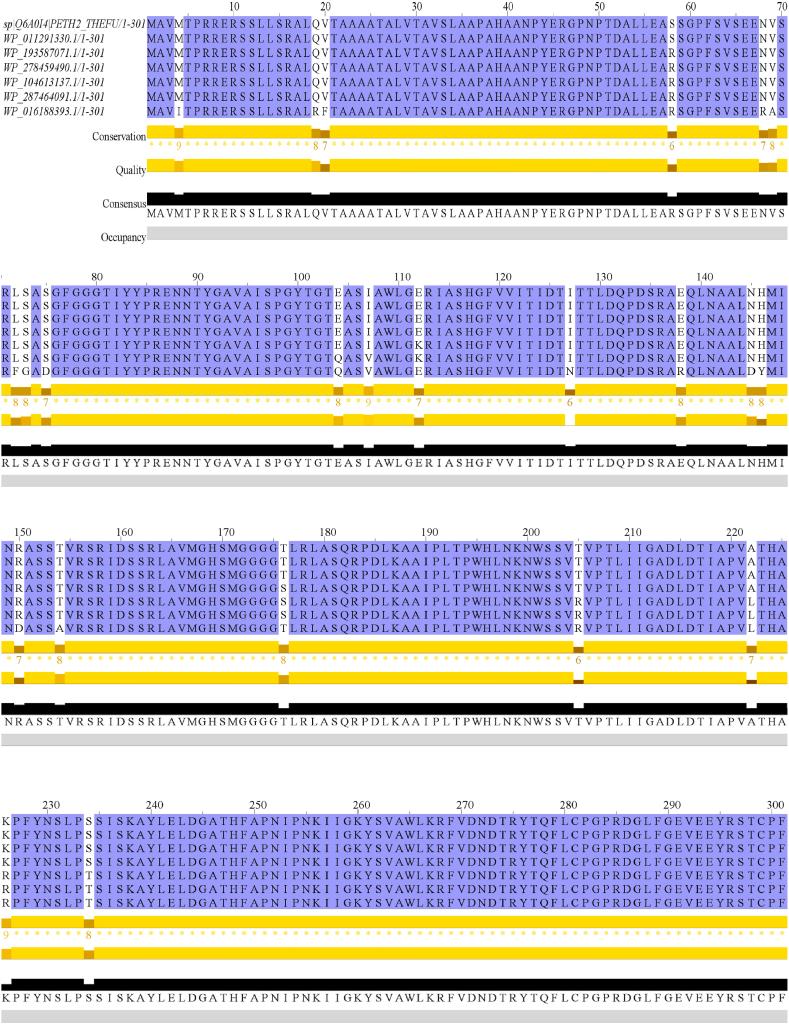
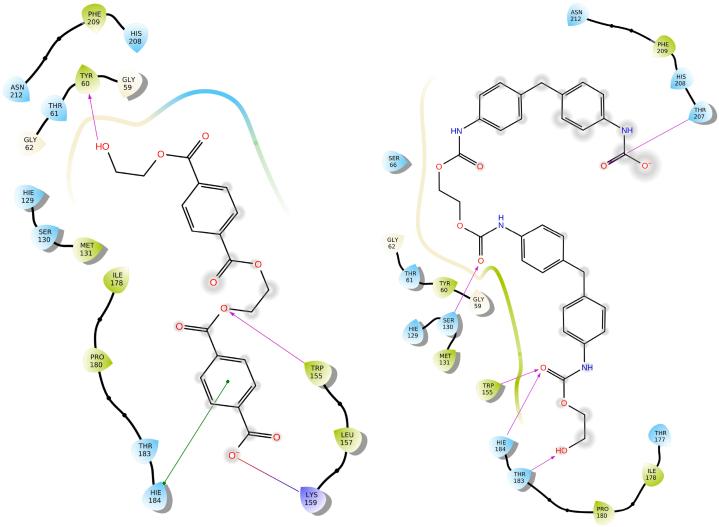
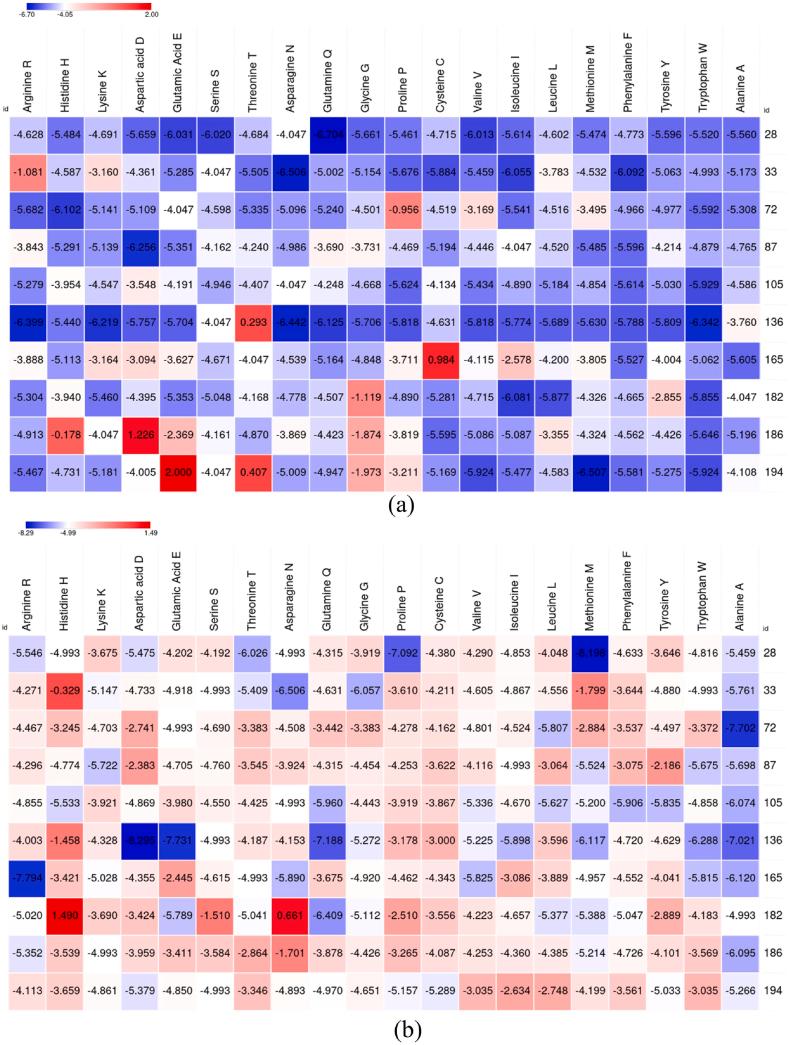
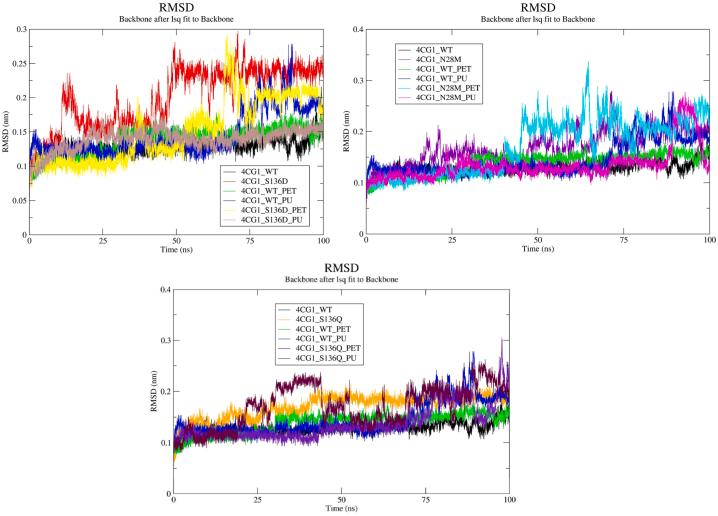
Plastic pollution is a worrying problem, and its degradation is a laborious process. Although enzymatic plastic breakdown is a sustainable method, drawbacks such as numerous plastic kinds of waste make the degradation challenging. Therefore, a multi-plastic degrading (MPD) enzyme becomes necessary. In this study, microorganisms and their enzymes that are known to degrade plastic polymers such as PET, PU, PVC, and PE were identified to assess their MPD capability. The cutinase of was found to degrade both PET and PU polymers. The crystallized structure of cutinase was retrieved from PDB, and PET, PU ligands were docked using Schrodinger. However, the interactions between cutinase and the ligands were not efficient, as evidenced by the docking scores of -4.047 and -4.993 for PET and PU, respectively. Nevertheless, the interaction of the cutinase's active site with the ligands by hydrogen bond formation was promising. In this work, unconserved regions of cutinase were identified as potential mutation sites to enhance binding efficiency. Alanine Scanning Mutagenesis (ASM) and Site Saturation Mutagenesis (SSM) were performed as screening tests to find variants of cutinase with better docking scores for both ligands, specifically S136D, N28M, and S136Q. Molecular Dynamic Simulation (MDS) was performed for Wild Type (WT) cutinase, variants, and their respective complexes formed with the ligands. This simulation indicated the compactness, stability, and minimal energy of the variant complexes compared to WT complexes. Subsequent studies can ensure the improved degradation of both PET and PU by the variants.
塑料污染是一个令人担忧的问题,其降解是一个费力的过程。尽管酶促塑料分解是一种可持续的方法,但诸如大量种类的塑料废物等缺点使得降解具有挑战性。因此,一种多塑料降解(MPD)酶变得必要。在这项研究中,鉴定了已知能降解PET、PU、PVC和PE等塑料聚合物的微生物及其酶,以评估它们的MPD能力。发现角质酶能降解PET和PU聚合物。从蛋白质数据库(PDB)中检索到角质酶的晶体结构,并使用薛定谔软件对接PET、PU配体。然而,角质酶与配体之间的相互作用并不高效,PET和PU的对接分数分别为-4.047和-4.993,这证明了这一点。尽管如此,角质酶活性位点与配体通过氢键形成的相互作用是有前景的。在这项工作中,角质酶的非保守区域被确定为潜在的突变位点,以提高结合效率。进行了丙氨酸扫描诱变(ASM)和位点饱和诱变(SSM)作为筛选试验,以找到对两种配体具有更好对接分数的角质酶变体,特别是S136D、N28M和S136Q。对野生型(WT)角质酶、变体及其与配体形成的各自复合物进行了分子动力学模拟(MDS)。该模拟表明,与WT复合物相比,变体复合物具有紧凑性、稳定性和最小能量。后续研究可以确保变体对PET和PU的降解得到改善。





 Zotero 插件