
免疫原性PAN细胞焦亡的综合分析及华蟾毒精诱导激活以增强胶质瘤免疫治疗的实验验证
Integrative analysis of immunogenic PANoptosis and experimental validation of cinobufagin-induced activation to enhance glioma immunotherapy.
作者信息
Cai Yonghua, Xiao Heng, Xue Shuaishuai, Li Peng, Zhan Zhengming, Lin Jie, Song Zibin, Liu Jun, Xu Wei, Zhou Qixiong, Qi Songtao, Zhang Xi'an, Luo Ziyi
机构信息
Department of Neurosurgery, Institute of Brain Diseases, Nanfang Hospital, Southern Medical University, Guangzhou, Guangdong, 510515, China.
Department of Neurosurgery, Guangzhou Women and Children's Medical Center, Guangdong Provincial Clinical Research Center for Child Health, Guangzhou Medical University, Guangzhou, 510623, China.
出版信息
J Exp Clin Cancer Res. 2025 Feb 3;44(1):35. doi: 10.1186/s13046-025-03301-1.
BACKGROUND
Glioma, particularly glioblastoma (GBM), is a highly aggressive tumor with limited responsiveness to immunotherapy. PANoptosis, a form of programmed cell death merging pyroptosis, apoptosis, and necroptosis, plays an important role in reshaping the tumor microenvironment (TME) and enhancing immunotherapy effectiveness. This study investigates PANoptosis dynamics in glioma and explores the therapeutic potential of its activation, particularly through natural compounds such as cinobufagin.
METHODS
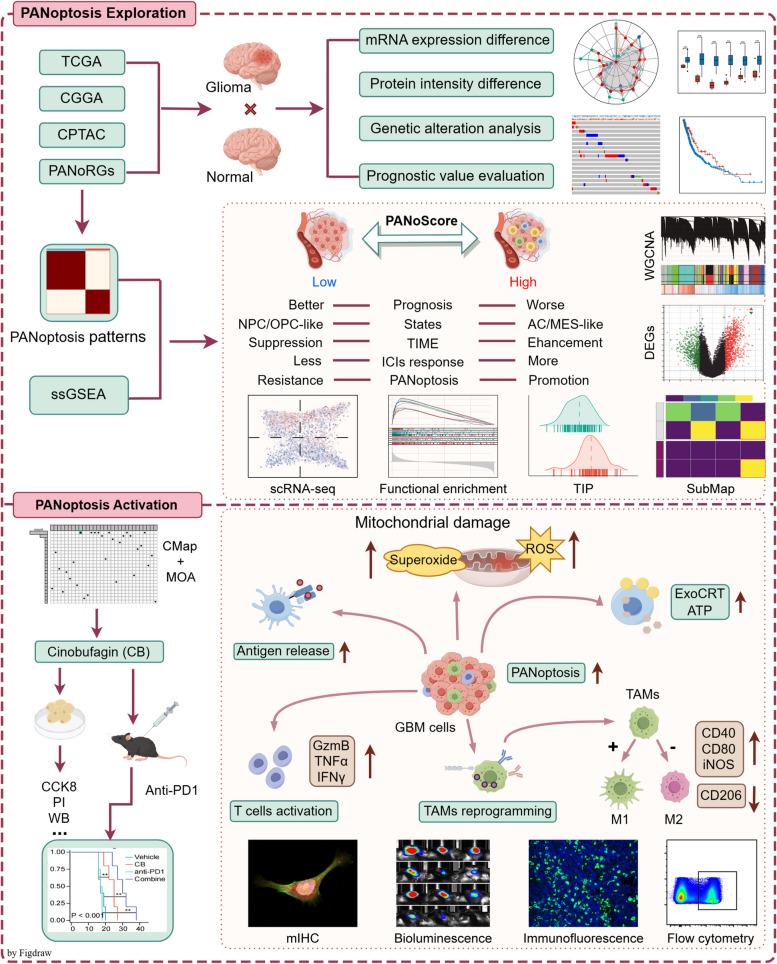
We comprehensively analyzed PANoptosis-related genes (PANoRGs) in multiple glioma cohorts, identifying different PANoptosis patterns and constructing the PANoptosis enrichment score (PANoScore) to evaluate its relationship with patient prognosis and immune activity. Cinobufagin, identified as a PANoptosis activator, was evaluated for its ability to induce PANoptosis and enhance anti-tumor immune responses both in vitro and in vivo GBM models.
RESULTS
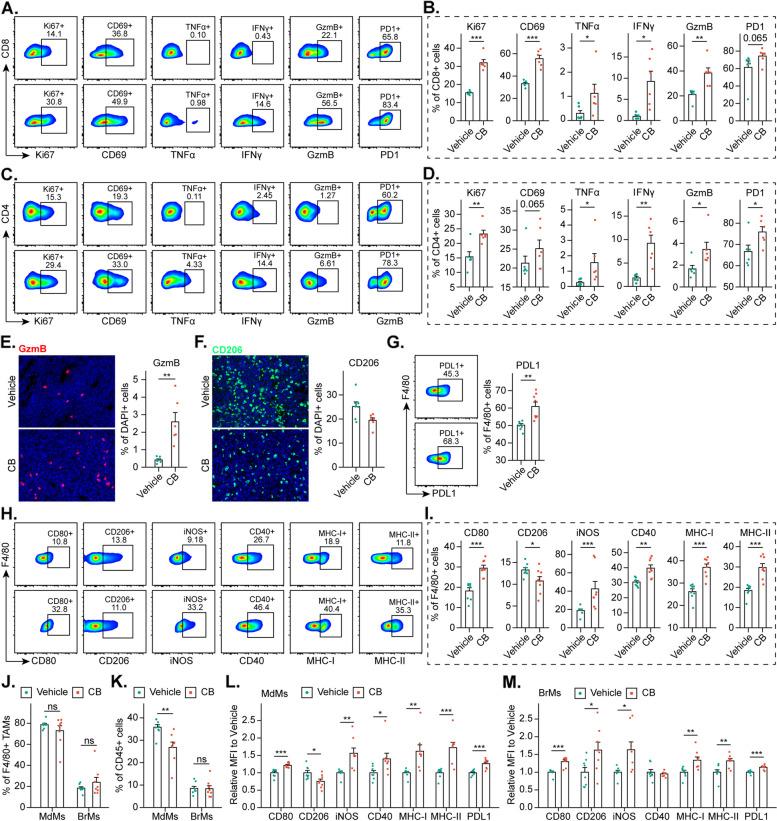
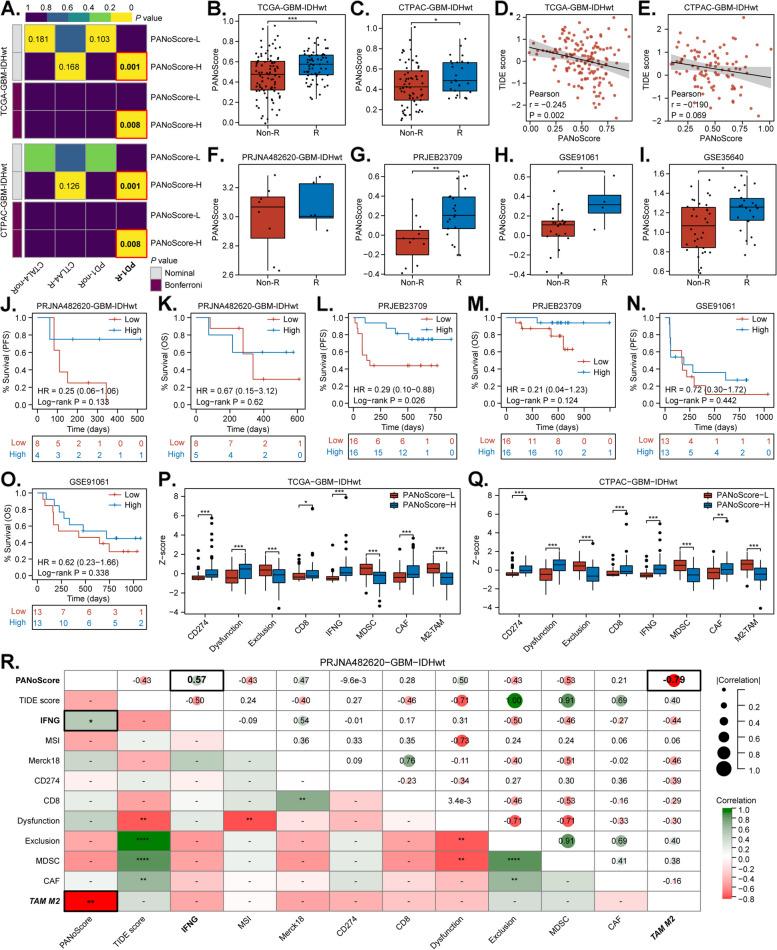
Our findings indicate that high PANoScore gliomas showed increased immune cell infiltration, particularly effector T cells, and enhanced sensitivity to immunotherapies. Cinobufagin effectively induced PANoptosis, leading to increased immunogenic cell death, facilitated tumor-associated microglia/macrophages (TAMs) polarization towards an M1-like phenotype while augmenting CD4+/CD8 + T cell infiltration and activation. Importantly, cinobufagin combined with anti-PD-1 therapy exhibited significant synergistic effects and prolonged survival in GBM models.
CONCLUSIONS
These findings highlight the therapeutic potential of PANoptosis-targeting agents, such as cinobufagin, in combination with immunotherapy, offering a promising approach to convert "cold" tumors into "hot" ones and improving glioma treatment outcomes.
背景
胶质瘤,尤其是胶质母细胞瘤(GBM),是一种侵袭性很强的肿瘤,对免疫疗法的反应有限。PAN细胞焦亡是一种程序性细胞死亡形式,融合了细胞焦亡、凋亡和坏死性凋亡,在重塑肿瘤微环境(TME)和提高免疫治疗效果方面发挥着重要作用。本研究调查了胶质瘤中PAN细胞焦亡的动态变化,并探索了激活PAN细胞焦亡的治疗潜力,特别是通过诸如华蟾毒精等天然化合物来激活。
方法
我们全面分析了多个胶质瘤队列中与PAN细胞焦亡相关的基因(PANoRGs),确定了不同的PAN细胞焦亡模式,并构建了PAN细胞焦亡富集评分(PANoScore),以评估其与患者预后和免疫活性的关系。华蟾毒精被确定为一种PAN细胞焦亡激活剂,在体外和体内GBM模型中评估了其诱导PAN细胞焦亡和增强抗肿瘤免疫反应的能力。
结果
我们的研究结果表明,高PANoScore的胶质瘤显示出免疫细胞浸润增加,特别是效应T细胞,并对免疫疗法更敏感。华蟾毒精有效地诱导了PAN细胞焦亡,导致免疫原性细胞死亡增加,促进肿瘤相关小胶质细胞/巨噬细胞(TAM)向M1样表型极化,同时增加CD4+/CD8+T细胞的浸润和激活。重要的是,华蟾毒精与抗PD-1疗法联合使用在GBM模型中表现出显著的协同效应并延长了生存期。
结论
这些发现突出了靶向PAN细胞焦亡的药物(如华蟾毒精)与免疫疗法联合使用的治疗潜力,为将“冷”肿瘤转化为“热”肿瘤并改善胶质瘤治疗结果提供了一种有前景的方法。




 Zotero 插件