
靶向AI-2群体感应:利用天然产物对抗猪链球菌生物膜感染。
Targeting AI-2 quorum sensing: harnessing natural products against Streptococcus suis biofilm infection.
作者信息
Gao Shuji, Yuan Shuo, Quan Yingying, Jin Wenjie, Shen Yamin, Li Rishun, Liu Baobao, Wang Yuxin, Yi Li, Wang Shaohui, Hou Xiaogai, Wang Yang
机构信息
College of Animal Science and Technology, Henan University of Science and Technology, Luoyang, 471000, China.
Shanghai Veterinary Research Institute, Chinese Academy of Agricultural Sciences, Shanghai, China.
出版信息
Vet Res. 2025 Feb 4;56(1):26. doi: 10.1186/s13567-025-01450-x.
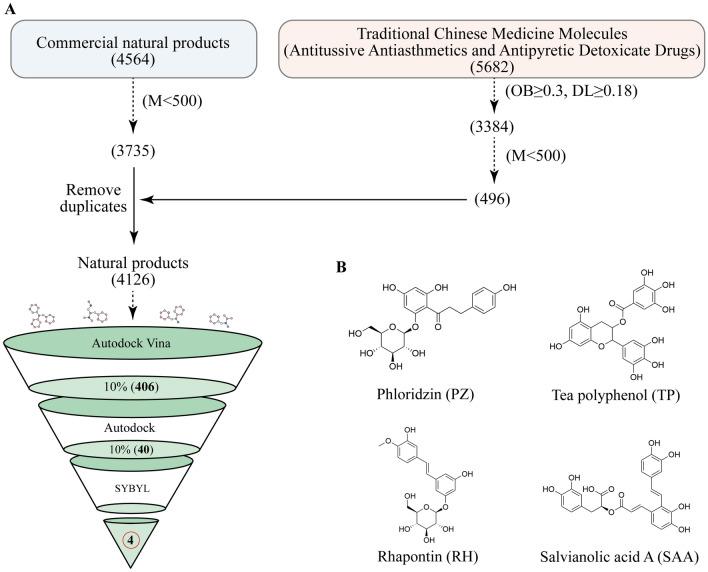
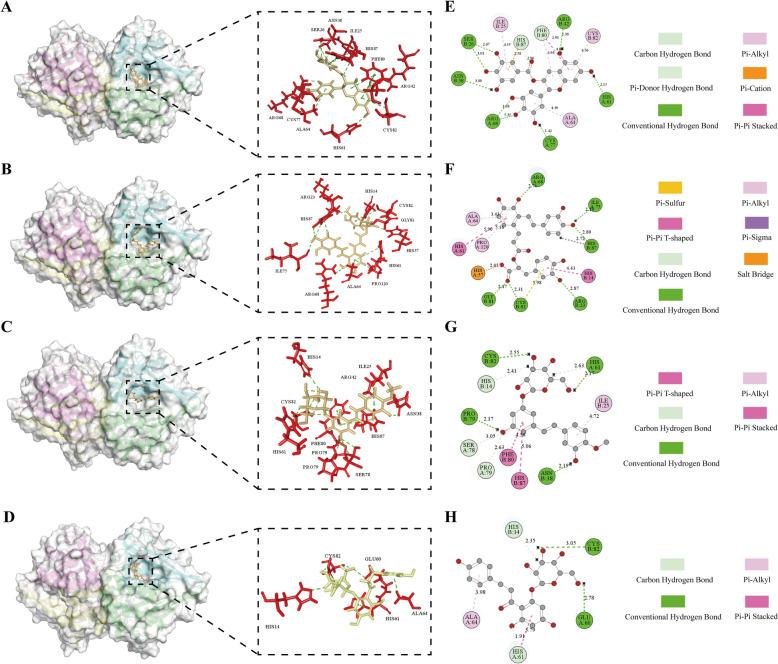
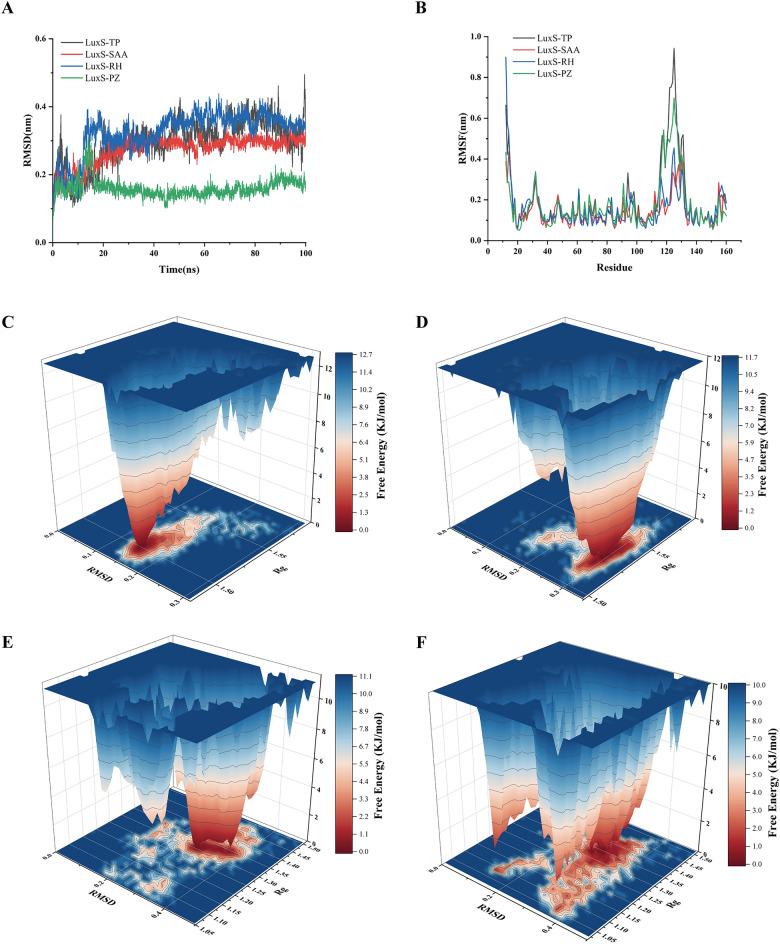
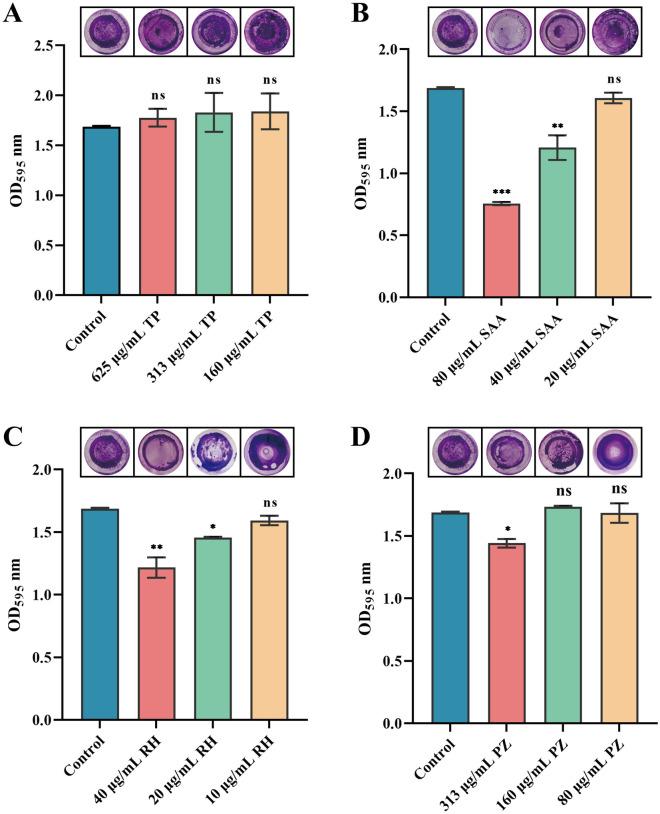
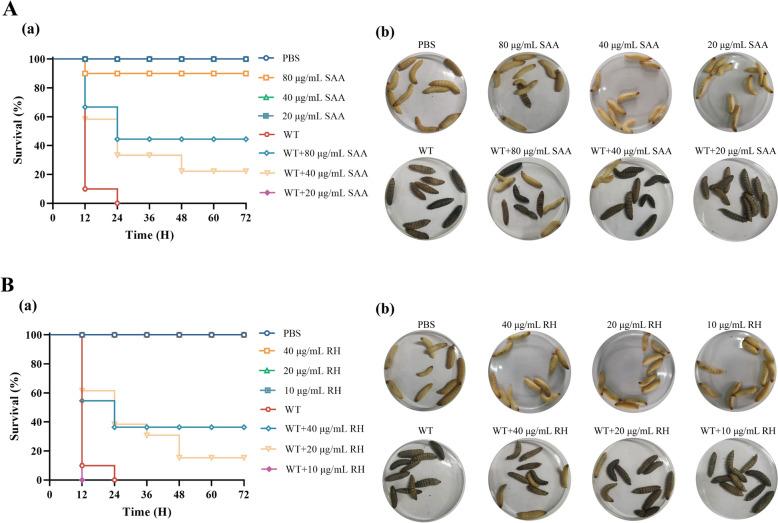
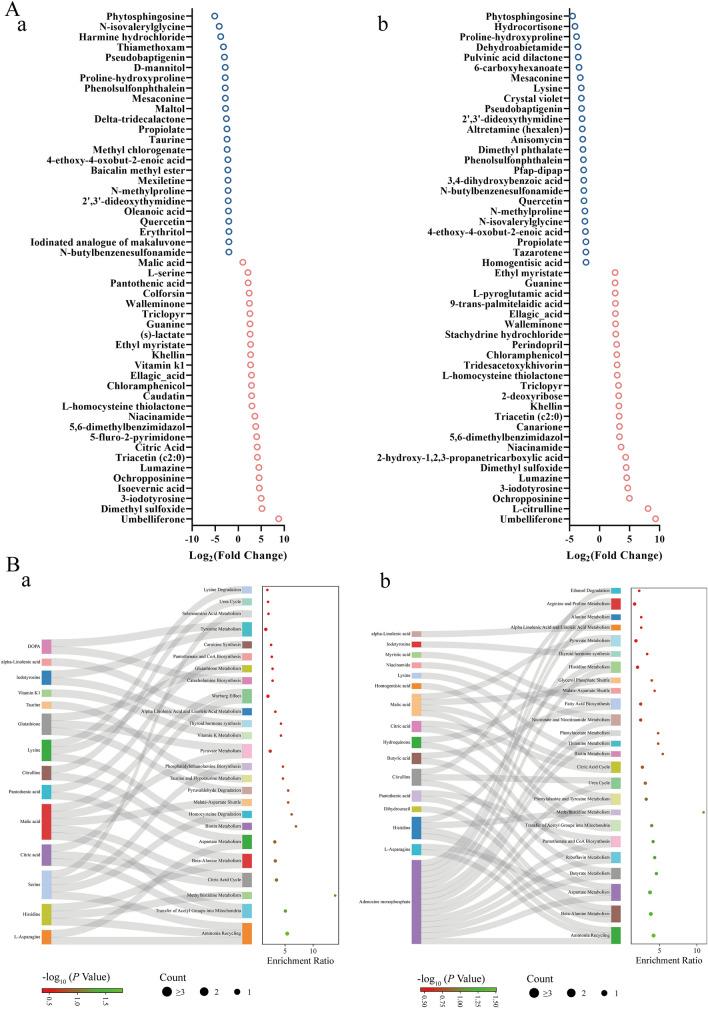
The biofilm acts as a protective layer for Streptococcus suis (S. suis), contributing to the development of drug resistance and chronic infections. Autoinducer 2 (AI-2) quorum sensing represents the primary regulatory pathway governing biofilm formation in S. suis. Consequently, targeting AI-2 quorum sensing to inhibit biofilm formation represents a promising strategy for preventing and managing drug resistance and chronic infections caused by S. suis. This study established a small natural product library by integrating commercial drug molecules with Chinese herbal medicine molecules. Consequently, two natural products, salvianolic acid A (SAA) and rhapontin (RH), which target S. suis AI-2 via quorum sensing, were identified. SAA and RH inhibit AI-2 synthesis through noncompetitive and competitive binding to S-ribosylhomocysteinase (LuxS). By inhibiting S. suis AI-2 quorum sensing, these compounds modulate the expression of adhesion genes and the synthesis of extracellular polysaccharides (EPS), reducing the adhesion ability of S. suis and ultimately inhibiting biofilm formation. Using LC‒MS/MS, we further analysed the impact of SAA and RH on the metabolic activity of S. suis, revealing the potential medicinal value of these compounds. Finally, the efficacy of SAA and RH against S. suis infection was validated in Galleria mellonella larvae, confirming their significant anti-infection effects.
生物膜作为猪链球菌(S. suis)的保护层,有助于耐药性的产生和慢性感染的发展。自诱导物2(AI-2)群体感应是控制猪链球菌生物膜形成的主要调节途径。因此,针对AI-2群体感应来抑制生物膜形成是预防和管理猪链球菌引起的耐药性和慢性感染的一种有前景的策略。本研究通过整合商业药物分子和中草药分子建立了一个小型天然产物库。因此,鉴定出了两种通过群体感应靶向猪链球菌AI-2的天然产物,丹酚酸A(SAA)和土大黄苷(RH)。SAA和RH通过与S-核糖基高半胱氨酸酶(LuxS)非竞争性和竞争性结合来抑制AI-2的合成。通过抑制猪链球菌AI-2群体感应,这些化合物调节黏附基因的表达和细胞外多糖(EPS)的合成,降低猪链球菌的黏附能力,最终抑制生物膜形成。使用液相色谱-串联质谱(LC‒MS/MS),我们进一步分析了SAA和RH对猪链球菌代谢活性的影响,揭示了这些化合物的潜在药用价值。最后,在大蜡螟幼虫中验证了SAA和RH对猪链球菌感染的疗效,证实了它们显著的抗感染作用。




 Zotero 插件