
基于响应面法设计γ-FeO分散在还原氧化石墨烯片上对孔雀石绿染料的去除研究
Response surface methodology for the design of malachite green dye removal by γ-FeO dispersed on reduced graphene oxide sheets.
作者信息
Zhu Liu, Sana Anam, Qamar Muhammad Tariq, Bahadur Ali, Liu Guocong, Aslam Mohammad, Zidan Ammar, Çardaklı İsmail Seçkin, Iqbal Shahid, Mahmood Sajid, Saad Muhammad, Alotaibi Khalid M
机构信息
School of Chemistry and Materials Engineering, Huizhou University, Huizhou, 516007, Guangdong, People's Republic of China.
Department of Chemistry, Forman Christian College (A Chartered University), Ferozepur Road, Lahore, 54600, Pakistan.
出版信息
Sci Rep. 2025 Feb 5;15(1):4402. doi: 10.1038/s41598-025-88072-7.
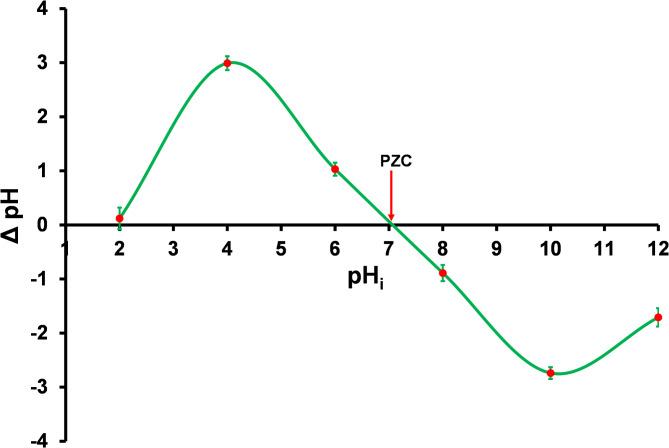
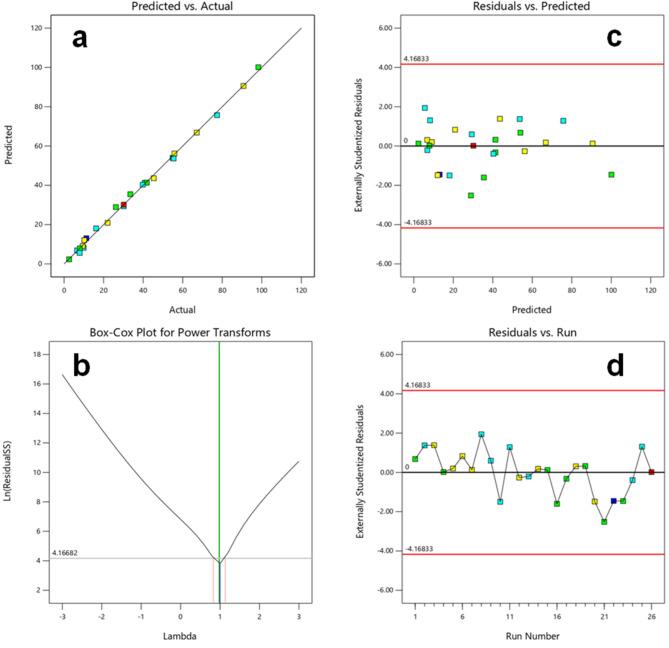
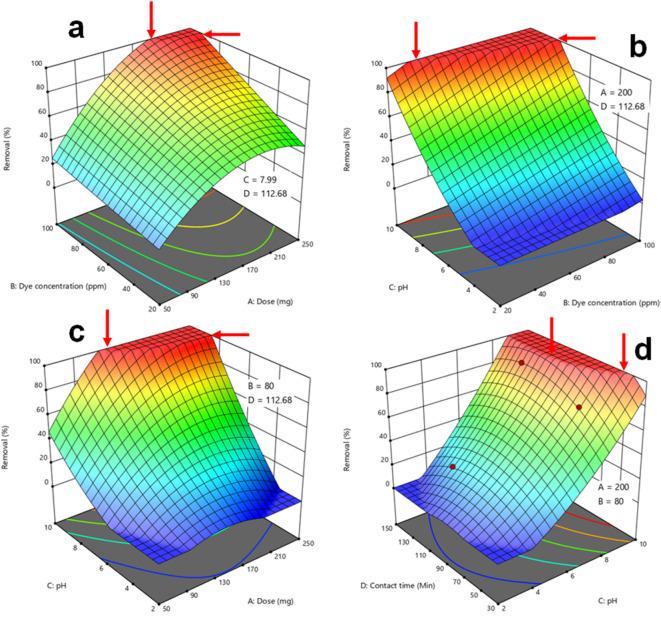
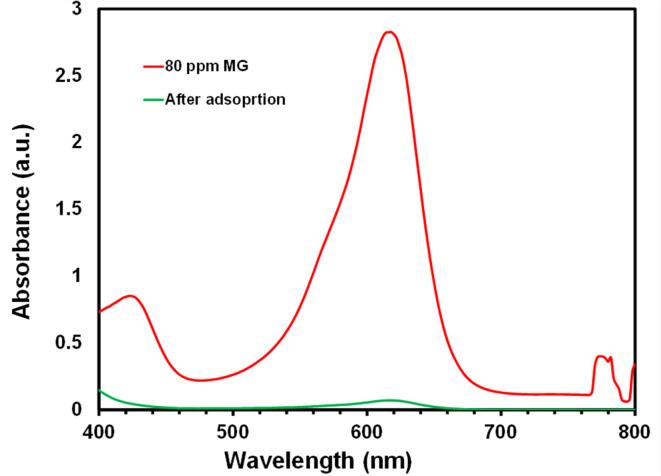
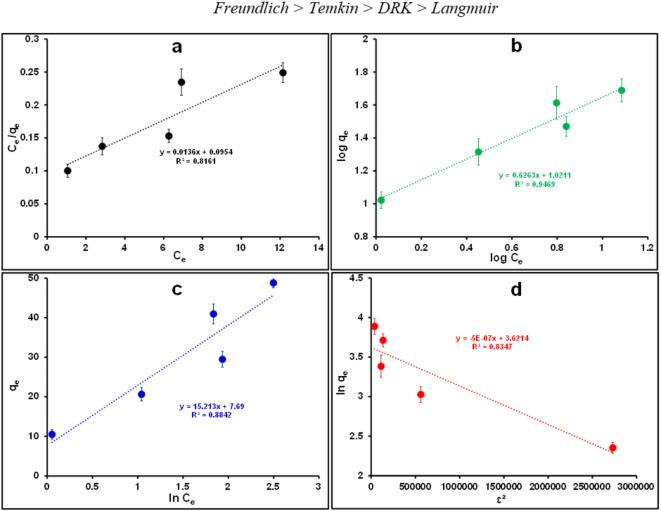
A nanocomposite composed of rGO and γ-FeO was prepared using ultrasonication for the adsorption of malachite green (MG) dye. The preferential plane diffractions at 2θ values of 35.54° and 26.45° about γ-FeO (311) and rGO (002) with 19.85 and 20.92 nm crystallite sizes, respectively confirmed the successful formation of nanocomposite nature of the adsorbent. Moreover, XPS and FTIR results also confirmed the composite formation due to the existence of peaks relevant to the composite's components. The adsorbent's surface charge (pH = ~ 7.1) was also estimated using the salt addition technique. To minimize experiments and optimize adsorption parameters for the removal of MG by the nanocomposite at 25 °C, central composite design (CCD) using response surface methodology (RSM) was used. The optimal adsorption parameters obtained from the within-range numerical optimization based on 0.923 Derringer's desirability function were 200 mg/100 mL dose, 80 ppm dye solution, 7.99 pH and 112.68 min. contact time for ~ 90% MG dye removal and 40.64 mg/g adsorption capacity (q) by rGO/γ-FeO. However, ~ 98% MG dye removal with 64.26 mg/g (q) was achieved upon extended-range estimation of adsorption parameters. The adsorption data exhibited the best co-relationship with Freundlich isotherm and pseudo-2 order kinetic model. According to a thermodynamic analysis, the MG adsorption process on the rGO/γ-FeO surface is exothermic, spontaneous, and less random. Moreover, the thermal stability, desorption, regeneration and reusability of rGO/γ-FeO nanocomposite were also explored. Finally, this study shows that RSM can be an excellent technique to optimize the dye adsorption process at industrial scale.
采用超声法制备了由还原氧化石墨烯(rGO)和γ-氧化铁(γ-FeO)组成的纳米复合材料,用于吸附孔雀石绿(MG)染料。γ-FeO(311)和rGO(002)在2θ值为35.54°和26.45°处的优先平面衍射,其微晶尺寸分别为19.85和20.92 nm,证实了吸附剂纳米复合材料的成功形成。此外,X射线光电子能谱(XPS)和傅里叶变换红外光谱(FTIR)结果也证实了由于存在与复合材料组分相关的峰而形成了复合材料。还使用加盐技术估算了吸附剂的表面电荷(pH = ~ 7.1)。为了减少实验次数并优化纳米复合材料在25°C下去除MG的吸附参数,采用了基于响应面法(RSM)的中心复合设计(CCD)。基于0.923的德林格合意性函数,从范围内数值优化获得的最佳吸附参数为:剂量200 mg/100 mL、染料溶液浓度80 ppm、pH 7.99以及接触时间112.68分钟,此时rGO/γ-FeO对MG染料的去除率约为90%,吸附容量(q)为40.64 mg/g。然而,在对吸附参数进行扩展范围估计时,MG染料的去除率达到了约98%,吸附容量(q)为64.26 mg/g。吸附数据与弗伦德里希等温线和伪二级动力学模型具有最佳的相关性。根据热力学分析,MG在rGO/γ-FeO表面的吸附过程是放热的、自发的且无序程度较低。此外,还探索了rGO/γ-FeO纳米复合材料的热稳定性、解吸、再生和可重复使用性。最后,本研究表明RSM可以成为在工业规模上优化染料吸附过程的一种出色技术。






 Zotero 插件