
城市固体废弃物理化性质的季节变化对有效材料和资源回收的影响。
Effects of seasonal variations of the physio-chemical properties of municipal solid waste on effective materials and resources recovery.
作者信息
Agwe Tobby Michael, Twesigye-Omwe Moses N, Ukundimana Zubeda, Rotimi Davies, Gupta Sneha
机构信息
Department of Civil, Structural and Environmental Engineering, Soroti University, P. O Box 211, Soroti, Uganda.
Department of Civil Engineering, Kabale University, P.O. Box 317, Kabale, Uganda.
出版信息
Sci Rep. 2025 Feb 7;15(1):4548. doi: 10.1038/s41598-025-87780-4.
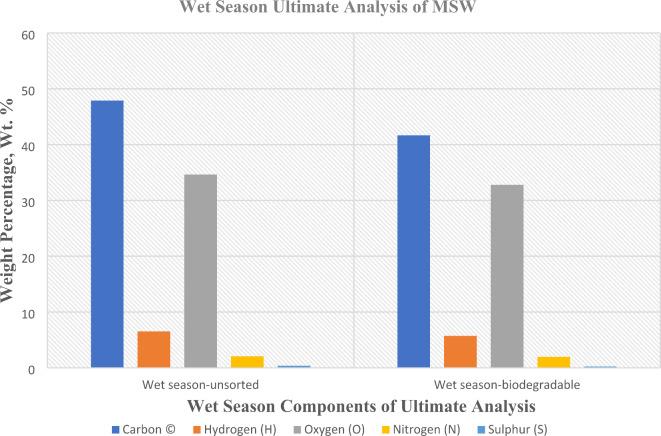
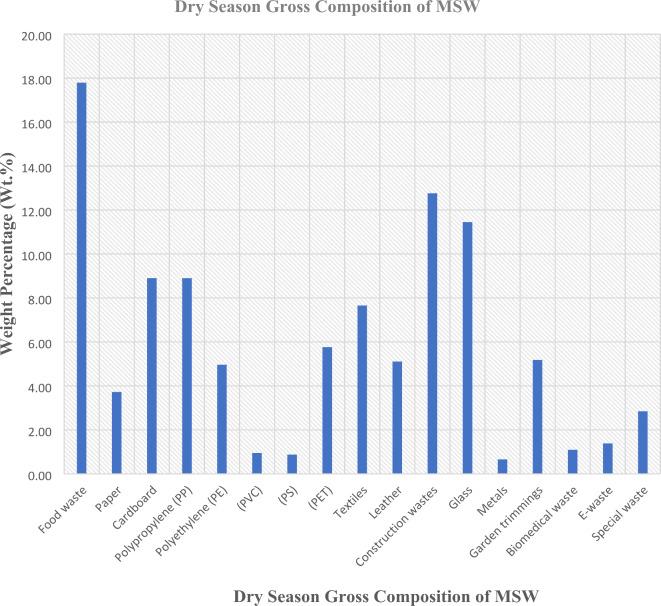
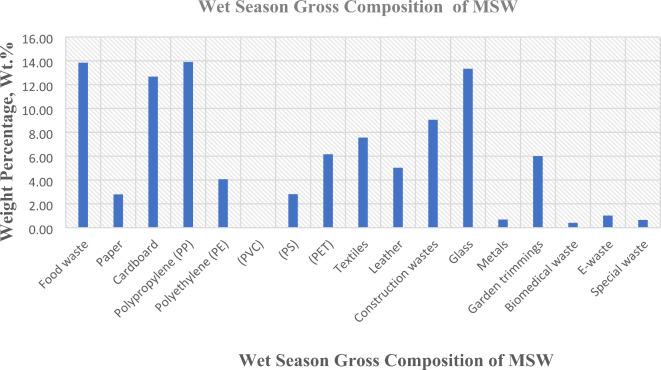
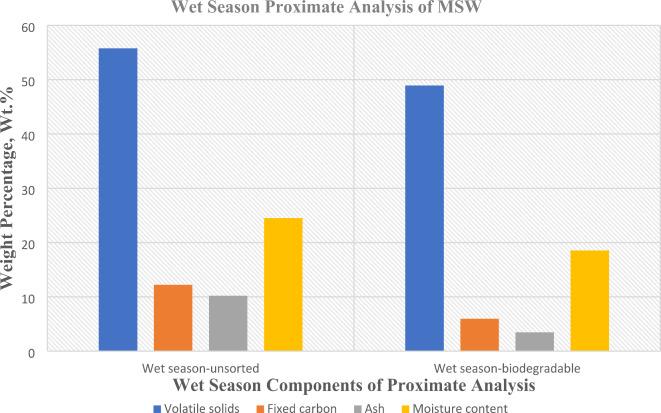
Municipal solid waste (MSW) generation rate is on the rise as it is estimated to reach 3,539 million tonnes by 2050 from the 1,999 million tonnes in 2015. The seasonal variations of the physio-chemical properties of the MSW among others exacerbates its management challenges. This study aimed to conduct in-depth investigations on the seasonal variations of physio-chemical properties of the MSW generated in Kabale Municipality, southwestern Uganda to inform sustainable MSW management systems. This study revealed that this MSW is majorly plastics, with concentrations of 21.45% and 26.94% in the dry and wet seasons, respectively, which presents a more recycling potential for these plastics in the wet season. The biodegradable MSW fraction (food, paper, cardboard and garden trimming wastes), which were 35.6% and 35.34% for the dry and wet seasons, respectively, supports energy recovery from the waste in the form of biogas, with a higher potential in the wet season as supported by its higher volatile solid content for the same of 48.92% as compared to that of the dry season of 34.92%. Based on these findings, it is recommended among others that the masses be sensitized on how to generate biogas from the biodegradable fraction of this MSW.
城市固体废弃物(MSW)的产生率正在上升,据估计,到2050年将从2015年的19.99亿吨增至35.39亿吨。城市固体废弃物的物理化学性质的季节性变化等因素加剧了其管理挑战。本研究旨在深入调查乌干达西南部卡巴莱市产生的城市固体废弃物的物理化学性质的季节性变化,以为可持续的城市固体废弃物管理系统提供信息。该研究表明,这种城市固体废弃物主要是塑料,在旱季和雨季的浓度分别为21.45%和26.94%,这表明这些塑料在雨季具有更大的回收潜力。可生物降解的城市固体废弃物部分(食物、纸张、纸板和花园修剪废弃物),在旱季和雨季分别占35.6%和35.34%,这有助于以沼气的形式从废弃物中回收能源,由于其挥发性固体含量在雨季更高,为48.92%,而旱季为34.92%,因此在雨季具有更高的潜力。基于这些发现,建议除其他事项外,提高民众对如何从这种城市固体废弃物的可生物降解部分产生沼气的认识。


 Zotero 插件