
将城市固体废物作为满足能源需求的潜在燃料的特性分析。
Characterization of Municipal Solid Waste as Potential Fuel for Energy Needs.
作者信息
Uler-Zefikj Monika, Godyń Katarzyna, Tokarczyk Katarzyna, Filkoski Risto V
机构信息
Ss. Cyril and Methodius University in Skopje, Faculty of Mechanical Engineering, 1000 Skopje, Republic of North Macedonia.
Strata Mechanics Research Institute, Polish Academy of Sciences, 30-059 Krakow, Poland.
出版信息
Materials (Basel). 2025 May 3;18(9):2103. doi: 10.3390/ma18092103.
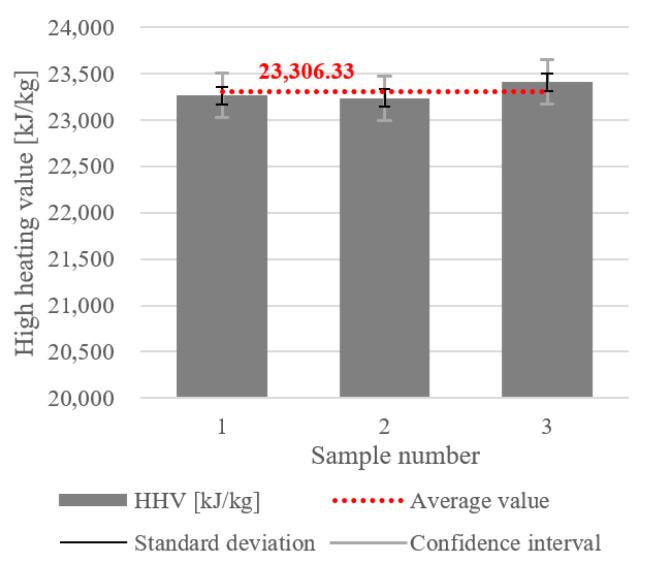
The continued expansion of cities in economic, population and geographical terms leads to significant environmental and infrastructural pressures, including the need for efficient municipal solid waste (MSW) management. This research focuses on the characterization of MSW generated in the city of Skopje and the investigation of its thermo-physical properties and energy utilization potential. The analyses cover physical and chemical properties, including density, moisture content, volatile matter, ash, and higher heating value, using adequate testing methods. The results indicate that MSW has a relatively high gross calorific value, surpassing typical MSW ranges comparable to those of solid fossil fuels. With approximately 79.42% volatile matter and a low ash content of 7.76%, the considered MSW demonstrates excellent combustibility. Chemical analysis reveals high carbon (53.12%) and hydrogen (7.69%) levels, supporting high energy value, while low nitrogen (0.84%) and sulfur (0.26%) levels ensure minimal NO and SO emissions. These characteristics position MSW as a suitable feedstock for energy production in incineration facilities. However, the heterogeneous composition of MSW presents challenges to process stability, necessitating prior waste preparation. The research concludes that harnessing waste energy potential could contribute to sustainability, reduce reliance on fossil fuels, and improve the environmental conditions in large urban areas.
城市在经济、人口和地理方面的持续扩张导致了巨大的环境和基础设施压力,其中包括对高效城市固体废物(MSW)管理的需求。本研究聚焦于斯科普里市产生的城市固体废物的特性,以及对其热物理性质和能源利用潜力的调查。分析涵盖了物理和化学性质,包括密度、含水量、挥发物、灰分和高位发热量,采用了适当的测试方法。结果表明,城市固体废物具有相对较高的总热值,超过了与固体化石燃料相当的典型城市固体废物范围。所考虑的城市固体废物含有约79.42%的挥发物和7.76%的低灰分含量,显示出优异的可燃性。化学分析显示碳含量高(53.12%)和氢含量高(7.69%),支持了高能量值,而低氮含量(0.84%)和硫含量(0.26%)确保了最低的氮氧化物和硫氧化物排放。这些特性使城市固体废物成为焚烧设施中能源生产的合适原料。然而,城市固体废物的异质组成给工艺稳定性带来了挑战,因此需要进行预先废物处理。研究得出结论,利用废物能源潜力有助于实现可持续发展,减少对化石燃料的依赖,并改善大城市地区的环境状况。



 Zotero 插件