
草莓相互作用的转录组分析揭示了与毒力相关的表达基因。
Transcriptome analysis of -Strawberry interaction reveals expressed genes associated with virulence.
作者信息
Ozbudak Egem, Carrillo-Tarazona Yisel, Diaz Edinson A, Zambon Flavia T, Rossi Lorenzo, Peres Natalia A, Raffaele Sylvain, Cano Liliana M
机构信息
Indian River Research and Education Center, Department of Plant Pathology, Institute of Food and Agricultural Sciences (IFAS), University of Florida, Fort Pierce, FL, United States.
U.S. Department of Agriculture (USDA), Agricultural Research Service (ARS), U.S. Horticultural Research Laboratory, Fort Pierce, FL, United States.
出版信息
Front Plant Sci. 2025 Jan 20;15:1390926. doi: 10.3389/fpls.2024.1390926. eCollection 2024.
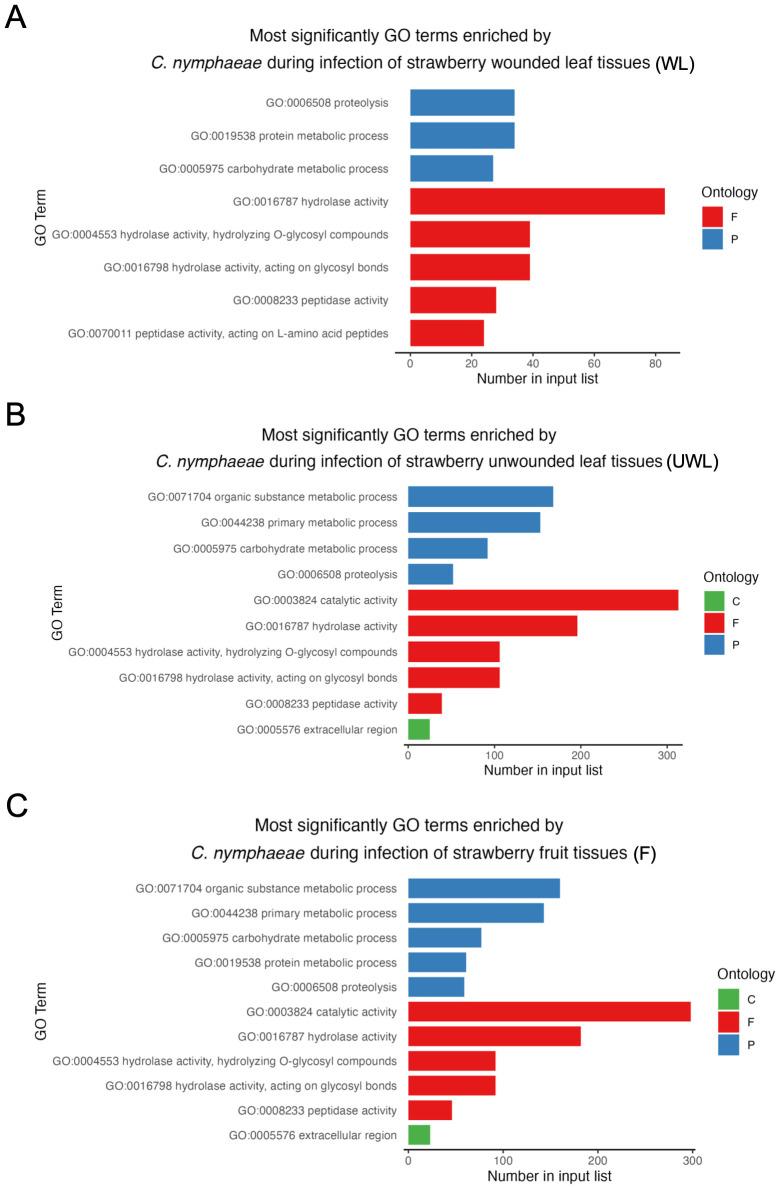
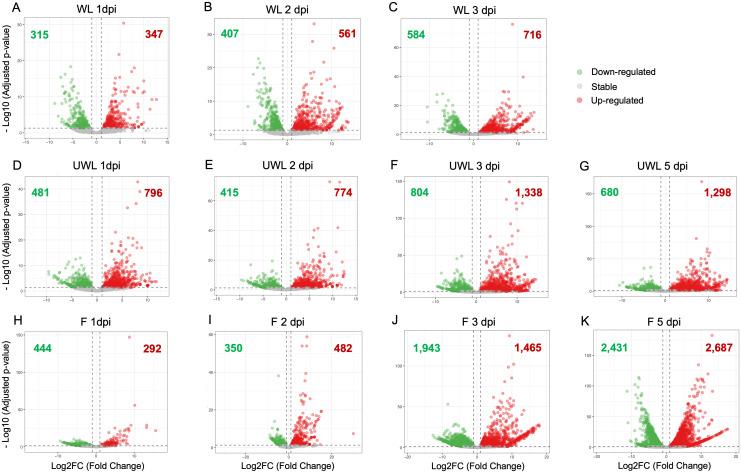
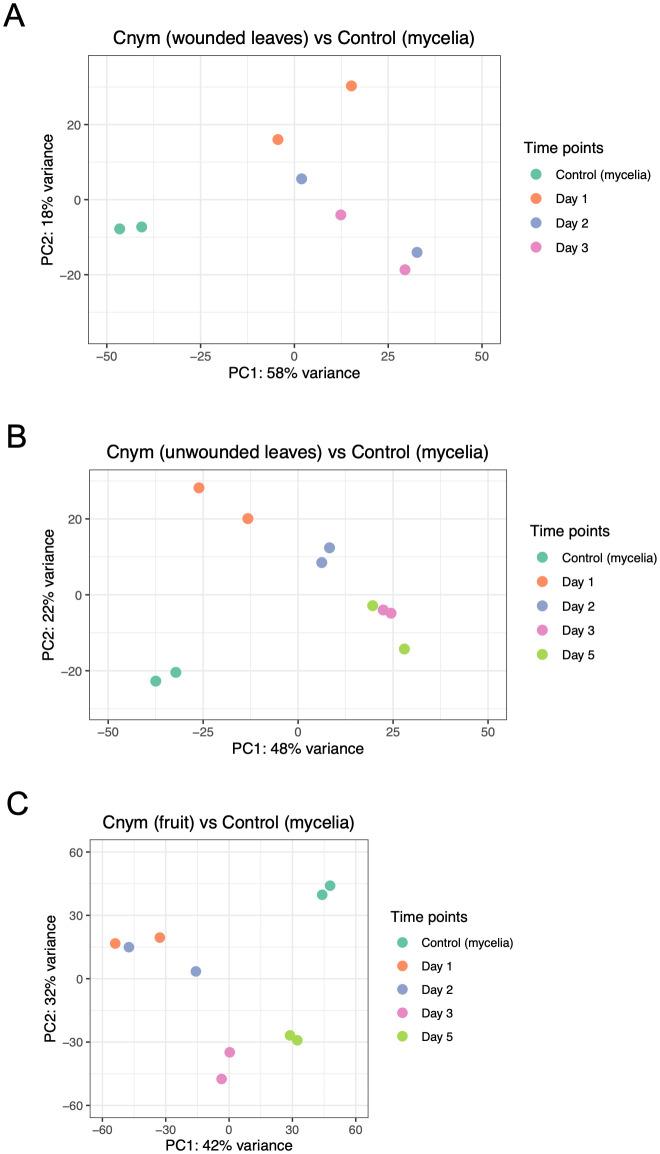
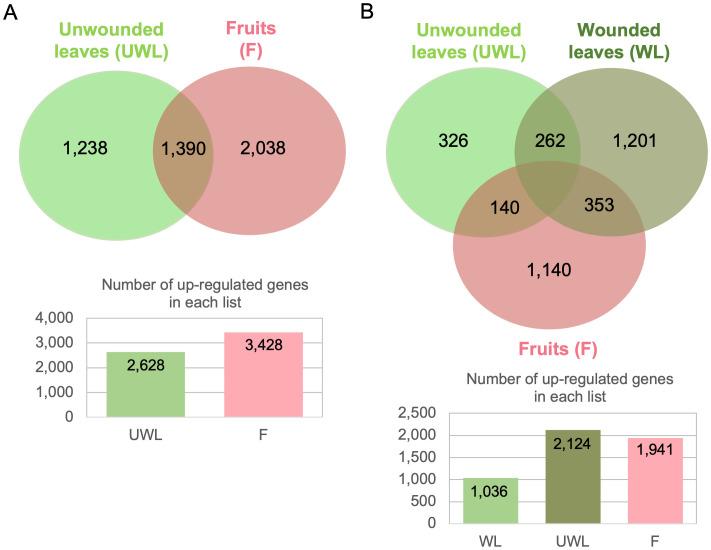
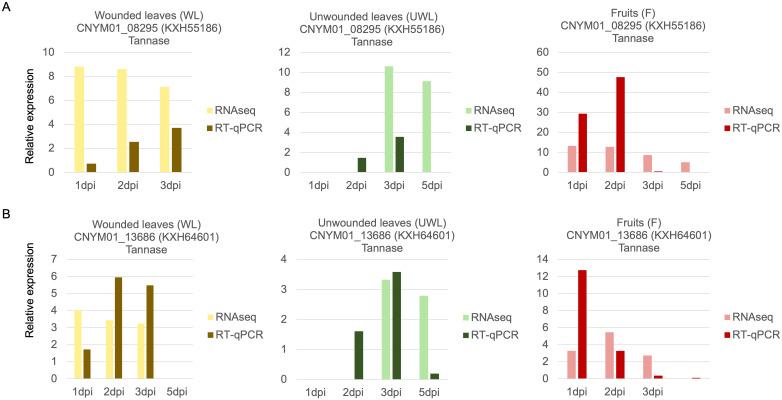
, the causal agent of anthracnose fruit rot, is globally recognized as a major pathogen of strawberries due to its economic impact. Fungal pathogens utilize secreted proteins to facilitate infection by acquiring host nutrients and suppressing plant immunity. Understanding the transcriptomic responses of during infection can provide critical insights into its pathogenic mechanisms. In this study, RNA sequencing (RNA-seq) was performed to profile the transcriptome of strain 02-179 during infection of leaf and fruit tissues of the susceptible strawberry () cultivar Florida Beauty. Differential gene expression analysis identified fungal genes upregulated during these interactions. Transcriptomic profiling revealed a set of genes encoding secreted effector proteins, including NUDIX hydrolase and LysM domain-containing proteins. Additionally, genes associated with Carbohydrate-Active enzymes (CAZymes), such as multicopper oxidase, pectinesterase, pectate lyase, glycosyl hydrolase family 7, and endochitinase, were significantly upregulated. Notably, two novel tannase genes were identified among the top upregulated genes in strawberry-infected leaves and fruits. Tannase enzymes are hypothesized to degrade tannins, a group of plant secondary metabolites abundant in strawberries, known for their defensive roles against pests and pathogens. The identification of tannase genes and the other genes associated with virulence underscores the complex molecular strategies employed by to infect and colonize strawberry tissues. Genes involved in degrading plant cell walls, suppressing host defenses, and potentially overcoming chemical barriers such as tannins play critical roles in the pathogenesis of anthracnose. Further functional characterization of these genes will enhance our understanding of the disease mechanisms and could inform the development of improved management strategies for infections in strawberries.
炭疽病果实腐烂的病原菌,由于其经济影响,在全球范围内被公认为草莓的主要病原菌。真菌病原菌利用分泌蛋白通过获取宿主营养和抑制植物免疫来促进感染。了解其在感染过程中的转录组反应可以为其致病机制提供关键见解。在本研究中,进行了RNA测序(RNA-seq)以分析易感草莓(佛罗里达美人)品种叶片和果实组织感染期间菌株02-179的转录组。差异基因表达分析确定了在这些相互作用中上调的真菌基因。转录组分析揭示了一组编码分泌效应蛋白的基因,包括NUDIX水解酶和含LysM结构域的蛋白。此外,与碳水化合物活性酶(CAZymes)相关的基因,如多铜氧化酶、果胶酯酶、果胶酸裂解酶、糖基水解酶家族7和内切几丁质酶,显著上调。值得注意的是,在草莓感染的叶片和果实中上调最明显的基因中鉴定出两个新的鞣酸酶基因。推测鞣酸酶可降解单宁,单宁是草莓中丰富的一类植物次生代谢产物,以其对害虫和病原菌的防御作用而闻名。鞣酸酶基因和其他与毒力相关基因的鉴定强调了该病原菌用于感染和定殖草莓组织的复杂分子策略。参与降解植物细胞壁、抑制宿主防御以及潜在克服诸如单宁等化学屏障的基因在炭疽病发病机制中起关键作用。对这些基因的进一步功能表征将增强我们对疾病机制的理解,并可为改进草莓炭疽病感染管理策略的制定提供信息。


 Zotero 插件