
一种用于预测多发性骨髓瘤预后、免疫浸润和化疗反应的新型铁死亡相关lncRNA定义风险特征。
A novel defined risk signature of ferroptosis-related lncRNAs for predicting prognosis, immune infiltration, and chemotherapy response in multiple myeloma.
作者信息
Yu Wei, Jing Zizi, Tang Jialin, Chen Jianbin
机构信息
Department of Hematology, The First Affiliated Hospital of Chongqing Medical University, No.1 Youyi Road, Chongqing, 400016, China.
Laboratory Research Center, The First Affiliated Hospital of Chongqing Medical University, Chongqing, 400016, China.
出版信息
Discov Oncol. 2025 Feb 11;16(1):160. doi: 10.1007/s12672-025-01947-z.
BACKGROUND
Ferroptosis, an iron-dependent form of programmed cell death, has been implicated in various types of cancer. However, the association between ferroptosis-related long noncoding RNAs (FRLs) and multiple myeloma (MM) remains unclear. This study aimed to develop an FRL-based predictive model to assess its potential role in predicting overall survival prognosis and evaluating immune cell infiltration and chemotherapy response in MM patients.
METHODS
We identified FRLs using the GEO and FerrDb databases and employed univariate Cox regression and least absolute shrinkage and selection operator (LASSO) to establish a prognostic FRLs signature in the training cohort. The reliability of the risk model was evaluated using Kaplan-Meier (K-M) and time-dependent receiver operating characteristic (ROC) curve analyses. Gene set enrichment analysis (GSEA) was conducted to explore the biological functions associated with the FRLs signature. We also assessed immune cell infiltration and estimated the IC50 of drugs using the R package 'pRRophetic'. The expression of FRLs was validated by qRT-PCR.
RESULTS
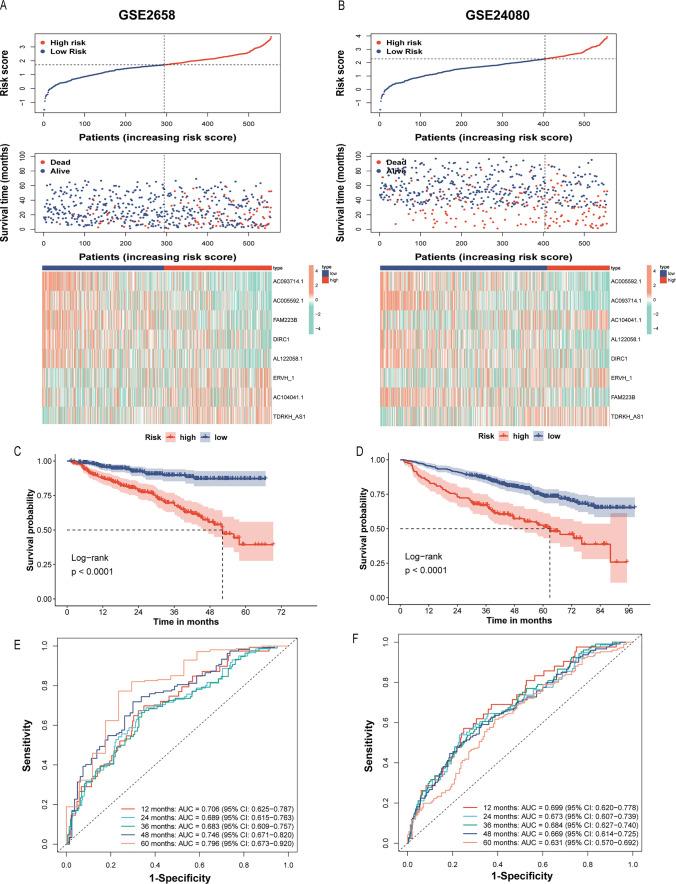
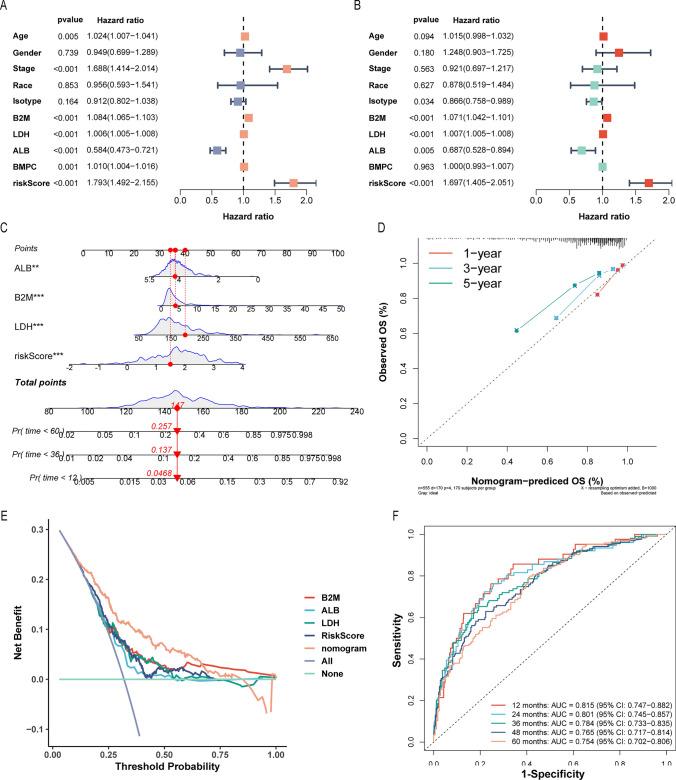
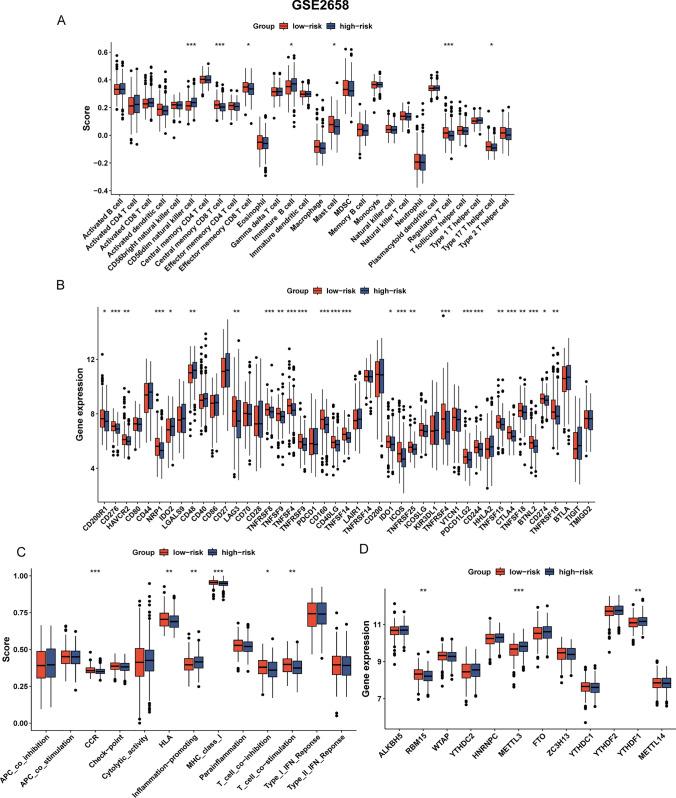
We established a novel 8 FRLs signature, comprising AC005592.1, AC093714.1, AC104041.1, AL122058.1, DIRC1, ERVH-1, FAM223B, and TDRKH-AS1. The risk model was identified as an independent risk factor for overall survival (OS) in MM patients. Bioinformatics analysis indicated that the high-risk group exhibited activation of carcinogenic signaling pathways and immune cell infiltration. The qRT-PCR confirmed the significant upregulation in the expression of ERVH-1, TDRKH-AS1, and AC104041.1, and the downregulation of DIRC1, AC005592.1, AC093714.1, and AL122058.1 in MM samples. Furthermore, the ferroptosis inducer erastin triggered ferroptosis, inhibited cell viability, and upregulated TDRKH-AS1.
CONCLUSION
Our study highlights the potential of the FRLs signature as a prognostic tool and its implications for therapeutic strategies in MM.
背景
铁死亡是一种铁依赖性的程序性细胞死亡形式,已被证实与多种类型的癌症有关。然而,铁死亡相关长链非编码RNA(FRL)与多发性骨髓瘤(MM)之间的关联仍不清楚。本研究旨在建立一种基于FRL的预测模型,以评估其在预测MM患者总生存预后、评估免疫细胞浸润和化疗反应方面的潜在作用。
方法
我们使用GEO和FerrDb数据库鉴定FRL,并采用单因素Cox回归和最小绝对收缩和选择算子(LASSO)在训练队列中建立预后FRL特征。使用Kaplan-Meier(K-M)和时间依赖性受试者工作特征(ROC)曲线分析评估风险模型的可靠性。进行基因集富集分析(GSEA)以探索与FRL特征相关的生物学功能。我们还使用R包“pRRophetic”评估免疫细胞浸润并估计药物的半数抑制浓度(IC50)。通过qRT-PCR验证FRL的表达。
结果
我们建立了一个由AC005592.1、AC093714.1、AC104041.1、AL122058.1、DIRC1、ERVH-1、FAM223B和TDRKH-AS1组成的新型8个FRL特征。风险模型被确定为MM患者总生存(OS)的独立危险因素。生物信息学分析表明,高危组表现出致癌信号通路的激活和免疫细胞浸润。qRT-PCR证实MM样本中ERVH-1、TDRKH-AS1和AC104041.1的表达显著上调,DIRC1、AC005592.1、AC093714.1和AL122058.1的表达下调。此外,铁死亡诱导剂艾拉司丁引发铁死亡,抑制细胞活力,并上调TDRKH-AS1。
结论
我们的研究突出了FRL特征作为预后工具的潜力及其对MM治疗策略的影响。




 Zotero 插件