
用于肠易激综合征的低FODMAP饮食:来自微生物组的见解
Low-FODMAP Diet for Irritable Bowel Syndrome: Insights from Microbiome.
作者信息
Zhang Haoshuai, Su Qi
机构信息
Microbiota I-Center (MagIC), Hong Kong SAR, China.
Department of Medicine and Therapeutics, The Chinese University of Hong Kong, Hong Kong SAR, China.
出版信息
Nutrients. 2025 Jan 31;17(3):544. doi: 10.3390/nu17030544.
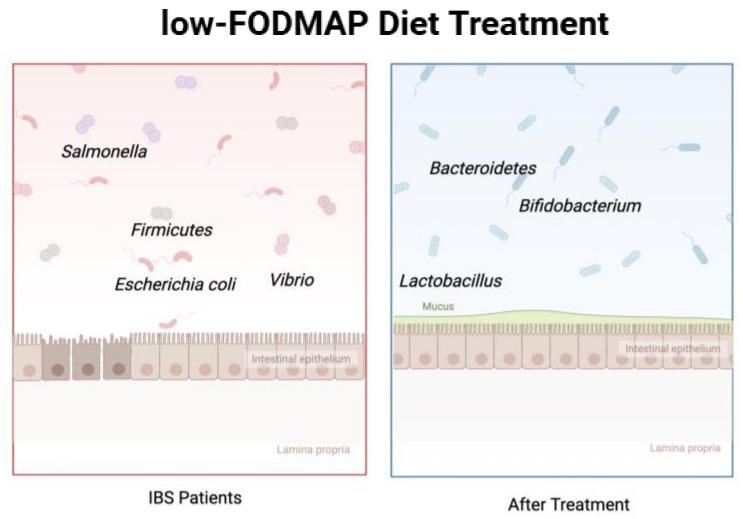
Irritable bowel syndrome (IBS) is a prevalent gastrointestinal disorder characterized by chronic abdominal pain, bloating, and altered bowel habits. Low-FODMAP diets, which involve restricting fermentable oligosaccharides, disaccharides, monosaccharides, and polyols, have emerged as an effective dietary intervention for alleviating IBS symptoms. This review paper aims to synthesize current insights into the impact of a low-FODMAP diet on the gut microbiome and its mechanisms of action in managing IBS. We explore the alterations in microbial composition and function associated with a low-FODMAP diet and discuss the implications of these changes for gut health and symptom relief. Additionally, we examine the balance between symptom improvement and potential negative effects on microbial diversity and long-term gut health. Emerging evidence suggests that while a low-FODMAP diet can significantly reduce IBS symptoms, it may also lead to reductions in beneficial microbial populations. Strategies to mitigate these effects, such as the reintroduction phase and the use of probiotics, are evaluated. This review highlights the importance of a personalized approach to dietary management in IBS, considering individual variations in microbiome responses. Understanding the intricate relationship between diet, the gut microbiome, and IBS symptomatology will guide the development of more effective, sustainable dietary strategies for IBS patients.
肠易激综合征(IBS)是一种常见的胃肠道疾病,其特征为慢性腹痛、腹胀和排便习惯改变。低发酵性寡糖、双糖、单糖和多元醇(FODMAP)饮食,即限制可发酵的寡糖、双糖、单糖和多元醇的饮食,已成为缓解IBS症状的一种有效饮食干预方法。这篇综述文章旨在综合当前关于低FODMAP饮食对肠道微生物群的影响及其在管理IBS中的作用机制的见解。我们探讨了与低FODMAP饮食相关的微生物组成和功能的变化,并讨论了这些变化对肠道健康和症状缓解的影响。此外,我们研究了症状改善与对微生物多样性和长期肠道健康的潜在负面影响之间的平衡。新出现的证据表明,虽然低FODMAP饮食可以显著减轻IBS症状,但它也可能导致有益微生物种群减少。我们评估了减轻这些影响的策略,如重新引入阶段和使用益生菌。这篇综述强调了在IBS饮食管理中采用个性化方法的重要性,要考虑到微生物群反应的个体差异。了解饮食、肠道微生物群和IBS症状学之间的复杂关系将指导为IBS患者制定更有效、可持续的饮食策略。


 Zotero 插件