
传染性支气管炎病毒的系统发育网络:探究候鸟对病毒聚类、进化和重组的影响。
Phylogenetic network of infectious bronchitis virus: exploring the impact of migratory birds on viral clustering, evolution, and recombination.
作者信息
Tai Yu-Chen, Hu Geng-Ming, Chen Chi-Ming
机构信息
Department of Physics, National Taiwan Normal University, Taipei, Taiwan.
出版信息
Vet Q. 2025 Dec;45(1):1-14. doi: 10.1080/01652176.2025.2465570. Epub 2025 Feb 14.
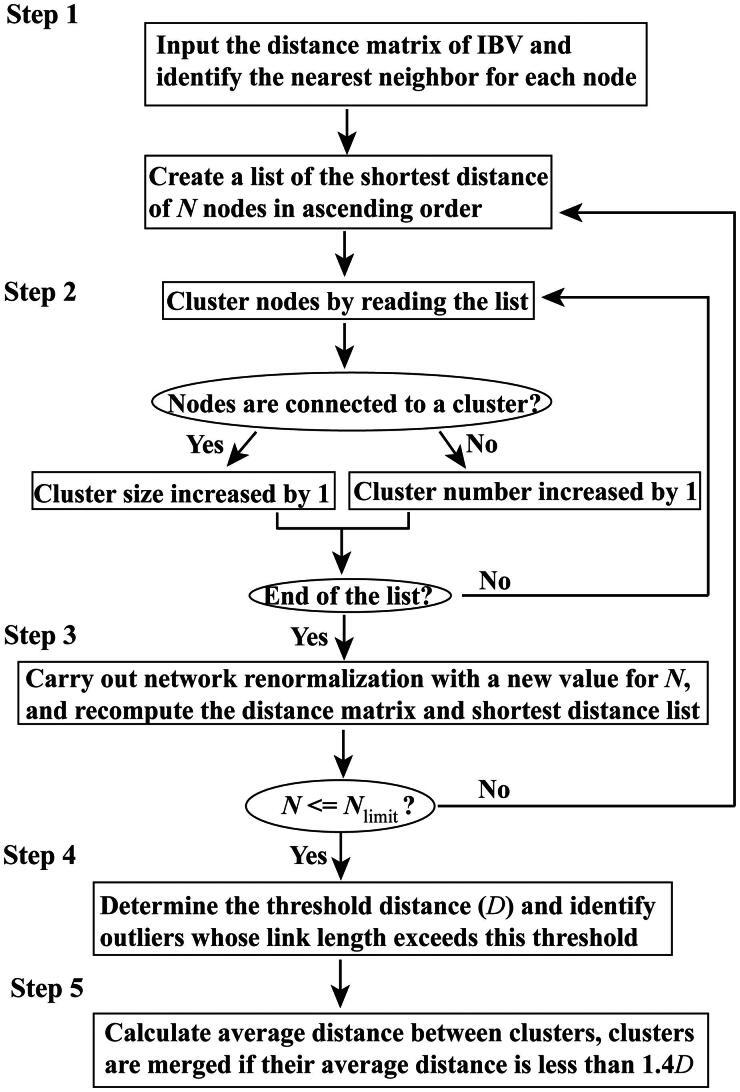
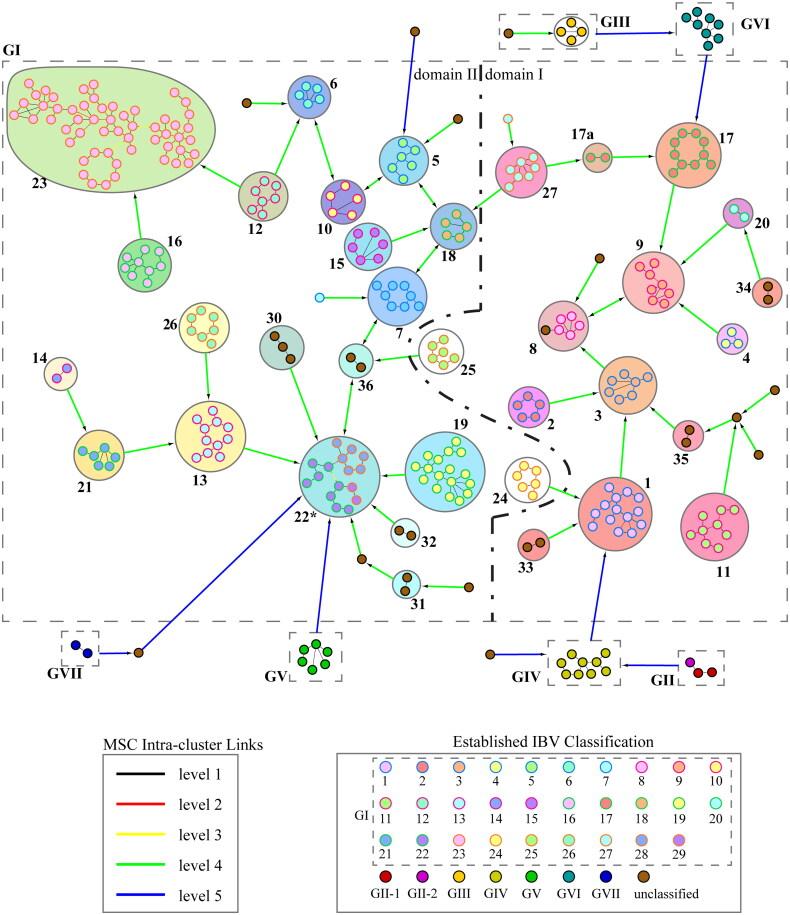
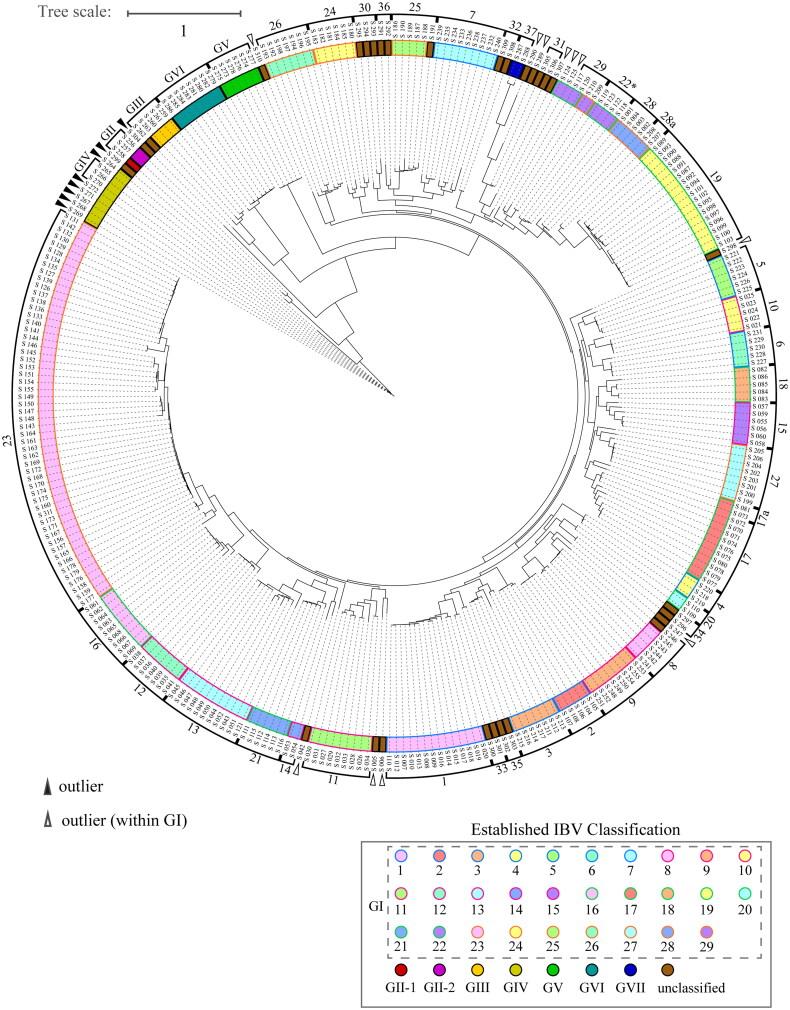
Infectious bronchitis virus (IBV) presents a major threat to global poultry production, necessitating a thorough understanding of its evolutionary relationships for effective control measures. This study presents a novel distance-based Minimum Span Clustering (MSClustering) method to cluster 311 IBV strains, with a comparison of its results to the established IBV classification. Phylogenetic network and recombination analyses were employed to investigate IBV evolutionary relationships and transmission pathways. The phylogenetic network revealed distinct clusters reflecting relationships between IBV strains. Importantly, these network patterns, combined with recombination event analysis, suggest an unrecognized role for migratory birds in IBV dissemination, highlighting potential transmission pathways beyond established poultry trade routes. These findings contribute to advancing our understanding of IBV evolution and support the development of targeted strategies for controlling viral outbreaks in poultry populations. While statistical limitations may affect threshold estimation for smaller networks, our MSClustering method significantly accelerates processing speeds-approximately 100,000 times faster than PhyML when analyzing the dataset-enabling comprehensive-scale phylogenetic analysis of viruses.
传染性支气管炎病毒(IBV)对全球家禽生产构成重大威胁,因此有必要深入了解其进化关系,以便采取有效的控制措施。本研究提出了一种基于距离的新型最小跨度聚类(MSClustering)方法,用于对311株IBV毒株进行聚类,并将其结果与已确立的IBV分类进行比较。采用系统发育网络和重组分析来研究IBV的进化关系和传播途径。系统发育网络揭示了反映IBV毒株之间关系的不同聚类。重要的是,这些网络模式与重组事件分析相结合,表明候鸟在IBV传播中发挥了未被认识的作用,突出了既定家禽贸易路线之外的潜在传播途径。这些发现有助于增进我们对IBV进化的理解,并支持制定针对性策略来控制家禽群体中的病毒爆发。虽然统计局限性可能会影响较小网络的阈值估计,但我们的MSClustering方法显著加快了处理速度——在分析数据集时比PhyML快约100,000倍,从而能够对病毒进行全面规模的系统发育分析。


 Zotero 插件