
RNA的超二级结构编码:核糖体上构象变化的痕迹以及Cas9的R环形成
Supersecondary Structure Code for RNA: Trace of Conformational Change on the Ribosome and the R-Loop Formation of Cas9.
作者信息
Izumi Hiroshi, Nafie Laurence A, Dukor Rina K
机构信息
National Institute of Advanced Industrial Science and Technology (AIST), AIST Tsukuba West, Tsukuba, Ibaraki 305-8569, Japan.
Department of Chemistry, Syracuse University, Syracuse, New York 13244-4100, United States.
出版信息
ACS Omega. 2025 Jan 27;10(5):4998-5005. doi: 10.1021/acsomega.4c10681. eCollection 2025 Feb 11.
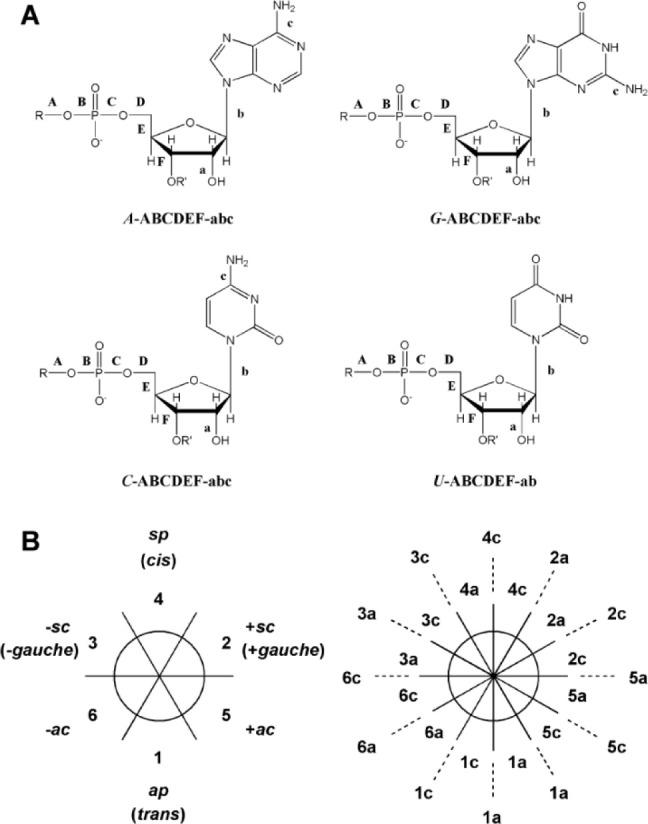
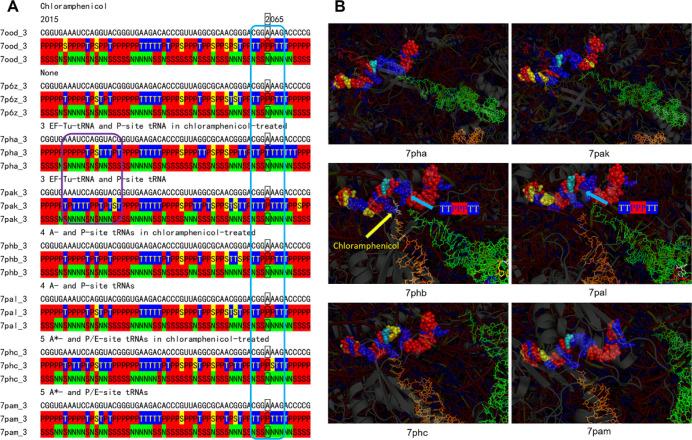
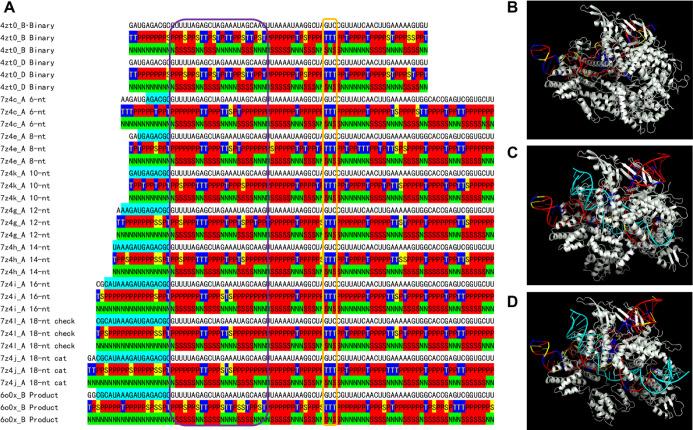
The shape of motifs is important for RNA functions and deeply reflects the structure of RNA at the supersecondary level, an intermediate level between secondary and spatial structure. However, there is currently no standardized classification system for the RNA supersecondary structures. Primary and secondary occupied conformations, accounting for 73% of the nucleic acid backbone units, were found by extending the concept of protein supersecondary structure code (SSSC) combined with the conformational code for organic molecules. The supersecondary structure code for RNA (SSCR) was introduced as a conformational term for each unit of the nucleic acid backbone using the letters P, S, T, and D, denoting respectively the primary occupied conformation (P), the secondary occupied conformation (S), the set of other conformations (T), and disordered residues (D). The alignment of SSCR sequences was used to compare with the different nucleic acid base sequences, depending on the species. SSCR can also trace the conformational change of motifs in RNA molecules such as ribosomal RNA (rRNA) and single-molecule guide RNA (sgRNA) in the R-loop formation process of Cas9. The assignment of supersecondary structure code T using the fuzzy search technique of structural code homology is an effective and quick detection method for motifs with conformational wobbling, such as the relatively rigid TTT motifs of sgRNA with Cas9, streptomycin-binding RNA aptamer, 23S rRNA, 2'-dG-II riboswitch, and human hepatitis B virus ε pregenomic RNA, which work as the scaffold for protein and RNA molecules or as the support stand for small external substrates.
基序的形状对RNA功能很重要,并且在超二级水平上深刻反映了RNA的结构,超二级水平是二级结构和空间结构之间的中间层次。然而,目前尚无针对RNA超二级结构的标准化分类系统。通过扩展蛋白质超二级结构编码(SSSC)的概念并结合有机分子的构象编码,发现了占核酸主链单元73%的一级和二级占据构象。RNA超二级结构编码(SSCR)被引入,作为核酸主链每个单元的构象术语,使用字母P、S、T和D分别表示一级占据构象(P)、二级占据构象(S)、其他构象集合(T)和无序残基(D)。SSCR序列的比对用于与不同的核酸碱基序列进行比较,具体取决于物种。SSCR还可以追踪RNA分子中基序的构象变化,如Cas9的R环形成过程中的核糖体RNA(rRNA)和单分子引导RNA(sgRNA)。使用结构编码同源性的模糊搜索技术对超二级结构编码T进行赋值,是检测具有构象摆动的基序的有效且快速的方法,如sgRNA与Cas9的相对刚性的TTT基序、链霉素结合RNA适体、23S rRNA、2'-dG-II核糖开关和人类乙型肝炎病毒ε前基因组RNA,这些基序可作为蛋白质和RNA分子的支架或作为小的外部底物的支撑物。


 Zotero 插件