
膝神经阻滞联合收肌管阻滞对接受膝关节镜手术患者的影响:一项随机对照试验
Effects of Genicular Nerve Blocks in Combination With an Adductor Canal Block in Patients Undergoing Arthroscopic Knee Surgery: A Randomized Controlled Trial.
作者信息
Amorntodsapornpong Poramed, Yuwapattanawong Kornkanok, Sakura Shinichi
机构信息
Department of Anesthesiology, Faculty of Medicine, Vajira Hospital, Navamindradhiraj University, Bangkok, THA.
Department of Anesthesiology, Unnan Municipal Hospital, Shimane University, Izumo, JPN.
出版信息
Cureus. 2025 Feb 18;17(2):e79215. doi: 10.7759/cureus.79215. eCollection 2025 Feb.
BACKGROUND AND OBJECTIVES
Arthroscopic knee surgery is increasingly popular. Optimal postoperative pain management enhances patient satisfaction and minimizes hospitalization. Numerous studies have demonstrated the benefits of adductor canal blocks (ACBs) and genicular nerve blocks (GNBs) in postoperative analgesia. This study aims to evaluate the efficacy of adding GNBs to an ACB in reducing postoperative pain scores compared to an ACB alone. Additionally, it seeks to compare secondary outcomes, including opioid consumption, motor blockade, nausea and vomiting, rash, and itching during the postoperative period.
METHOD
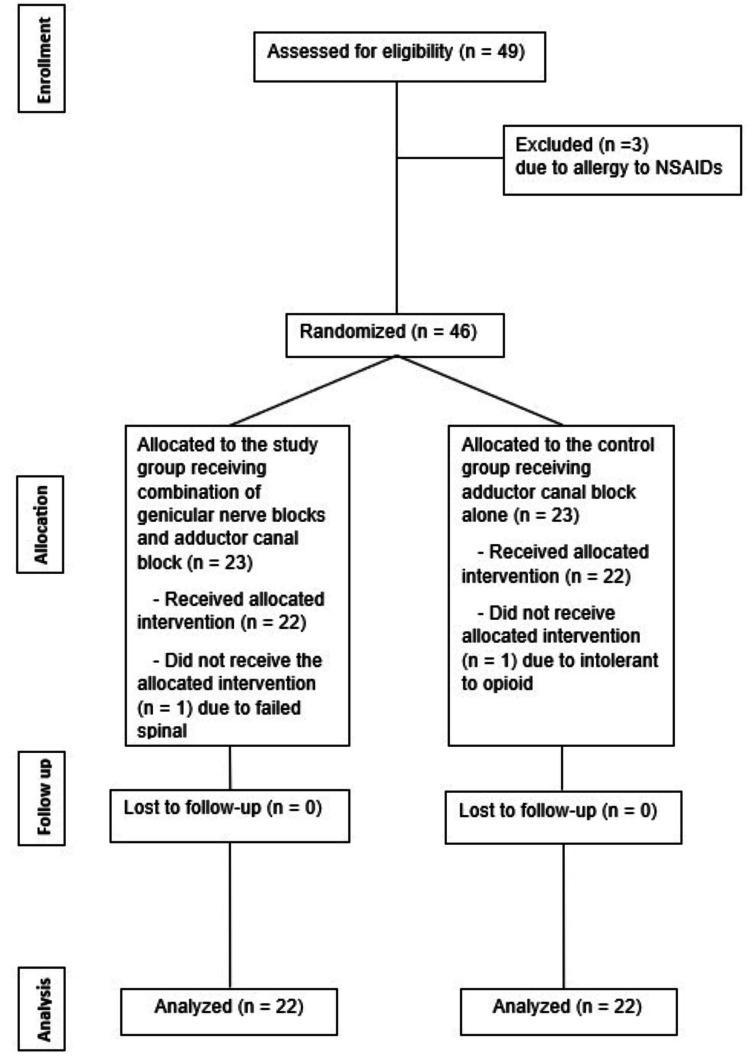
This prospective, randomized, controlled clinical trial included 49 patients undergoing arthroscopic knee surgery. The study group received a GNB with 0.25% bupivacaine (3 mL) at each quadrant of the knee, except for the inferolateral quadrant, in combination with an ACB using 0.25% bupivacaine (20 mL). The control group received an ACB alone. Fentanyl (1-2 mcg/kg IV) was administered as rescue analgesia during the perioperative period. Pain scores (visual analog score (VAS)), cumulative opioid consumption, motor blockade, and incidences of postoperative nausea and vomiting (PONV) and itching were assessed at six, 12, 24, and 48 hours postoperatively.
RESULTS
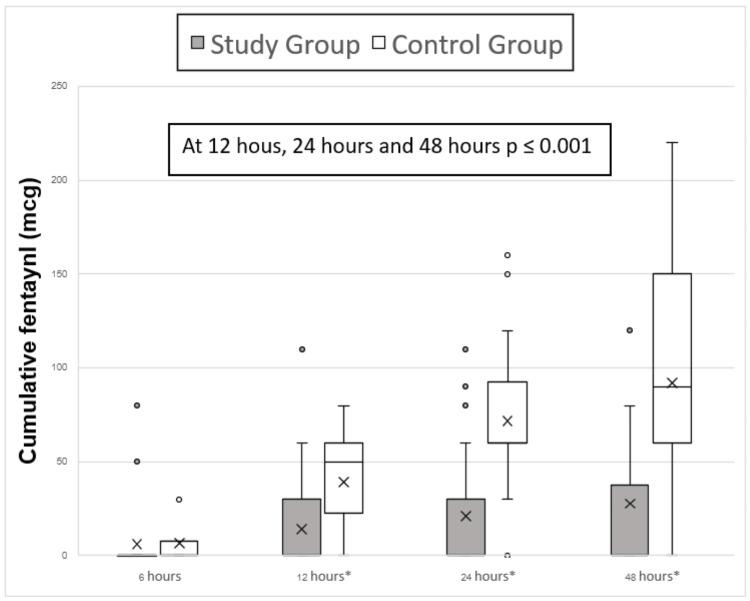
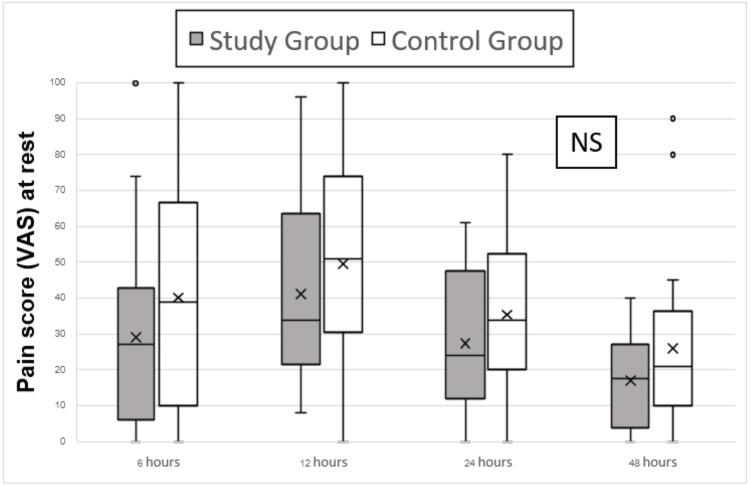
No statistically significant differences in median pain scores were observed between the groups. However, postoperative opioid consumption was significantly lower in the study group, with median values (interquartile range (IQR)) of 0 (0, 30) at 12, 24, and 48 hours postoperatively compared to the control group (p ≤ 0.001). Additionally, no significant differences were found between groups regarding motor blockade or opioid-related side effects.
CONCLUSION
Adding GNBs to an ACB did not demonstrate superiority in reducing postoperative pain scores. However, it effectively reduced perioperative opioid consumption at 12 to 48 hours postoperatively without increasing adverse effects such as nausea, vomiting, or motor blockade. These findings highlight the potential of GNBs as a valuable component of postoperative pain management strategies for arthroscopic knee surgery.
背景与目的
关节镜下膝关节手术越来越受欢迎。最佳的术后疼痛管理可提高患者满意度并减少住院时间。大量研究已证明收肌管阻滞(ACB)和膝状神经阻滞(GNB)在术后镇痛中的益处。本研究旨在评估与单独使用ACB相比,在ACB基础上加用GNB对降低术后疼痛评分的疗效。此外,还旨在比较次要结局,包括术后阿片类药物消耗量、运动阻滞、恶心和呕吐、皮疹以及瘙痒情况。
方法
这项前瞻性、随机、对照临床试验纳入了49例行关节镜下膝关节手术的患者。研究组在膝关节除下外侧象限外的每个象限接受0.25%布比卡因(3 mL)的GNB,并联合使用0.25%布比卡因(20 mL)进行ACB。对照组仅接受ACB。围手术期给予芬太尼(1 - 2 mcg/kg静脉注射)作为补救性镇痛。术后6、12、24和48小时评估疼痛评分(视觉模拟评分(VAS))、累积阿片类药物消耗量、运动阻滞以及术后恶心和呕吐(PONV)及瘙痒的发生率。
结果
两组之间的中位疼痛评分无统计学显著差异。然而,研究组术后阿片类药物消耗量显著更低,术后12、24和48小时的中位值(四分位间距(IQR))为0(0,30),而对照组为(p≤0.001)。此外,两组在运动阻滞或阿片类药物相关副作用方面未发现显著差异。
结论
在ACB基础上加用GNB在降低术后疼痛评分方面未显示出优越性。然而,它有效降低了术后12至48小时的围手术期阿片类药物消耗量,且未增加恶心、呕吐或运动阻滞等不良反应。这些发现凸显了GNB作为关节镜下膝关节手术后疼痛管理策略的重要组成部分的潜力。

 Zotero 插件