
蜘蛛社会性的基因组学后果及持续性
The genomic consequences and persistence of sociality in spiders.
作者信息
Ma Jilong, Bechsgaard Jesper, Aagaard Anne, Villesen Palle, Bilde Trine, Schierup Mikkel Heide
机构信息
Bioinformatics Research Center, Aarhus University, Aarhus C, DK-8000, Denmark;
Department of Biology, Aarhus University, Aarhus C, DK-8000, Denmark.
出版信息
Genome Res. 2025 Mar 18;35(3):499-511. doi: 10.1101/gr.279503.124.
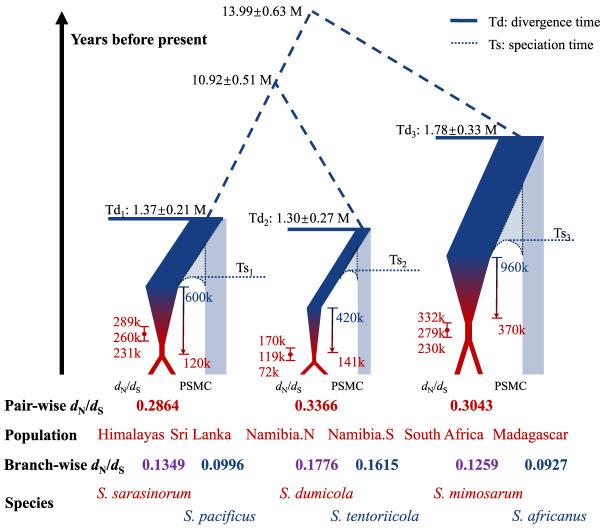
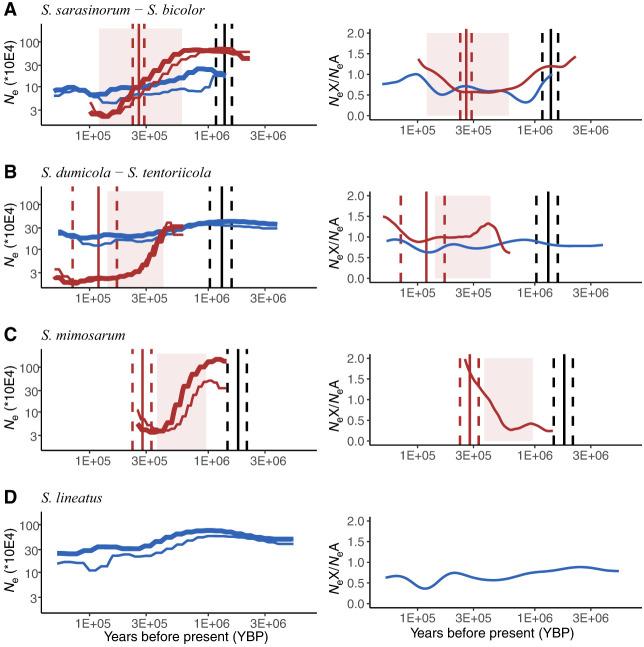
In cooperatively breeding social animals, a few individuals account for all reproduction. In some taxa, sociality is accompanied by a transition from outcrossing to inbreeding. In concert, these traits reduce effective population size, potentially rendering transitions to sociality "evolutionarily dead-ends." We addressed this hypothesis in a comparative genomic study in spiders, in which sociality has evolved independently at least 23 times, but social branches are recent and short. We present genomic evidence for the evolutionary dead-end hypothesis in a spider genus with three independent transitions to sociality. We assembled and annotated high-quality, chromosome-level reference genomes from three pairs of closely related social and subsocial species. We timed the divergence between the social and subsocial species pairs to be from 1.3 million to 1.8 million years. Social evolution in spiders involves a shift from outcrossing to inbreeding and from an equal to a female-biased sex ratio, causing severe reductions in effective population size and decreased efficacy of selection. We show that transitions to sociality only had full effect on purifying selection at 119, 260, and 279 kya, respectively, and follow similar convergent trajectories of progressive loss of diversity and shifts to an increasingly female-biased sex ratio. This almost deterministic genomic response to sociality may explain why social spider lineages do not persist. What causes species extinction is not clear, but either could be selfish meiotic drive eliminating the production of males or could be an inability to retain genome integrity in the face of extremely reduced efficacy of selection.
在合作繁殖的群居动物中,少数个体承担了所有的繁殖任务。在一些分类群中,群居性伴随着从异交向近交的转变。这些特征共同作用,减小了有效种群规模,可能使向群居性的转变成为“进化的死胡同”。我们在一项蜘蛛的比较基因组研究中验证了这一假说,在蜘蛛中群居性至少独立进化了23次,但群居分支出现的时间较近且持续时间较短。我们在一个有三次独立向群居性转变的蜘蛛属中,为进化死胡同假说提供了基因组证据。我们组装并注释了来自三对密切相关的群居和亚群居物种的高质量染色体水平参考基因组。我们测定群居和亚群居物种对之间的分化时间为130万至180万年。蜘蛛的社会进化涉及从异交向近交的转变以及从雌雄比例相等向雌性偏多的转变,导致有效种群规模严重减小以及选择效率降低。我们表明,向群居性的转变分别仅在11.9万、26万和27.9万年前才对纯化选择产生全面影响,并且遵循了类似的趋同轨迹,即多样性逐渐丧失以及向越来越雌性偏多的性别比例转变。这种对群居性几乎确定的基因组反应可能解释了为什么群居蜘蛛谱系无法持续存在。物种灭绝的原因尚不清楚,但可能是自私的减数分裂驱动消除了雄性的产生,或者是在选择效率极低的情况下无法保持基因组完整性。


 Zotero 插件