
肌动蛋白小体是具有细胞样特性的、富含细胞器的大型细胞外囊泡。
Blebbisomes are large, organelle-rich extracellular vesicles with cell-like properties.
作者信息
Jeppesen Dennis K, Sanchez Zachary C, Kelley Noah M, Hayes James B, Ambroise Jessica, Koory Emma N, Krystofiak Evan, Taneja Nilay, Zhang Qin, Dungan Matthew M, Perkins Olivia L, Tyska Matthew J, Knapik Ela W, Dean Kevin M, Doran Amanda C, Coffey Robert J, Burnette Dylan T
机构信息
Department of Medicine, Vanderbilt University Medical Center, Nashville, TN, USA.
Department of Cell and Developmental Biology, Vanderbilt University School of Medicine Basic Sciences, Nashville, TN, USA.
出版信息
Nat Cell Biol. 2025 Mar;27(3):438-448. doi: 10.1038/s41556-025-01621-0. Epub 2025 Feb 21.
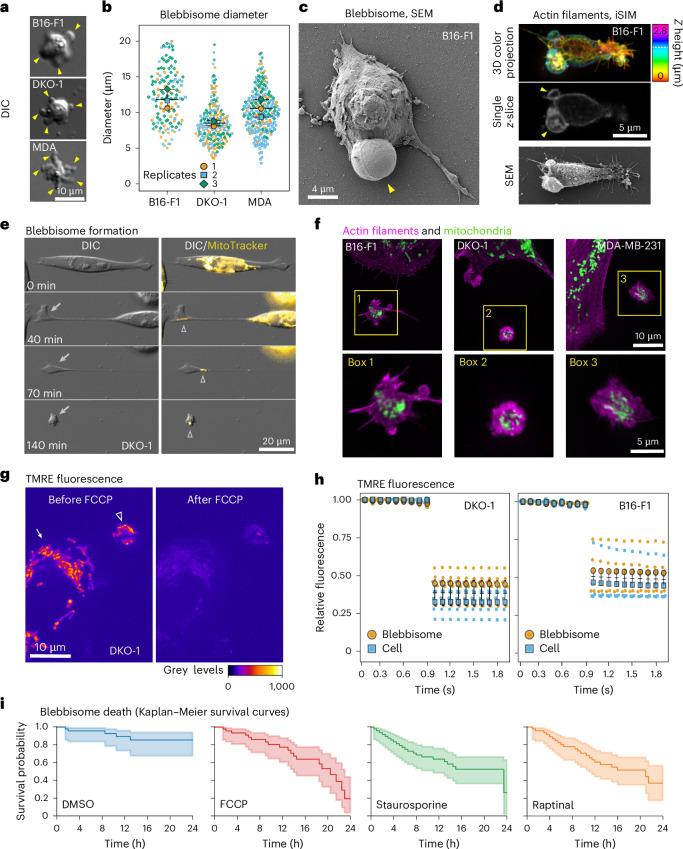
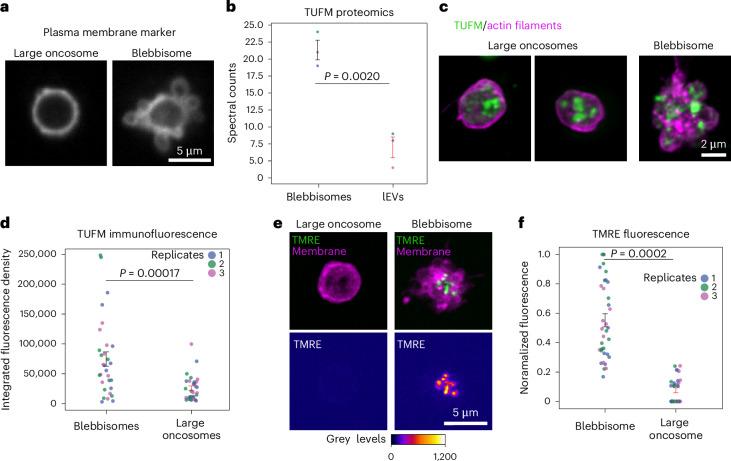
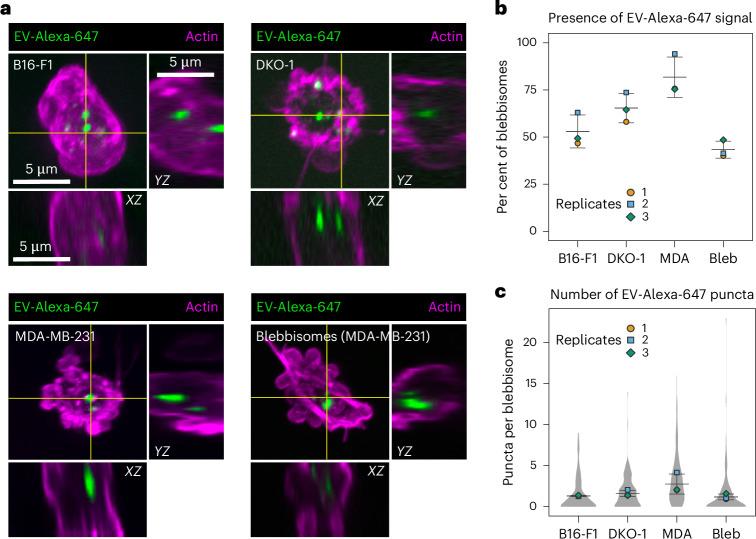
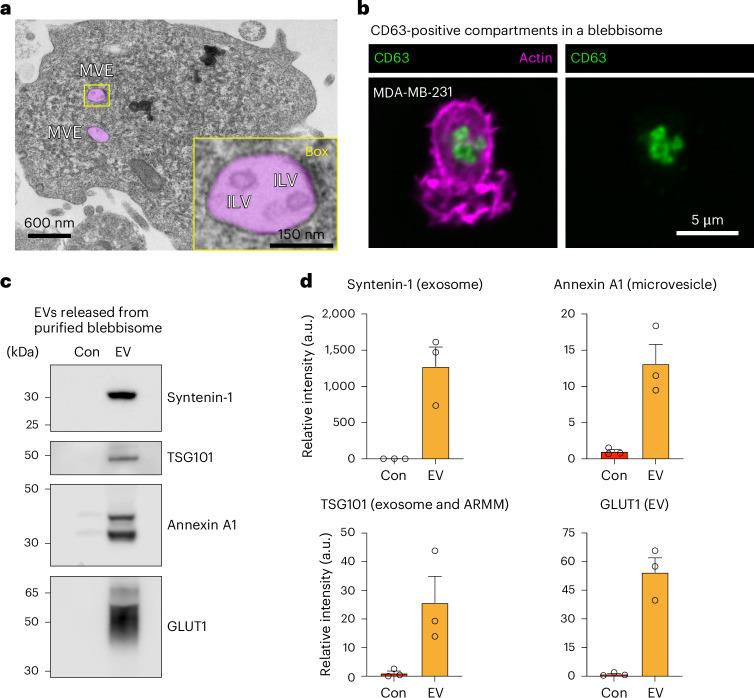
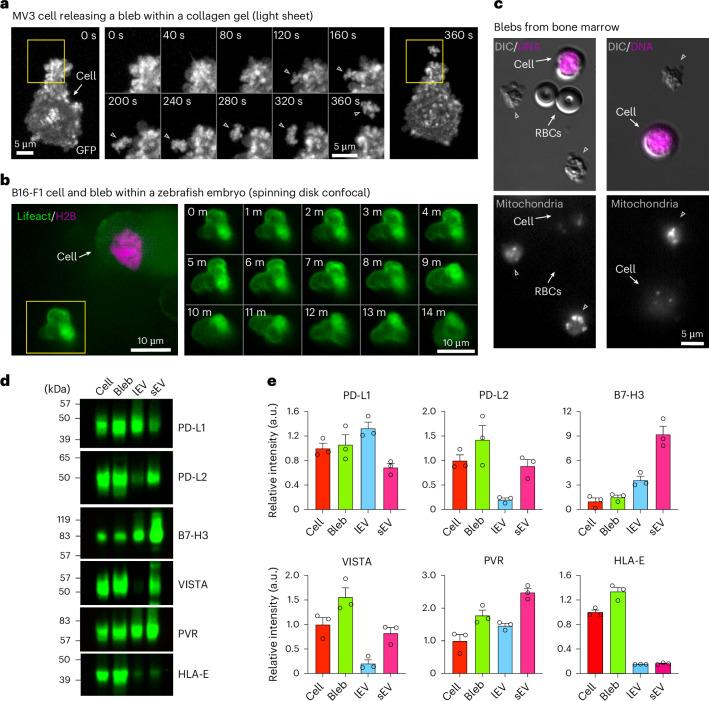
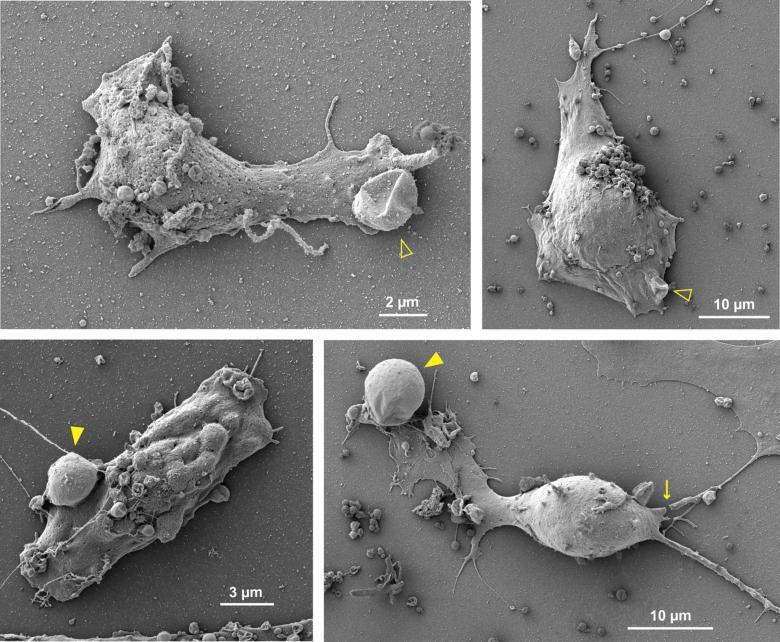
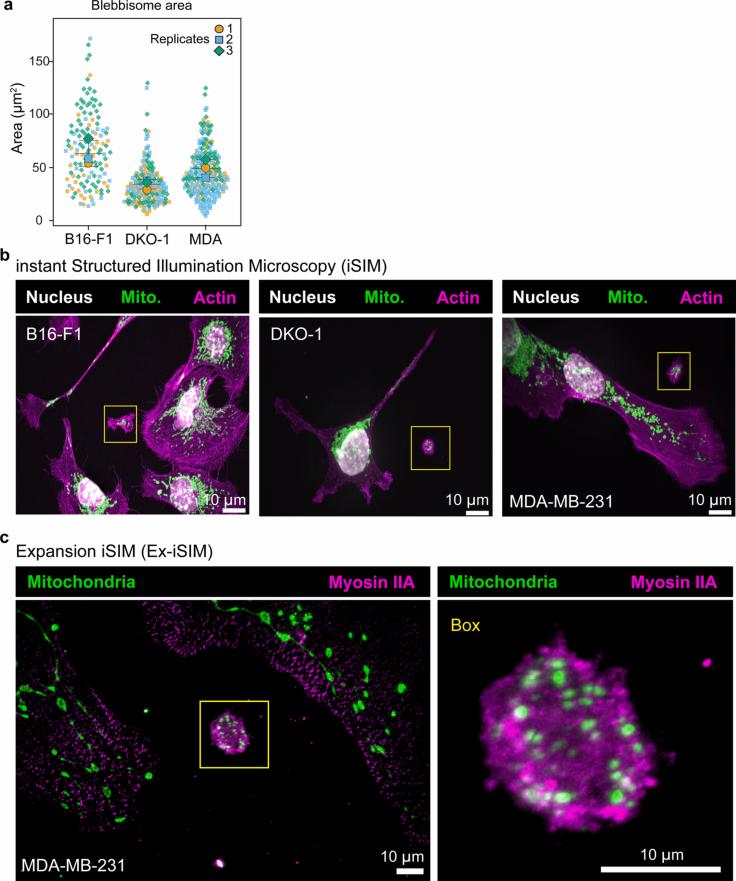
Cells secrete a large variety of extracellular vesicles (EVs) to engage in cell-to-cell and cell-to-environment intercellular communication. EVs are functionally involved in many physiological and pathological processes by interacting with cells that facilitate transfer of proteins, lipids and genetic information. However, our knowledge of EVs is incomplete. Here we show that cells actively release exceptionally large (up to 20 µm) membrane-enclosed vesicles that exhibit active blebbing behavior, and we, therefore, have termed them blebbisomes. Blebbisomes contain an array of cellular organelles that include functional mitochondria and multivesicular endosomes, yet lack a definable nucleus. We show that blebbisomes can both secrete and internalize exosomes and microvesicles. Blebbisomes are released from normal and cancer cells, can be observed by direct imaging of cancer cells in vivo and are present in normal bone marrow. We demonstrate that cancer-derived blebbisomes contain a plethora of inhibitory immune checkpoint proteins, including PD-L1, PD-L2, B7-H3, VISTA, PVR and HLA-E. These data identify a very large, organelle-containing functional EV that act as cell-autonomous mobile communication centres capable of integrating and responding to signals in the extracellular environment.
细胞分泌多种细胞外囊泡(EVs),以进行细胞间和细胞与环境间的细胞通讯。EVs通过与促进蛋白质、脂质和遗传信息传递的细胞相互作用,在许多生理和病理过程中发挥功能作用。然而,我们对EVs的了解并不完整。在此,我们表明细胞会主动释放异常大(直径可达20微米)的膜包被囊泡,这些囊泡表现出活跃的起泡行为,因此我们将它们命名为泡状体。泡状体包含一系列细胞器,其中包括功能性线粒体和多囊泡内体,但缺乏明确界定的细胞核。我们表明泡状体既能分泌也能内化外泌体和微泡。泡状体从正常细胞和癌细胞中释放出来,可通过体内癌细胞的直接成像观察到,并且存在于正常骨髓中。我们证明源自癌症的泡状体含有大量抑制性免疫检查点蛋白,包括程序性死亡受体配体1(PD-L1)、程序性死亡受体配体2(PD-L2)、B7-H3、VISTA、脊髓灰质炎病毒受体(PVR)和人类白细胞抗原E(HLA-E)。这些数据确定了一种非常大的、含有细胞器的功能性EV,其作为细胞自主的移动通讯中心,能够整合并响应细胞外环境中的信号。






 Zotero 插件