
用于递送疏水性抗氧化剂的眼用原位纳米复合凝胶
Ophthalmic In Situ Nanocomposite Gel for Delivery of a Hydrophobic Antioxidant.
作者信息
Slavkova Marta, Voycheva Christina, Popova Teodora, Tzankov Borislav, Tzankova Diana, Spassova Ivanka, Kovacheva Daniela, Stefanova Denitsa, Tzankova Virginia, Yoncheva Krassimira
机构信息
Department of Pharmaceutical Technology and Biopharmacy, Faculty of Pharmacy, Medical University of Sofia, 1000 Sofia, Bulgaria.
Department of Pharmaceutical Chemistry, Faculty of Pharmacy, Medical University of Sofia, 1000 Sofia, Bulgaria.
出版信息
Gels. 2025 Feb 2;11(2):105. doi: 10.3390/gels11020105.
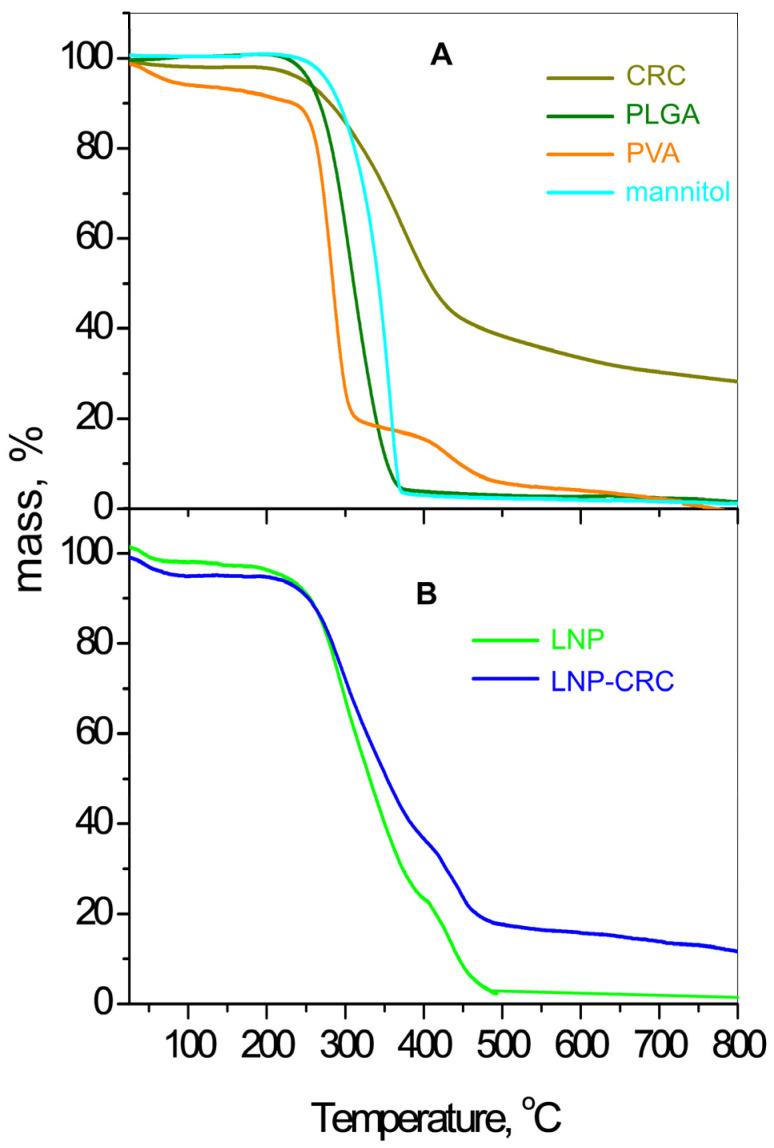
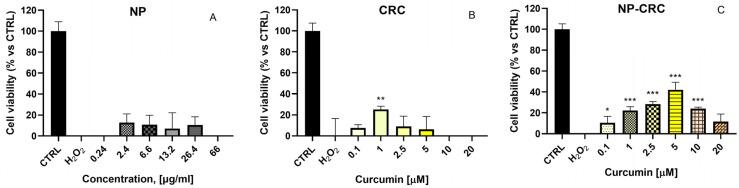
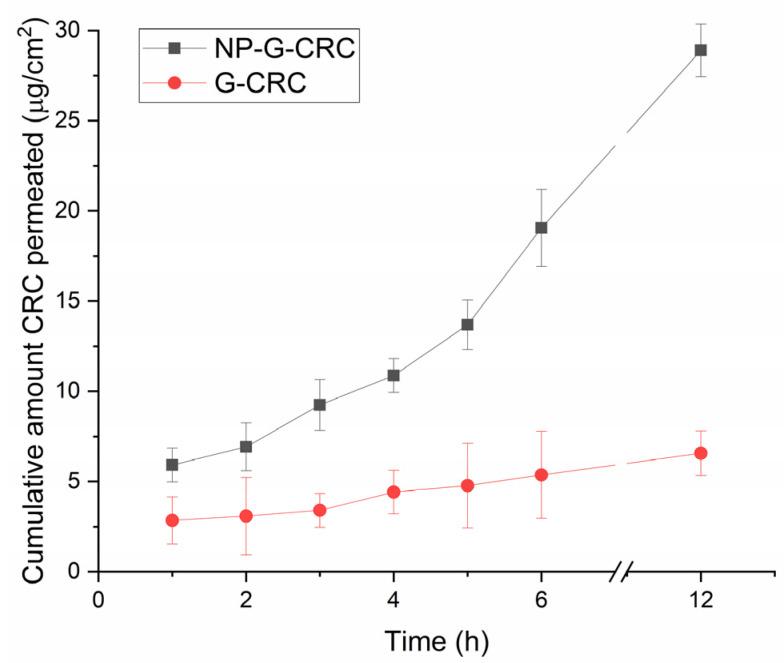
The topical administration of in situ hydrogels for ocular pathologies is a promising application strategy for providing high effectiveness and patient compliance. Curcumin, a natural polyphenol, possesses all the prerequisites for successful therapy of ophthalmic diseases, but unfortunately its physicochemical properties hurdle the practical use. Applying a composite in situ thermoresponsive hydrogel formulation embedded with polymer nanoparticles is a potent strategy to overcome all the identified drawbacks. In the present work we prepared uniform spherical nanoparticles (296.4 ± 3.1 nm) efficiently loaded with curcumin (EE% 82.5 ± 2.3%) based on the biocompatible and biodegradable poly-(lactic-co-glycolic acid). They were thoroughly physicochemically characterized in terms of FTIR, SEM, TGA, and DLS, in vitro release following Fickian diffusion (45.62 ± 2.37%), and stability over 6 months. Their lack of cytotoxicity was demonstrated in vitro on HaCaT cell lines, and the potential for antioxidant protection was also outlined, starting from concentrations as low as 0.1 µM and reaching 41% protection at 5 µM. An in situ thermoresponsive hydrogel (17% / poloxamer 407 and 0.1% Carbopol) with suitable properties for ophthalmic application was optimized with respect to gelation temperature (31.40 ± 0.36 °C), gelling time (8.99 ± 0.28 s) upon tears dilution, and gel erosion (90.75 ± 4.06%). Upon curcumin-loaded nanoparticle embedding, the in situ hydrogels demonstrated appropriate pseudoplastic behavior and viscosity at 35 °C (2129 ± 24 Pa∙s), 6-fold increase in the permeation, and prolonged release over 6 h.
原位水凝胶用于眼部疾病的局部给药是一种很有前景的应用策略,可实现高效性和患者依从性。姜黄素是一种天然多酚,具备成功治疗眼科疾病的所有先决条件,但遗憾的是其物理化学性质阻碍了实际应用。应用嵌入聚合物纳米颗粒的复合原位热响应水凝胶配方是克服所有已发现缺点的有效策略。在本研究中,我们基于生物相容性和可生物降解的聚(乳酸-乙醇酸)制备了均匀的球形纳米颗粒(296.4 ± 3.1 nm),其姜黄素负载效率高(包封率82.5 ± 2.3%)。对其进行了全面的物理化学表征,包括傅里叶变换红外光谱(FTIR)、扫描电子显微镜(SEM)、热重分析(TGA)和动态光散射(DLS),通过菲克扩散进行体外释放(45.62 ± 2.37%),并考察了6个月的稳定性。在体外HaCaT细胞系上证明了其无细胞毒性,还概述了其抗氧化保护潜力,从低至0.1 μM的浓度开始,在5 μM时达到41%的保护率。优化了一种具有适合眼科应用性质的原位热响应水凝胶(17%/泊洛沙姆407和0.1%卡波姆),其凝胶化温度为(31.40 ± 0.36 °C),泪液稀释后的胶凝时间为(8.99 ± 0.28 s),凝胶侵蚀率为(90.75 ± 4.06%)。嵌入负载姜黄素的纳米颗粒后,原位水凝胶在35 °C时表现出适当的假塑性行为和粘度(2129 ± 24 Pa∙s),渗透增加6倍,释放时间延长至6小时。






 Zotero 插件