
用于快速新冠病毒诊断的高性价比电化学免疫传感器的研发与优化
Development and Optimization of a Cost-Effective Electrochemical Immunosensor for Rapid COVID-19 Diagnosis.
作者信息
Lima Thaís Machado, Leal Daiane Martins, Ferreira Zirlane Coelho, Souza Fernando de Jesus, de Oliveira Danilo Bretas, Rocha-Vieira Etel, Martins Helen Rodrigues, Pereira Arnaldo César, Ferreira Lucas Franco
机构信息
Institute of Science and Technology, Federal University of the Jequitinhonha and Mucuri Valleys (UFVJM), Diamantina 39100-000, Minas Gerais, Brazil.
Faculty of Medicine, Federal University of the Jequitinhonha and Mucuri Valleys (UFVJM), Diamantina 39100-000, Minas Gerais, Brazil.
出版信息
Biosensors (Basel). 2025 Jan 22;15(2):67. doi: 10.3390/bios15020067.
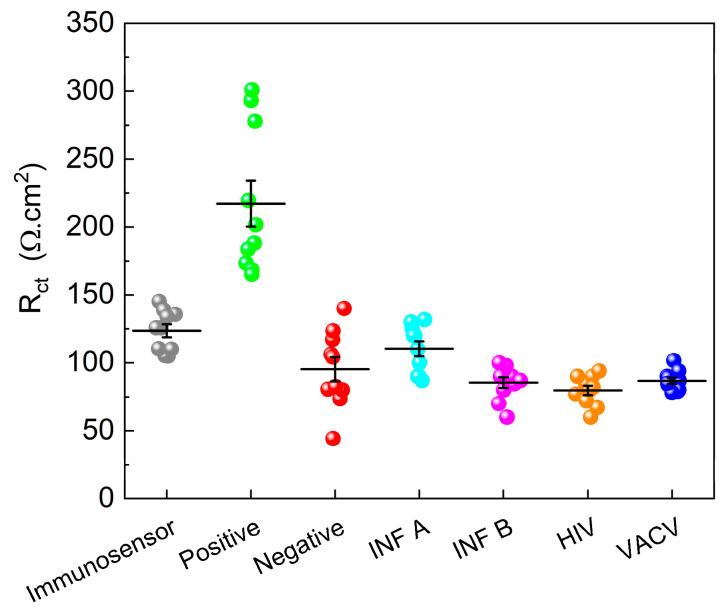
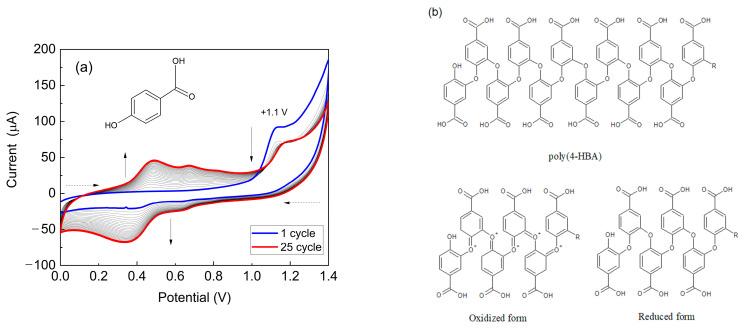
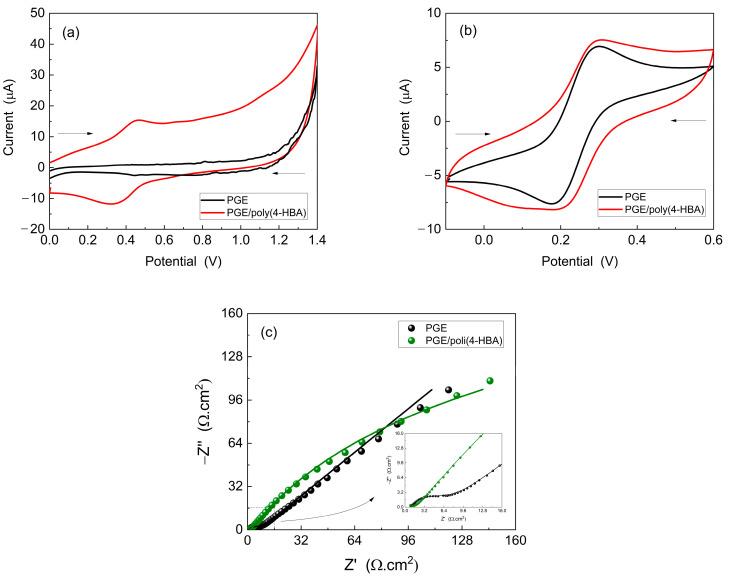
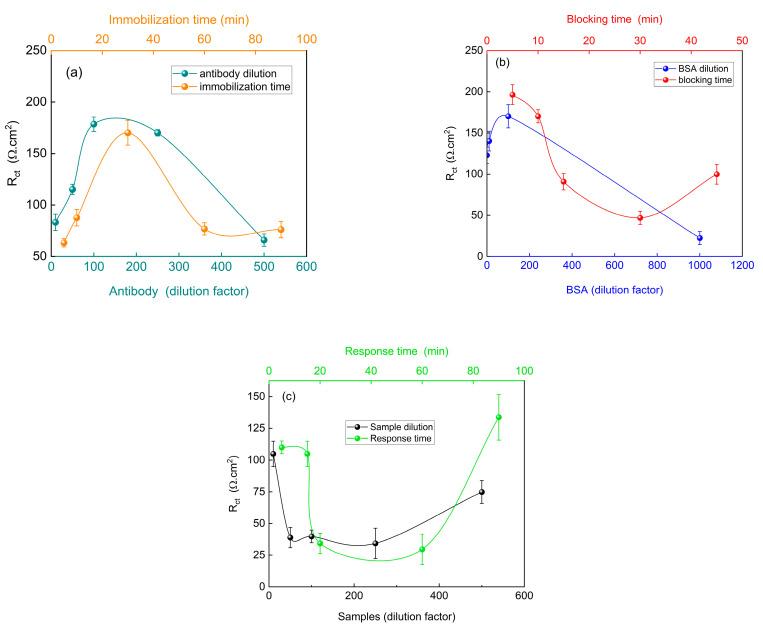
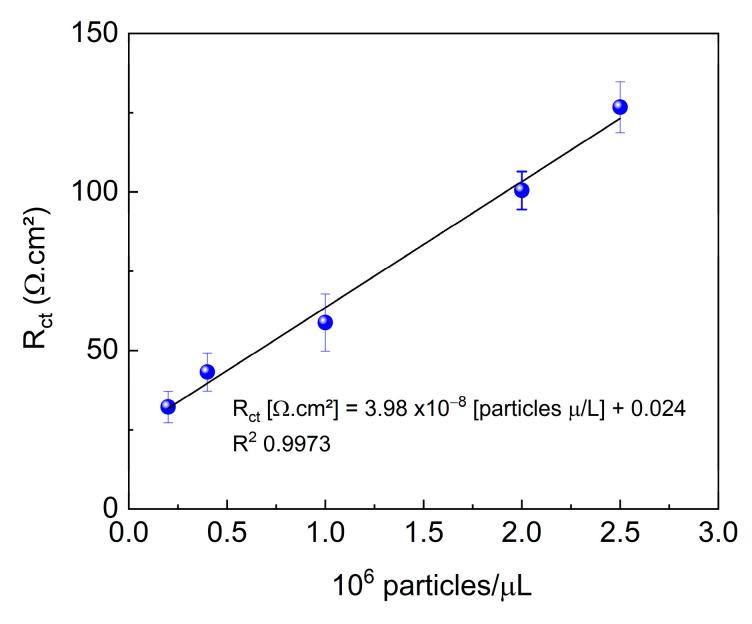
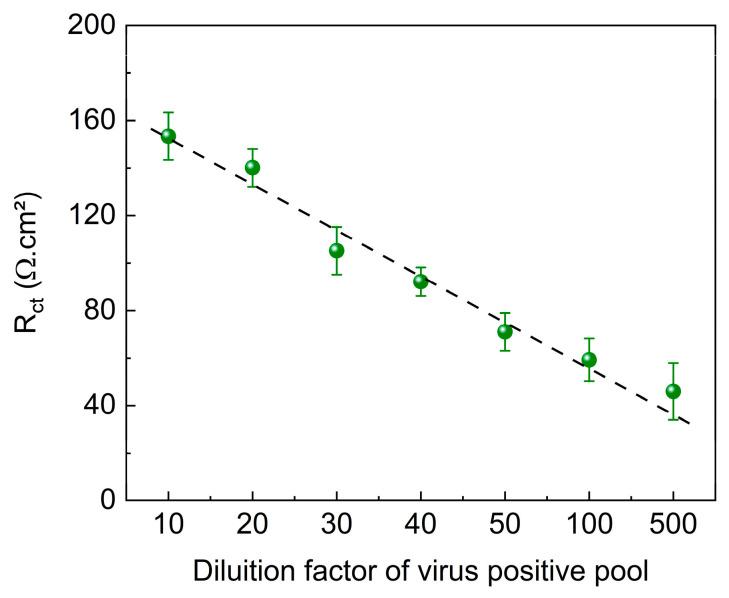
The coronavirus disease (COVID-19) pandemic has created an urgent need for rapid, accurate, and cost-effective diagnostic tools. In this study, an economical electrochemical immunosensor for the rapid diagnosis of COVID-19 was developed and optimized based on charge transfer resistance (Rct) values obtained by electrochemical impedance spectroscopy (EIS) from the interaction between antibodies (anti-SARS-CoV-2) immobilized as a bioreceptor and the virus (SARS-CoV-2). The sensor uses modified pencil graphite electrodes (PGE) coated with poly(4-hydroxybenzoic acid), anti-SARS-CoV-2, and silver nanoparticles. The immobilization of anti-SARS-CoV-2 antibodies was optimized at a concentration of 1:250 for 30 min, followed by blocking the surface with 0.01% bovine serum albumin for 10 min. The optimal conditions for virus detection in clinical samples were a 1:10 dilution with a response time of 20 min. The immunosensor responded linearly in the range of 0.2-2.5 × 10 particles/μL. From the relationship between the obtained signal and the concentration of the analyzed sample, the limit of detection (LOD) and limit of quantification (LOQ) obtained were 1.21 10 and 4.04 10 particles/μL, respectively. The device did not cross-react with other viruses, including Influenza A and B, HIV, and Vaccinia virus. The relative standard deviation (RSD) of the six immunosensors prepared using the shared-pool sample was 3.87. Decreases of 22.3% and 12.4% were observed in the response values of the ten immunosensors stored at 25 °C and 4.0 °C, respectively. The sensor provides timely and accurate results with high sensitivity and specificity, offering a cost-effective alternative to the existing diagnostic methods.
冠状病毒病(COVID-19)大流行迫切需要快速、准确且经济高效的诊断工具。在本研究中,基于电化学阻抗谱(EIS)从固定为生物受体的抗体(抗SARS-CoV-2)与病毒(SARS-CoV-2)之间的相互作用获得的电荷转移电阻(Rct)值,开发并优化了一种用于快速诊断COVID-19的经济型电化学免疫传感器。该传感器使用涂覆有聚(4-羟基苯甲酸)、抗SARS-CoV-2和银纳米颗粒的改性铅笔石墨电极(PGE)。抗SARS-CoV-2抗体的固定在浓度为1:250的条件下优化30分钟,然后用0.01%牛血清白蛋白封闭表面10分钟。临床样本中病毒检测的最佳条件是1:10稀释,响应时间为20分钟。该免疫传感器在0.2 - 2.5×10颗粒/μL范围内呈线性响应。根据获得的信号与分析样品浓度之间的关系,得到的检测限(LOD)和定量限(LOQ)分别为1.21×10和4.04×10颗粒/μL。该装置与其他病毒,包括甲型和乙型流感病毒、HIV和痘苗病毒,无交叉反应。使用共享池样品制备的六个免疫传感器的相对标准偏差(RSD)为3.87。分别在25℃和4.0℃储存的十个免疫传感器的响应值中观察到22.3%和12.4%的下降。该传感器以高灵敏度和特异性提供及时准确的结果,为现有诊断方法提供了一种经济高效的替代方案。


 Zotero 插件