
12周的抗阻训练能否改善2型糖尿病老年患者的肌肉力量、动态平衡和代谢状况?
Can 12-Week Resistance Training Improve Muscle Strength, Dynamic Balance and the Metabolic Profile in Older Adults with Type 2 Diabetes Mellitus?
作者信息
de Seixas Soares André Luiz, Brech Guilherme Carlos, Machado-Lima Adriana, Dos Santos Joselma Rodrigues, D' Andréa Greve Júlia Maria, Grecco Marcus Vinicius, Afonso Mara, Sousa Juliana Cristina, Rodrigues Ariana Tito, Dos Santos Lino Matheus Henrique, Silva Vanderlei Carneiro da, de Souza Carneiro Patricia Nemara Freitas, Evangelista Alexandre Lopes, Davis Catherine L, Castilho Alonso Angelica
机构信息
Graduate Program in Aging Sciences, University Sao Judas Tadeu (USJT), São Paulo CEP 03166-000, SP, Brazil.
Georgia Prevention Institute, Medical College of Georgia, Augusta University, Augusta, GA 30912, USA.
出版信息
Int J Environ Res Public Health. 2025 Jan 28;22(2):184. doi: 10.3390/ijerph22020184.
UNLABELLED
The present study aimed to evaluate the effects of 12-week resistance training (RT) on muscle strength, dynamic balance, glycemic control and the lipid profile.
METHODS
The Laboratory of Movement Studies in the University of São Paulo, Brazil, developed this longitudinal study between 2021 and 2023. It assessed 62 males with type 2 diabetes mellitus pre and post an RT protocol. The participants, who were 69.8 (±3.9) years old, took part in a 12-week twice-weekly RT program. Three sets of eight to twelve repetitions each were executed for eight exercises targeting the large muscle groups. The intensity was set between 7 and 8 out of 10 for perceived effort, according to the Omni Resistance Exercise Scale. All participants were evaluated pre and post in knee extensor and flexor strength by isokinetic dynamometry, handgrip strength by manual dynamometry and dynamic postural balance by a force platform, as well as blood tests to determine the lipid and glycemic profiles. For comparison, paired t or Wilcoxon tests were used at an alpha of 5%.
RESULTS
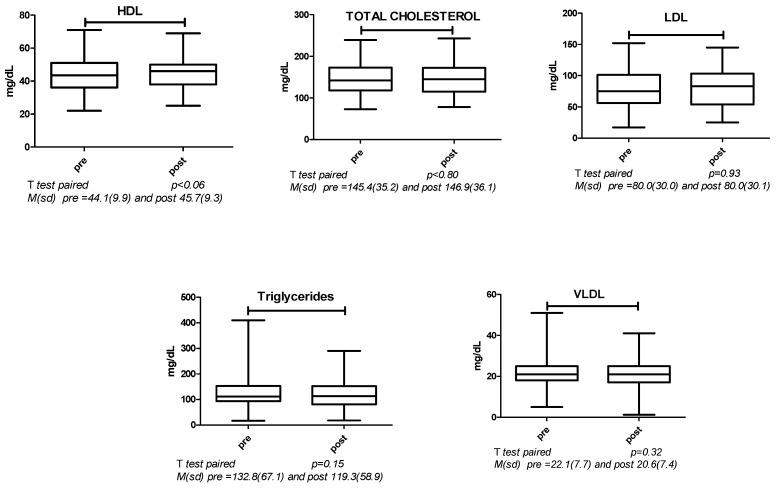
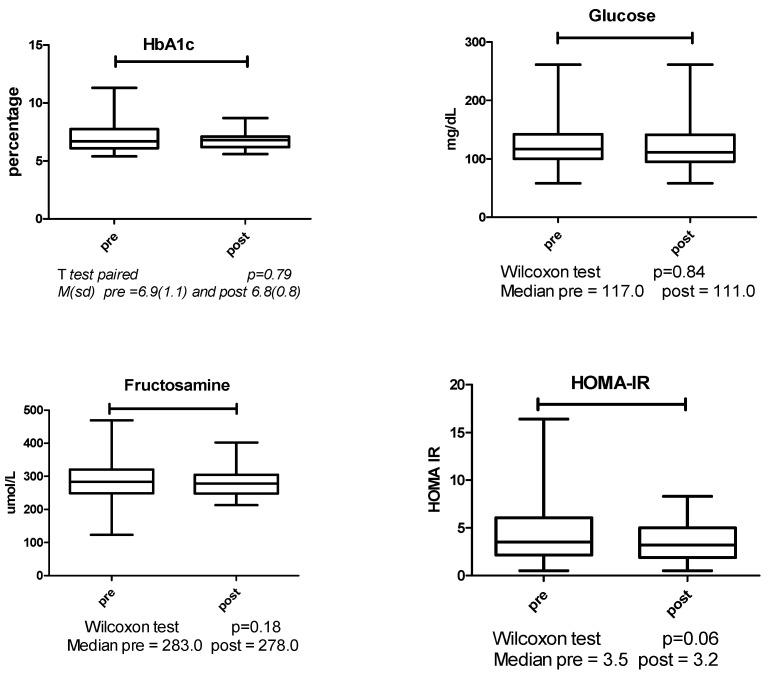
There was an improvement in muscular strength by handgrip restricted to the non-dominant side ( = 0.033) and for the bilateral knee flexors ( < 0.001) and extensors ( < 0.001), as determined by isokinetic dynamometry. There was no improvement in dynamic postural balance, glycemic control or lipid control.
CONCLUSIONS
The 12-week RT promoted improved muscle strength in knee extension and flexion and non-dominant grip pressure but did not affect dynamic balance, glycemic control or the lipid profile.
未标注
本研究旨在评估为期12周的抗阻训练(RT)对肌肉力量、动态平衡、血糖控制和血脂谱的影响。
方法
巴西圣保罗大学运动研究实验室在2021年至2023年开展了这项纵向研究。它评估了62名2型糖尿病男性在进行抗阻训练方案前后的情况。参与者年龄为69.8(±3.9)岁,参加了为期12周、每周两次的抗阻训练计划。针对大肌肉群的八项练习,每项进行三组,每组八至十二次重复。根据全范围抗阻运动量表,感知用力强度设定为10分制中的7至8分。所有参与者在训练前后均通过等速测力法评估膝伸肌和屈肌力量、通过手动测力法评估握力、通过力平台评估动态姿势平衡,以及通过血液检测确定血脂和血糖谱。为进行比较,使用配对t检验或威尔科克森检验,显著性水平为5%。
结果
通过等速测力法测定,仅非优势侧握力( = 0.033)以及双侧膝屈肌( < 0.001)和伸肌( < 0.001)的肌肉力量有所改善。动态姿势平衡、血糖控制或血脂控制没有改善。
结论
为期12周的抗阻训练促进了膝伸肌和屈肌力量以及非优势握力的提高,但未影响动态平衡、血糖控制或血脂谱。
 Zotero 插件