
美国新冠疫情前及疫情期间缺血性卒中住院治疗情况及预后趋势:一项全国住院患者样本研究
Trends in Ischemic Stroke Hospitalization and Outcomes in the United States Pre- and Peri-COVID-19 Pandemic: A National Inpatient Sample Study.
作者信息
Jafarli Alibay, Di Napoli Mario, Kasper Rachel S, Saver Jeffrey L, McCullough Louise D, Salehi-Omran Setareh, Mansouri Behnam, Lioutas Vasileios Arsenios, Ismail Mohammed, Divani Afshin A
机构信息
Department of Neurology, University of Texas, San Antonio, TX 78712, USA.
Neurological Service, Dell'annunziata Hospital, 67039 Sulmona, L'Aquila, Italy.
出版信息
J Clin Med. 2025 Feb 18;14(4):1354. doi: 10.3390/jcm14041354.
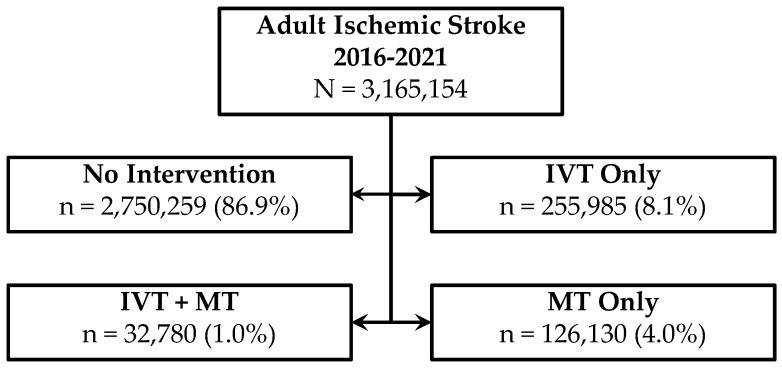
The COVID-19 pandemic impacted healthcare systems globally, disrupting the management and treatment of acute ischemic stroke (AIS). Understanding how AIS admissions, treatments, and outcomes were affected is critical for improving stroke care in future crises. The objective of this work was to assess the COVID-19 pandemic's impact on AIS admissions, treatment patterns, complications, and patient outcomes in the U.S. from 2016 to 2021, focusing on differences between pre-pandemic (2016-2019) and peri-pandemic (2020-2021) periods. This is a retrospective cohort study using the National Inpatient Sample (NIS) database, analyzing weighted discharge records of AIS patients over six years. Data encompass U.S. hospitals, including urban, rural, teaching, and non-teaching facilities. The study included AIS patients aged 18 and older (N = 3,154,154). The cohort's mean age was 70.0 years, with an average hospital stay of 5.1 days and an adjusted mean cost of $16,765. Men comprised 50.5% of the cohort. We analyzed temporal trends in AIS hospitalizations from 2016 to 2021, comparing pre- and peri-COVID-19 periods. The primary outcome was the AIS admissions trend over time, with secondary outcomes including reperfusion therapy utilization, intubation rates, discharge disposition, and complications. Trends in risk factors and NIH Stroke Scale (NIHSS) severity were also evaluated. AIS admissions rose from 507,920 in 2016 to 535,694 in 2021. Age and sex distribution shifted, with a growing proportion of male AIS cases (from 49.8% to 51.4%) and a decrease in mean age from 70.3 to 69.7 years. Although not statistically significant, White patients were the majority (68.0%), though their proportion declined as Black, Hispanic, and Asian/Pacific Islander cases increased. Reperfusion therapy, especially mechanical thrombectomy, rose from 2.2% to 5.6% over the study period. Intubation rates increased from 4.8% pre-COVID-19 to 5.5% peri-COVID, with higher rates among COVID-positive patients. NIHSS severity declined over time, with severe strokes (NIHSS ≥ 16) decreasing from 14.5% in 2017 to 12.6% in 2021. The COVID-19 pandemic brought significant shifts in AIS patterns, with younger, more diverse patients, increased reperfusion therapy use, and rising complication rates. These changes underscore the importance of resilient healthcare strategies and resource allocation to maintain stroke care amid future public health emergencies.
新冠疫情对全球医疗系统产生了影响,扰乱了急性缺血性中风(AIS)的管理和治疗。了解AIS的入院情况、治疗方式和治疗结果如何受到影响,对于改善未来危机中的中风护理至关重要。这项工作的目的是评估2016年至2021年新冠疫情对美国AIS入院情况、治疗模式、并发症及患者治疗结果的影响,重点关注疫情前(2016 - 2019年)和疫情期间(2020 - 2021年)的差异。这是一项回顾性队列研究,使用国家住院样本(NIS)数据库,分析六年内AIS患者的加权出院记录。数据涵盖美国医院,包括城市、农村、教学和非教学机构。该研究纳入了18岁及以上的AIS患者(N = 3,154,154)。队列的平均年龄为70.0岁,平均住院天数为5.1天,调整后的平均费用为16,765美元。男性占队列的50.5%。我们分析了2016年至2021年AIS住院的时间趋势,比较了新冠疫情前和疫情期间。主要结果是AIS入院随时间的趋势,次要结果包括再灌注治疗的使用、插管率、出院处置和并发症。还评估了危险因素和美国国立卫生研究院卒中量表(NIHSS)严重程度的趋势。AIS入院人数从2016年的507,920人增加到2021年的535,694人。年龄和性别分布发生了变化,男性AIS病例的比例增加(从49.8%增至51.4%),平均年龄从70.3岁降至69.7岁。虽然无统计学意义,但白人患者占多数(68.0%),不过随着黑人、西班牙裔和亚太岛民病例的增加,其比例有所下降。在研究期间,再灌注治疗,尤其是机械取栓术,从2.2%升至5.6%。插管率从新冠疫情前的4.8%升至疫情期间的5.5%,新冠阳性患者的插管率更高。随着时间推移,NIHSS严重程度下降,重度中风(NIHSS≥16)从2017年的14.5%降至2021年的12.6%。新冠疫情使AIS模式发生了重大变化,患者更年轻、更多样化,再灌注治疗的使用增加,并发症发生率上升。这些变化凸显了在未来公共卫生紧急情况中保持中风护理的弹性医疗策略和资源分配的重要性。


 Zotero 插件