
芳烃受体参与猫冠状病毒感染的体外评估
In Vitro Evaluation of Aryl Hydrocarbon Receptor Involvement in Feline Coronavirus Infection.
作者信息
Del Sorbo Luca, Giugliano Rosa, Cerracchio Claudia, Iovane Valentina, Salvatore Maria Michela, Serra Francesco, Amoroso Maria Grazia, Pellegrini Francesco, Levante Martina, Capozza Paolo, Diakoudi Georgia, Galdiero Massimiliano, Fusco Giovanna, Pratelli Annamaria, Andolfi Anna, Fiorito Filomena
机构信息
Department of Veterinary Medicine and Animal Production, University of Naples Federico II, 80137 Naples, Italy.
Department of Experimental Medicine, University of Campania Luigi Vanvitelli, 80138 Naples, Italy.
出版信息
Viruses. 2025 Feb 6;17(2):227. doi: 10.3390/v17020227.
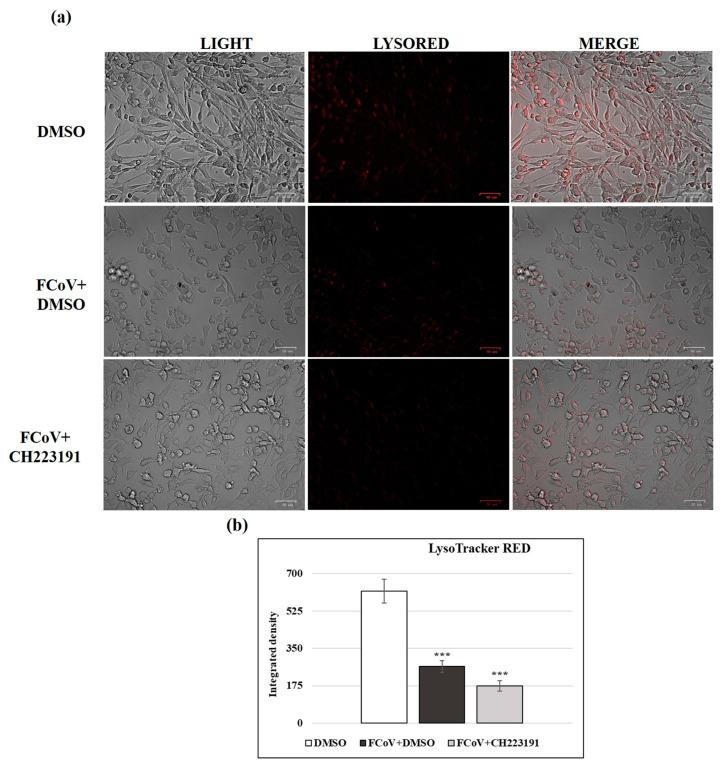
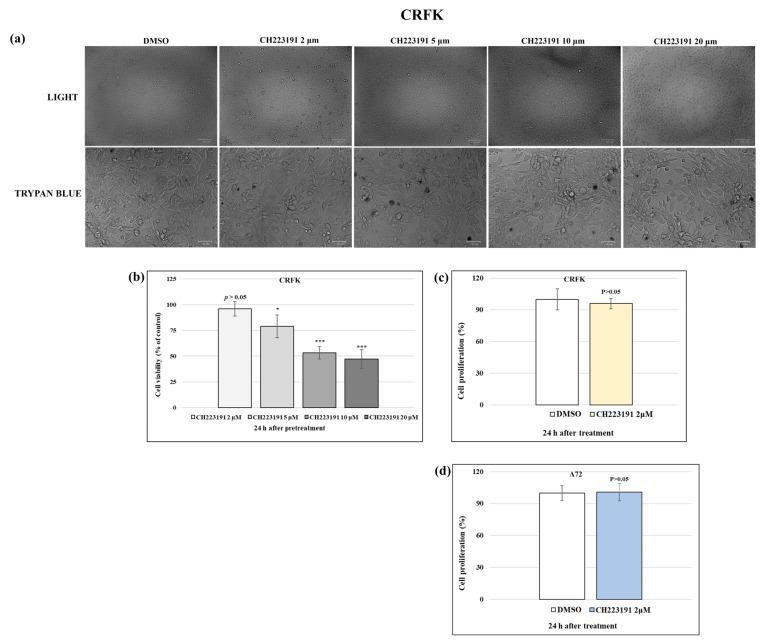
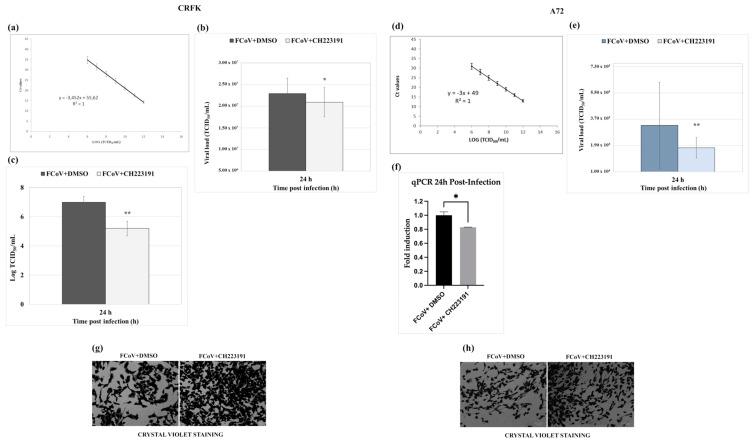
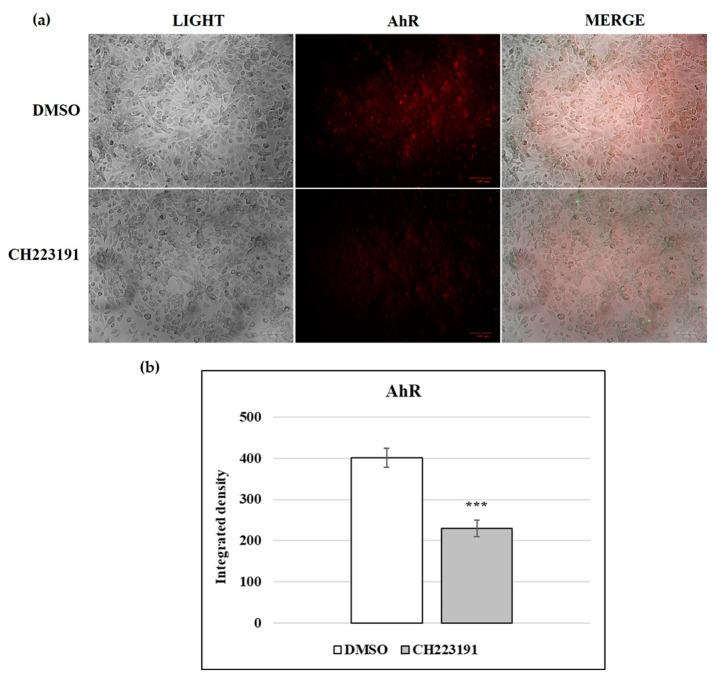
Feline coronavirus (FCoV) is an alphacoronavirus (αCoV) that causes moderate or chronic asymptomatic infection in cats. However, in a single infected cat, FCoV can modify its cellular tropism by acquiring the ability to infect macrophages, resulting in the development of feline infectious peritonitis (FIP). In this context, to restrain the impact of FCoV infection, scientific research has focused attention on the development of antiviral therapies involving novel mechanisms of action. Recent studies have demonstrated that aryl hydrocarbon receptor (AhR) signaling regulates the host response to different human and animal CoVs. Hence, the mechanism of action of AhR was evaluated upon FCoV infection in Crandell Feline Kidney (CRFK) and in canine fibrosarcoma (A72) cells. Following infection with feline enteric CoV (FECV), strain "München", a significant activation of AhR and of its target CYP1A1, was observed. The selective AhR antagonist CH223191 provoked a reduction in FCoV replication and in the levels of viral nucleocapsid protein (NP). Furthermore, the effect of the AhR inhibitor on the acidity of lysosomes in infected cells was observed. Our findings indicate that FCoV acts on viral replication that upregulates AhR. CH223191 repressed virus yield through the inhibition of AhR. In this respect, for counteracting FCoV, AhR represents a new target useful for identifying antiviral drugs. Moreover, in the presence of CH223191, the alkalinization of lysosomes in FCoV-infected CRFK cells was detected, outlining their involvement in antiviral activity.
猫冠状病毒(FCoV)是一种甲型冠状病毒(αCoV),可在猫身上引起中度或慢性无症状感染。然而,在一只受感染的猫中,FCoV可通过获得感染巨噬细胞的能力来改变其细胞嗜性,从而导致猫传染性腹膜炎(FIP)的发生。在这种情况下,为了抑制FCoV感染的影响,科学研究将注意力集中在开发具有新作用机制的抗病毒疗法上。最近的研究表明,芳烃受体(AhR)信号传导调节宿主对不同人类和动物冠状病毒的反应。因此,在克兰德尔猫肾(CRFK)细胞和犬纤维肉瘤(A72)细胞中评估了FCoV感染时AhR的作用机制。在用猫肠道冠状病毒(FECV)“慕尼黑”株感染后,观察到AhR及其靶标CYP1A1的显著激活。选择性AhR拮抗剂CH223191可使FCoV复制及病毒核衣壳蛋白(NP)水平降低。此外,还观察到AhR抑制剂对感染细胞中溶酶体酸度的影响。我们的研究结果表明,FCoV作用于上调AhR的病毒复制。CH223191通过抑制AhR来抑制病毒产量。在这方面,为了对抗FCoV,AhR是一个可用于鉴定抗病毒药物的新靶点。此外,在存在CH223191的情况下,检测到FCoV感染的CRFK细胞中溶酶体碱化,表明它们参与了抗病毒活性。




 Zotero 插件