
将白细胞介素-2编码环状RNA与免疫调节脂质纳米颗粒协同作用以增强癌症免疫治疗。
Coordinating interleukin-2 encoding circRNA with immunomodulatory lipid nanoparticles to potentiate cancer immunotherapy.
作者信息
Yang Kai, Bai Bing, Li Xiaomei, Rou Wei, Huang Cheng, Lu Meixin, Zhang Xueyan, Dong Chunbo, Qi Shaolong, Liu Zhida, Yu Guocan
机构信息
Ministry of Education Key Laboratory of Bioorganic Phosphorus Chemistry & Chemical Biology, Department of Chemistry, Tsinghua University, Beijing 100084, P. R. China.
Shanxi Academy of Advanced Research and Innovation, Taiyuan 030032, P. R. China.
出版信息
Sci Adv. 2025 Feb 28;11(9):eadn7256. doi: 10.1126/sciadv.adn7256. Epub 2025 Feb 26.
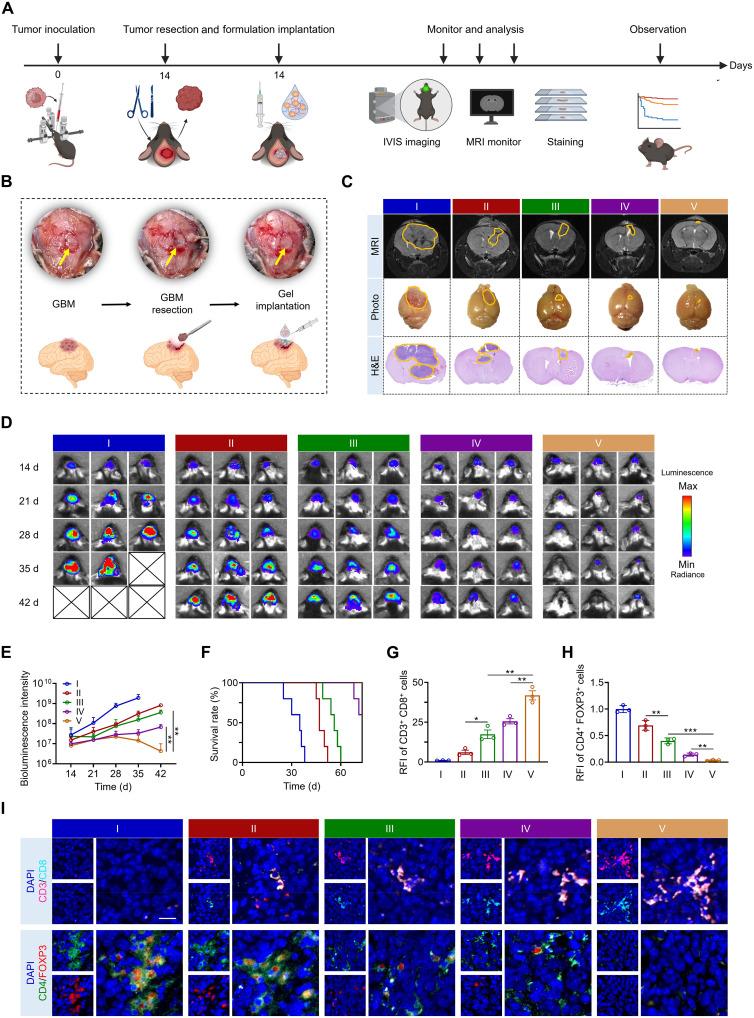
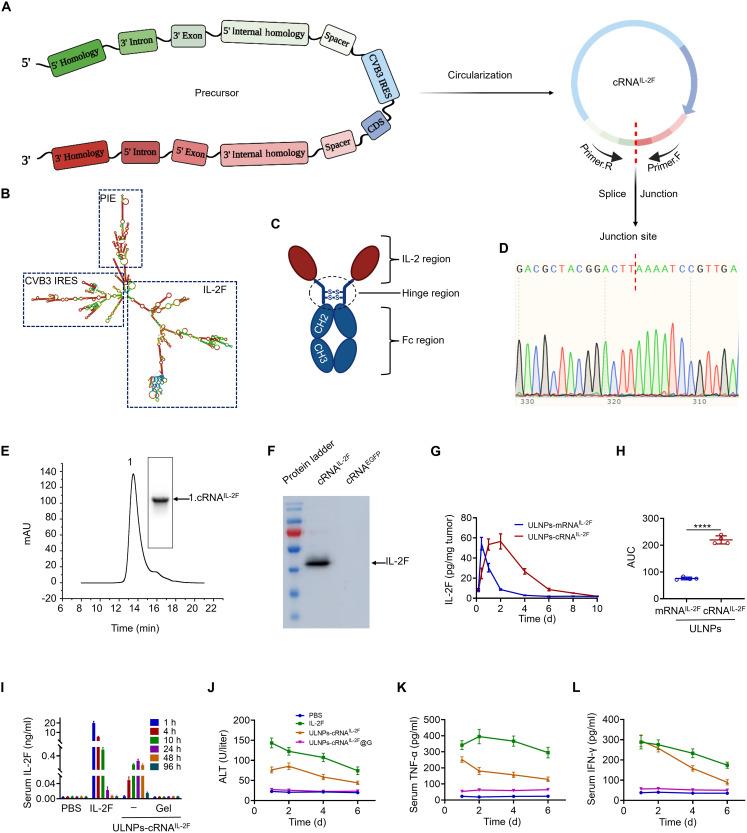
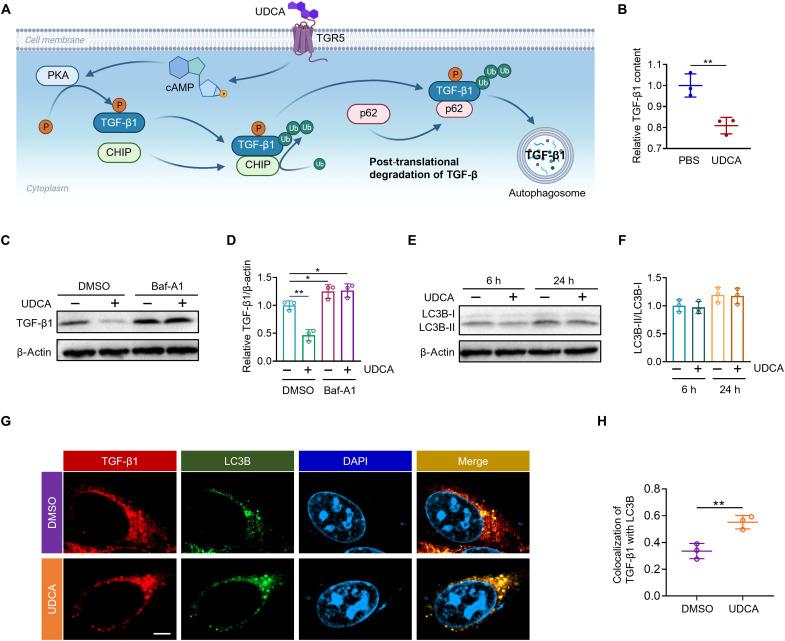
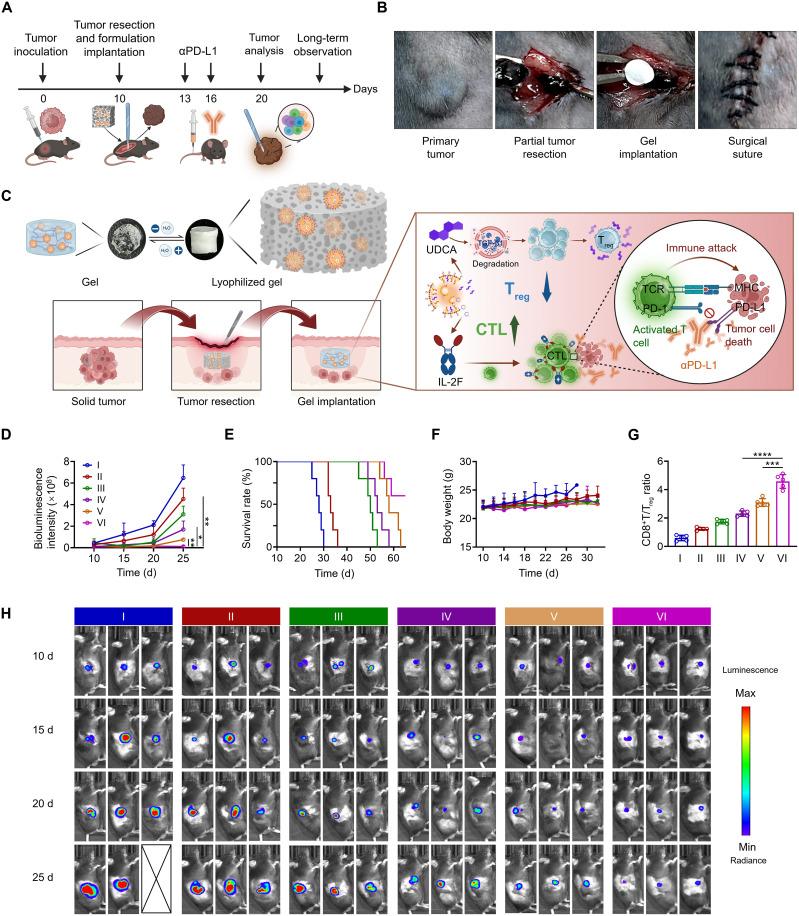
Interleukin-2 (IL-2) is a cytokine vital for CD8 T cell activation and proliferation, holding great potential for cancer immunotherapy. Nevertheless, inherent shortcomings of short half-life, activation of regulatory T (T) cells, and systemic toxicity limit its application. To tackle these, a circular RNA (cRNA)-based IL-2 therapy using immunomodulatory lipid nanoparticles [ursodeoxycholic acid lipid nanoparticles (ULNPs)] and sustained-release hydrogel was developed. Fusing fragment crystallizable (Fc) region into IL-2 and encoding this fusion protein IL-2-Fc (IL-2F) in cRNA (cRNA) greatly extend the half-life. ULNPs containing ursodeoxycholic acid, a transforming growth factor-β1 inhibitor, suppress the function of T cells. Consequently, the ULNPs-cRNA formulation promotes CD8 T cells and suppresses T cells, increasing the CD8/T ratio for effective immunotherapy. Furthermore, a locally administrated hydrogel loading with ULNPs-cRNA sustains the release, enhancing efficacy and reducing toxicity. This innovative approach achieves remarkable tumor inhibition in both melanoma and orthotopic glioma models with or without surgery, offering a promising future for cancer immunotherapy.
白细胞介素-2(IL-2)是一种对CD8 T细胞活化和增殖至关重要的细胞因子,在癌症免疫治疗中具有巨大潜力。然而,其半衰期短、激活调节性T(Treg)细胞以及全身毒性等固有缺点限制了其应用。为了解决这些问题,研发了一种基于环状RNA(circRNA)的IL-2疗法,该疗法使用免疫调节脂质纳米颗粒[熊去氧胆酸脂质纳米颗粒(ULNPs)]和缓释水凝胶。将可结晶片段(Fc)区域融合到IL-2中,并在circRNA(circIL-2F)中编码这种融合蛋白IL-2-Fc(IL-2F),可大大延长半衰期。含有熊去氧胆酸(一种转化生长因子-β1抑制剂)的ULNPs可抑制Treg细胞的功能。因此,ULNPs-circIL-2F制剂可促进CD8 T细胞并抑制Treg细胞,提高CD8/Treg比率以实现有效的免疫治疗。此外,负载ULNPs-circIL-2F的局部给药水凝胶可持续释放,增强疗效并降低毒性。这种创新方法在有或没有手术的黑色素瘤和原位胶质瘤模型中均实现了显著的肿瘤抑制,为癌症免疫治疗提供了广阔的前景。



 Zotero 插件