
探索血浆蛋白质组:鉴定连接衰老、内环境稳定和器官功能的枢纽蛋白。
Exploring the Plasma Proteome: Identifying Hub Proteins linking Aging, Homeostasis, and Organ Function.
作者信息
Jiao Juan, Gao Fei, Zhao Hongye, Jiang Mingjun, Zhou Yan, Liu Dizhi, Fang Sihang, Gao Danni, Wang Zhaoping, Yang Ze, Yuan Huiping
机构信息
Department of Clinical Laboratory, the Seventh Medical Center, Chinese PLA General Hospital, Beijing 100700, P.R. China.
Department of Research & Development, Beijing IPE Center for Clinical Laboratory CO, Beijing 100176, P.R. China.
出版信息
Int J Med Sci. 2025 Feb 10;22(5):1109-1123. doi: 10.7150/ijms.107750. eCollection 2025.
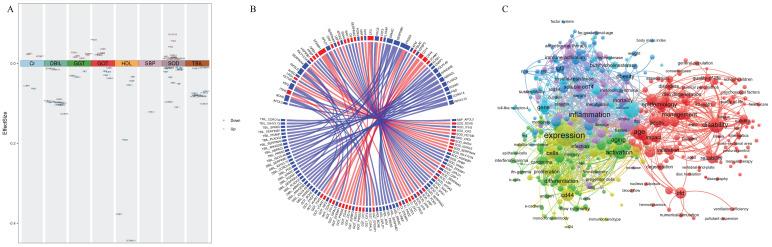
As effectors of interactions between genes and the environment, plasma proteins can monitor homeostasis and reflect the aging state of an organism. However, biomarkers of aging that are associated with homeostasis are still unclear. This study investigates the phenotype-related plasma proteome profiles of healthy individuals and to identify proteins that are specifically related to aging and physiological indices and their expression patterns across the lifespan. From September 2020 to March 2021, 71 participants aged over 20 to 100 years were enrolled in this cross-sectional study. Data were analyzed from April 2021 to December 2023. The plasma proteome was analyzed to identify proteins that are specifically related to aging and their expression patterns across the lifespan. Then, hub proteins were screened through correlation of aging proteins with physiological and biochemical phenotypes. Based on levels of plasma proteins, physiological indices are associated with age. Additionally, these differences in protein expression correlate with age and physiological indices. Finally, we identified 20 hub proteins that correlate with both physiological indices and age, and these proteins are involved in oxidative stress, inflammation and metabolism. Bibliometric analysis confirmed that 8 hub proteins (CD44, CD14, IGF2, CFD, LBP, IGFBP3, EFEMP1, and AHSG) associated with age affect organ function by mediating homeostasis. Plasma proteins associated with both age and physiological indices are involved in oxidative stress, inflammation, and metabolism. This is the first investigation to link aging and homeostasis based on plasma proteins.
作为基因与环境相互作用的效应器,血浆蛋白可以监测体内稳态并反映生物体的衰老状态。然而,与体内稳态相关的衰老生物标志物仍不明确。本研究调查了健康个体的表型相关血浆蛋白质组谱,以鉴定与衰老、生理指标及其在整个生命周期中的表达模式特异性相关的蛋白质。2020年9月至2021年3月,71名年龄在20至100岁之间的参与者被纳入这项横断面研究。数据于2021年4月至2023年12月进行分析。分析血浆蛋白质组以鉴定与衰老特异性相关的蛋白质及其在整个生命周期中的表达模式。然后,通过衰老蛋白与生理和生化表型的相关性筛选枢纽蛋白。基于血浆蛋白水平,生理指标与年龄相关。此外,这些蛋白质表达差异与年龄和生理指标相关。最后,我们鉴定出20种与生理指标和年龄均相关的枢纽蛋白,这些蛋白质参与氧化应激、炎症和代谢。文献计量分析证实,8种与年龄相关的枢纽蛋白(CD44、CD14、IGF2、CFD、LBP、IGFBP3、EFEMP1和AHSG)通过介导体内稳态影响器官功能。与年龄和生理指标均相关的血浆蛋白参与氧化应激、炎症和代谢。这是首次基于血浆蛋白将衰老与体内稳态联系起来的研究。


 Zotero 插件