
受共晶多晶型启发的药物纳米组装体用于肺内皮靶向和肺动脉高压治疗
Cocrystal pleomorphism-inspired drug nanoassembly for pulmonary-endothelium targeting and pulmonary hypertension treatment.
作者信息
Zoulikha Makhloufi, Zou Jiahui, Yang Pei, Wu Jun, Wu Wei, Hao Kun, He Wei
机构信息
School of Pharmacy, China Pharmaceutical University, Nanjing 2111198, China.
School of Science, China Pharmaceutical University, Nanjing 2111198, China.
出版信息
Acta Pharm Sin B. 2025 Jan;15(1):557-570. doi: 10.1016/j.apsb.2024.11.008. Epub 2024 Nov 18.
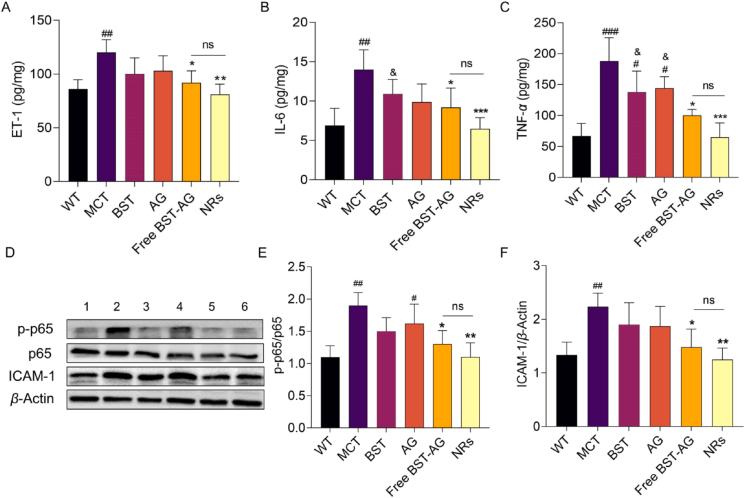
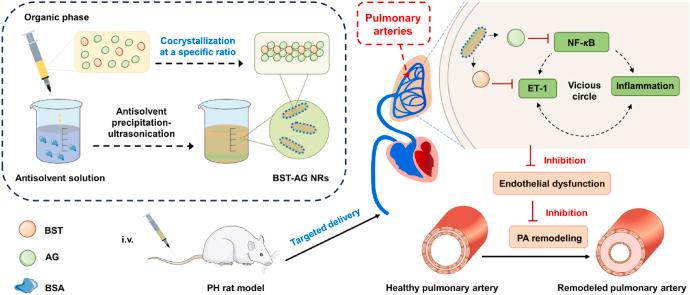
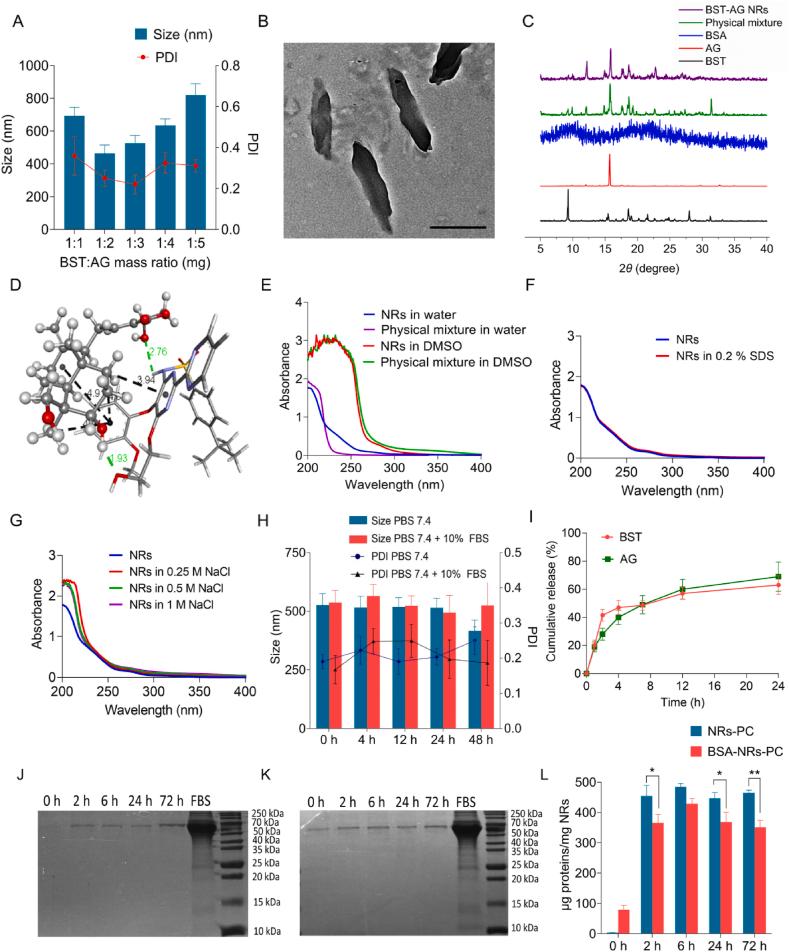
Endothelial dysfunction is one of the early triggers of vascular remodeling during pulmonary hypertension (PH) with complex predisposing mechanisms, mainly an unbalanced generation of vasoactive factors, increased expression of growth factors, prothrombotic elements, and inflammatory markers. Conventional treatment regimens are restricted to a single therapeutic pathway, which usually leads to limited clinical outcomes. Combination therapies targeting multiple cells and several signaling pathways are increasingly adopted in PH treatment. Herein, inspired by the cocrystal pleomorphism theory, we prepared rod-shaped nanococrystals of the endothelin-1 (ET-1) receptor antagonist (bosentan, BST) and the anti-inflammatory drug (andrographolide, AG) for targeting the pulmonary endothelium and alleviating PH. The 525 nm-sized co-delivery system displayed a rod-like morphology, preferentially accumulated in the pulmonary endothelium and alleviated pulmonary artery (PA) remodeling. A three-week treatment with the preparation significantly alleviated the monocrotaline (MCT)- or Sugen 5416/hypoxia (SuHx)-induced PH by reducing the pulmonary artery pressure, increasing the survival rate, improving the hemodynamics, and inhibiting vascular remodeling. Mechanistically, the nanococrystals collaboratively repaired endothelial dysfunction by suppressing the pathways of ET-1/NF-B/ICAM-1/TNF-/IL-6. In conclusion, the cocrystal-based strategy offers a promising approach for constructing co-delivery systems. The developed rod-shaped nanococrystals effectively target the pulmonary endothelium and relieve experimental PH.
内皮功能障碍是肺动脉高压(PH)期间血管重塑的早期触发因素之一,其诱发机制复杂,主要是血管活性因子生成失衡、生长因子、促血栓形成因子和炎症标志物的表达增加。传统治疗方案局限于单一治疗途径,通常导致临床疗效有限。针对多种细胞和多种信号通路的联合疗法在PH治疗中越来越多地被采用。在此,受共晶多晶型理论的启发,我们制备了内皮素-1(ET-1)受体拮抗剂(波生坦,BST)和抗炎药物(穿心莲内酯,AG)的棒状纳米共晶,用于靶向肺内皮并缓解PH。525nm大小的共递送系统呈现棒状形态,优先在肺内皮中积累并减轻肺动脉(PA)重塑。用该制剂进行为期三周的治疗,通过降低肺动脉压力、提高生存率、改善血流动力学和抑制血管重塑,显著缓解了野百合碱(MCT)或Sugen 5416/低氧(SuHx)诱导的PH。机制上,纳米共晶通过抑制ET-1/NF-κB/ICAM-1/TNF-α/IL-6途径协同修复内皮功能障碍。总之,基于共晶的策略为构建共递送系统提供了一种有前景的方法。所开发的棒状纳米共晶有效地靶向肺内皮并缓解实验性PH。



 Zotero 插件