
炎症与癌症中组蛋白H3K27甲基化的调控
Regulation of histone H3K27 methylation in inflammation and cancer.
作者信息
Ma Jing, Zhang Yalin, Li Jingyuan, Dang Yanqi, Hu Dan
机构信息
Seventh People's Hospital of Shanghai University of Traditional Chinese Medicine, No. 358 Datong Road, Pudong New Area, Shanghai, 200137, China.
Institute of Digestive Diseases, Longhua Hospital, China-Canada Center of Research for Digestive Diseases (ccCRDD), Shanghai University of Traditional Chinese Medicine, Shanghai, 200032, China.
出版信息
Mol Biomed. 2025 Mar 5;6(1):14. doi: 10.1186/s43556-025-00254-x.
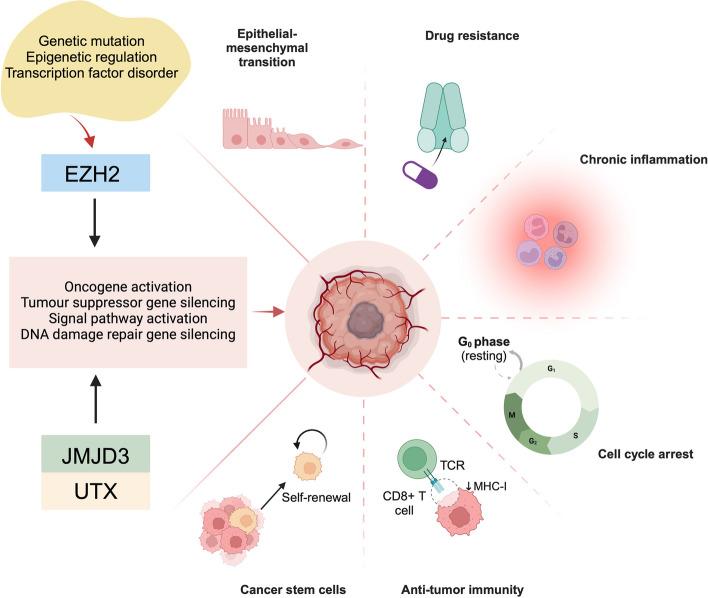
Inflammation is a multifaceted defense mechanism of the immune system against infection. Chronic inflammation is intricately linked to all stages of tumorigenesis and is therefore associated with an elevated risk of developing serious cancers. Epigenetic mechanisms have the capacity to trigger inflammation as well as facilitate tumor development and transformation within an inflammatory context. They achieve this by dynamically modulating the expression of both pro-inflammatory and anti-inflammatory cytokines, which in turn sustains chronic inflammation. The aberrant epigenetic landscape reconfigures the transcriptional programs of inflammatory and oncogenic genes. This reconfiguration is pivotal in dictating the biological functions of both tumor cells and immune cells. Aberrant histone H3 lysine 27 site (H3K27) methylation has been shown to be involved in biological behaviors such as inflammation development, tumor progression, and immune response. The establishment and maintenance of this repressive epigenetic mark is dependent on the involvement of the responsible histone modifying enzymes enhancer of zeste homologue 2 (EZH2), jumonji domain containing 3 (JMJD3) and ubiquitously transcribed tetratricopeptide repeat gene X (UTX) as well as multiple cofactors. In addition, specific pharmacological agents have been shown to modulate H3K27 methylation levels, thereby modulating inflammation and carcinogenesis. This review comprehensively summarises the current characteristics and clinical significance of epigenetic regulation of H3K27 methylation in the context of inflammatory response and tumor progression.
炎症是免疫系统针对感染的一种多方面的防御机制。慢性炎症与肿瘤发生的各个阶段都有着复杂的联系,因此与罹患严重癌症的风险升高相关。表观遗传机制既能引发炎症,又能在炎症环境中促进肿瘤的发展和转变。它们通过动态调节促炎细胞因子和抗炎细胞因子的表达来实现这一点,进而维持慢性炎症。异常的表观遗传格局会重新配置炎症基因和致癌基因的转录程序。这种重新配置对于决定肿瘤细胞和免疫细胞的生物学功能至关重要。已表明异常的组蛋白H3赖氨酸27位点(H3K27)甲基化参与诸如炎症发展、肿瘤进展和免疫反应等生物学行为。这种抑制性表观遗传标记的建立和维持依赖于负责的组蛋白修饰酶——增强子结合蛋白2(EZH2)、含Jumonji结构域蛋白3(JMJD3)和泛转录四肽重复序列基因X(UTX)以及多种辅因子的参与。此外,已表明特定的药物制剂可调节H3K27甲基化水平,从而调节炎症和致癌作用。本综述全面总结了在炎症反应和肿瘤进展背景下H3K27甲基化表观遗传调控的当前特征和临床意义。



 Zotero 插件