
p53可增强DNA修复,并抑制衰老细胞中的细胞质染色质片段及炎症反应。
p53 enhances DNA repair and suppresses cytoplasmic chromatin fragments and inflammation in senescent cells.
作者信息
Miller Karl N, Li Brightany, Pierce-Hoffman Hannah R, Patel Shreeya, Lei Xue, Rajesh Adarsh, Teneche Marcos G, Havas Aaron P, Gandhi Armin, Macip Carolina Cano, Lyu Jun, Victorelli Stella G, Woo Seung-Hwa, Lagnado Anthony B, LaPorta Michael A, Liu Tianhui, Dasgupta Nirmalya, Li Sha, Davis Andrew, Korotkov Anatoly, Hultenius Erik, Gao Zichen, Altman Yoav, Porritt Rebecca A, Garcia Guillermina, Mogler Carolin, Seluanov Andrei, Gorbunova Vera, Kaech Susan M, Tian Xiao, Dou Zhixun, Chen Chongyi, Passos João F, Adams Peter D
机构信息
Cancer Genome and Epigenetics Program; Sanford Burnham Prebys MDI, La Jolla, CA, USA.
Laboratory of Biochemistry and Molecular Biology; National Cancer Institute; National Institutes of Health, Bethesda, MD, USA.
出版信息
Nat Commun. 2025 Mar 5;16(1):2229. doi: 10.1038/s41467-025-57229-3.
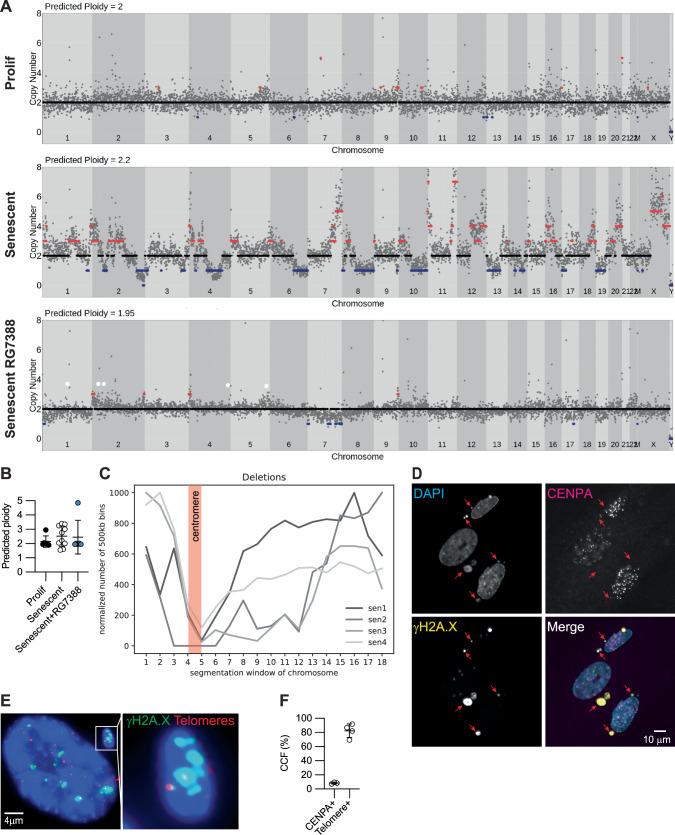
Genomic instability and inflammation are distinct hallmarks of aging, but the connection between them is poorly understood. Here we report a mechanism directly linking genomic instability and inflammation in senescent cells through a mitochondria-regulated molecular circuit involving p53 and cytoplasmic chromatin fragments (CCF) that are enriched for DNA damage signaling marker γH2A.X. We show that p53 suppresses CCF accumulation and its downstream inflammatory phenotype. p53 activation suppresses CCF formation linked to enhanced DNA repair and genome integrity. Activation of p53 in aged mice by pharmacological inhibition of MDM2 reverses transcriptomic signatures of aging and age-associated accumulation of monocytes and macrophages in liver. Mitochondrial ablation in senescent cells suppresses CCF formation and activates p53 in an ATM-dependent manner, suggesting that mitochondria-dependent formation of γH2A.X + CCF dampens nuclear DNA damage signaling and p53 activity. These data provide evidence for a mitochondria-regulated p53 signaling circuit in senescent cells that controls DNA repair, genome integrity, and senescence- and age-associated inflammation, with relevance to therapeutic targeting of age-associated disease.
基因组不稳定和炎症是衰老的显著特征,但它们之间的联系却鲜为人知。在此,我们报告一种机制,该机制通过涉及p53和富含DNA损伤信号标记γH2A.X的细胞质染色质片段(CCF)的线粒体调节分子回路,将衰老细胞中的基因组不稳定与炎症直接联系起来。我们发现p53抑制CCF积累及其下游炎症表型。p53激活抑制与增强的DNA修复和基因组完整性相关的CCF形成。通过药物抑制MDM2激活老年小鼠体内的p53,可逆转衰老的转录组特征以及肝脏中单核细胞和巨噬细胞与年龄相关的积累。衰老细胞中的线粒体消融以依赖ATM的方式抑制CCF形成并激活p53,这表明γH2A.X + CCF的线粒体依赖性形成会减弱核DNA损伤信号传导和p53活性。这些数据为衰老细胞中的线粒体调节p53信号回路提供了证据,该回路控制DNA修复、基因组完整性以及与衰老和年龄相关的炎症,与年龄相关疾病的治疗靶点相关。



 Zotero 插件