
慢性脑积水大鼠模型中脑脊液循环和脑淋巴引流受损
Impaired cerebrospinal fluid circulation and cerebral lymphatic drainage in a rat model of chronic hydrocephalus.
作者信息
Back Dong Bin, Choi Bo-Ryoung, Kwon Kyoung Ja, Choi Dong-Hee, Shin Chan Young, Lee Jongmin, Kim Hahn Young
机构信息
Department of Neurology, Research Institute of Medical Science, Konkuk University School of Medicine, Seoul, Republic of Korea.
Department of Medicine, Research Institute of Medical Science, Konkuk University School of Medicine, Seoul, Republic of Korea.
出版信息
Front Mol Neurosci. 2025 Feb 19;18:1516265. doi: 10.3389/fnmol.2025.1516265. eCollection 2025.
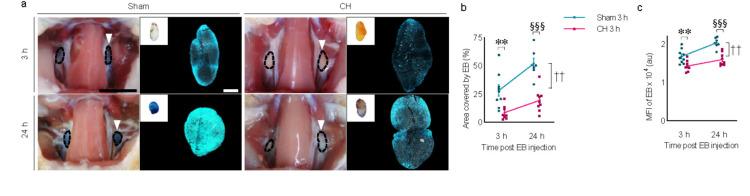
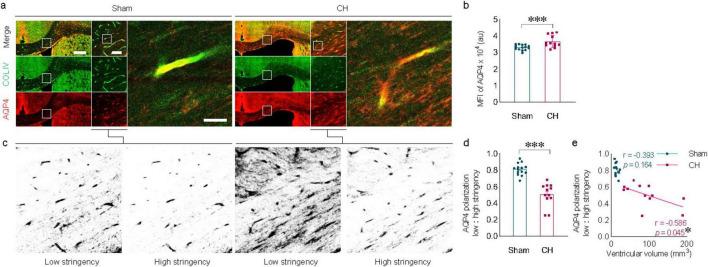
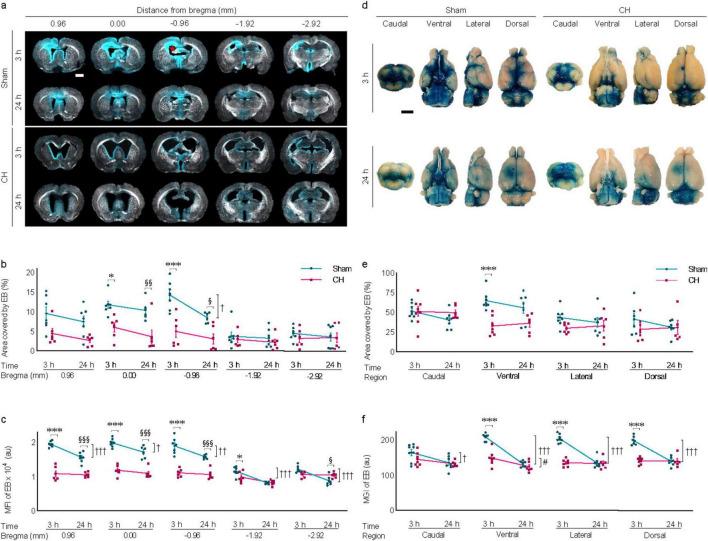
The cerebrospinal fluid (CSF) not only protects the brain but also maintains homeostasis by removing metabolic waste produced by brain activity. This study hypothesizes that chronic CSF circulatory dysfunction, such as chronic hydrocephalus or normal pressure hydrocephalus (NPH), may be a critical condition in neurodegenerative diseases associated with metabolic waste accumulation. To investigate the CSF circulation and cerebral lymphatic drainage in a rat model of chronic hydrocephalus induced by kaolin injection, we performed time-dependent evaluations of intraparenchymal injection of tracers as well as intraventricular injection of Evans blue. The study systemically evaluated the dysfunction of CSF circulation and lymphatic drainage in the brain from various perspectives, including the glymphatic system, transependymal CSF flow, subarachnoid CSF flow, meningeal lymphatic drainage, and peripheral lymphatic drainage to deep cervical lymph nodes. The results indicated delayed CSF circulation, including glymphatic system, and cerebral lymphatic drainage in the kaolin-induced chronic hydrocephalus model. Based on these findings, our research indicated that dysfunction of CSF circulation, as observed in conditions such as chronic hydrocephalus or NPH, may act as an initiating or exacerbating factor in neurodegenerative diseases. This can lead to the accumulation of metabolic waste, as seen in Alzheimer's disease. Our research can help identify risk factors and provide insight into the underlying pathophysiology of neurodegenerative diseases, which may lead to the development of novel therapeutic strategies.
脑脊液(CSF)不仅能保护大脑,还能通过清除大脑活动产生的代谢废物来维持体内平衡。本研究假设,慢性脑脊液循环功能障碍,如慢性脑积水或正常压力脑积水(NPH),可能是与代谢废物积累相关的神经退行性疾病的关键病症。为了研究高岭土注射诱导的慢性脑积水大鼠模型中的脑脊液循环和脑淋巴引流,我们对脑实质内注射示踪剂以及脑室内注射伊文思蓝进行了时间依赖性评估。该研究从多个角度系统地评估了大脑中脑脊液循环和淋巴引流的功能障碍,包括类淋巴系统、经室管膜脑脊液流动、蛛网膜下腔脑脊液流动、脑膜淋巴引流以及至颈深淋巴结的外周淋巴引流。结果表明,在高岭土诱导的慢性脑积水模型中,包括类淋巴系统在内的脑脊液循环和脑淋巴引流均延迟。基于这些发现,我们的研究表明,在慢性脑积水或NPH等情况下观察到的脑脊液循环功能障碍,可能是神经退行性疾病的起始或加剧因素。这会导致代谢废物的积累,如在阿尔茨海默病中所见。我们的研究有助于识别风险因素,并深入了解神经退行性疾病的潜在病理生理学,这可能会导致新治疗策略的开发。





 Zotero 插件