
室管膜细胞:在中枢神经系统感染中的作用和治疗应用。
Ependymal cells: roles in central nervous system infections and therapeutic application.
机构信息
Department of Pulmonary and Critical Care Medicine, Shanghai Public Health Clinical Center, Fudan University, 2901 Cao Lang Road, Jinshan District, Shanghai, China.
Shanghai Institute of Infectious Disease and Biosecurity, 130 Dong An Road, Xuhui District, Shanghai, China.
出版信息
J Neuroinflammation. 2024 Oct 9;21(1):255. doi: 10.1186/s12974-024-03240-2.
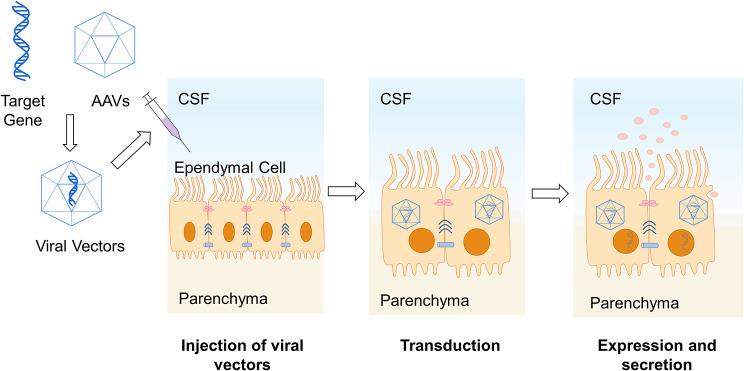
Ependymal cells are arranged along the inner surfaces of the ventricles and the central canal of the spinal cord, providing anatomical, physiological and immunological barriers that maintain cerebrospinal fluid (CSF) homeostasis. Based on this, studies have found that alterations in gene expression, cell junctions, cytokine secretion and metabolic disturbances can lead to dysfunction of ependymal cells, thereby participating in the onset and progression of central nervous system (CNS) infections. Additionally, ependymal cells can exhibit proliferative and regenerative potential as well as secretory functions during CNS injury, contributing to neuroprotection and post-injury recovery. Currently, studies on ependymal cell primarily focus on the basic investigations of their morphology, function and gene expression; however, there is a notable lack of clinical translational studies examining the molecular mechanisms by which ependymal cells are involved in disease onset and progression. This limits our understanding of ependymal cells in CNS infections and the development of therapeutic applications. Therefore, this review will discuss the molecular mechanism underlying the involvement of ependymal cells in CNS infections, and explore their potential for application in clinical treatment modalities.
室管膜细胞排列在脑室和脊髓中央管的内表面,提供解剖学、生理学和免疫学屏障,以维持脑脊液(CSF)的内环境稳定。基于这一点,研究发现基因表达、细胞连接、细胞因子分泌和代谢紊乱的改变可导致室管膜细胞功能障碍,从而参与中枢神经系统(CNS)感染的发病和进展。此外,在中枢神经系统损伤时,室管膜细胞表现出增殖和再生潜能以及分泌功能,有助于神经保护和损伤后恢复。目前,对室管膜细胞的研究主要集中在其形态、功能和基因表达的基础研究上;然而,在探讨室管膜细胞参与疾病发病和进展的分子机制方面,临床转化研究明显缺乏。这限制了我们对中枢神经系统感染中室管膜细胞的理解,也限制了治疗应用的发展。因此,本综述将讨论室管膜细胞参与中枢神经系统感染的分子机制,并探讨其在临床治疗方法中的应用潜力。


 Zotero 插件