
变应性鼻炎中鼻上皮细胞与调节性T细胞通过CCL1/CCR8对变应原产生反应的相互作用。
Interaction between nasal epithelial cells and Tregs in allergic rhinitis responses to allergen via CCL1/CCR8.
作者信息
Sha Jichao, Yang Maolin, Lei Yashu, Sun Liwei, Meng Cuida, Zhu Dongdong
机构信息
Department of Otorhinolaryngology Head and Neck Surgery, China-Japan Union Hospital of Jilin University, Changchun, China.
出版信息
Front Immunol. 2025 Feb 20;16:1526081. doi: 10.3389/fimmu.2025.1526081. eCollection 2025.
BACKGROUND
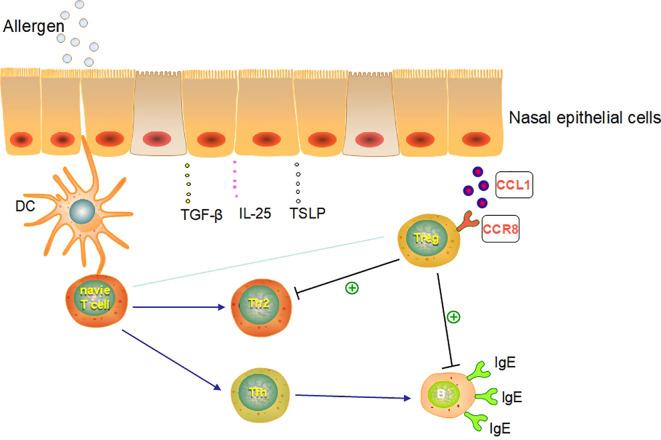
The airway epithelial barrier is the first defence against aeroallergens. Nasal epithelial cells (NECs) are vital in regulating innate and adaptive mucosal immunity in allergic rhinitis (AR). Tregs produce cytokines essential for the immunomodulatory activities in allergen immunotherapy. Understanding the relationship between NECs and Tregs in the airway hyperresponsiveness network is essential for developing novel treatments.
METHODS
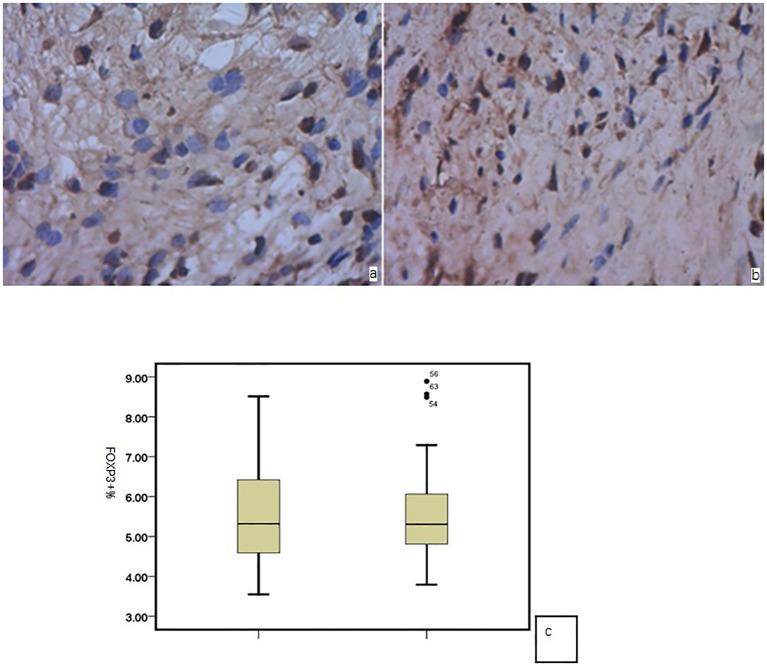
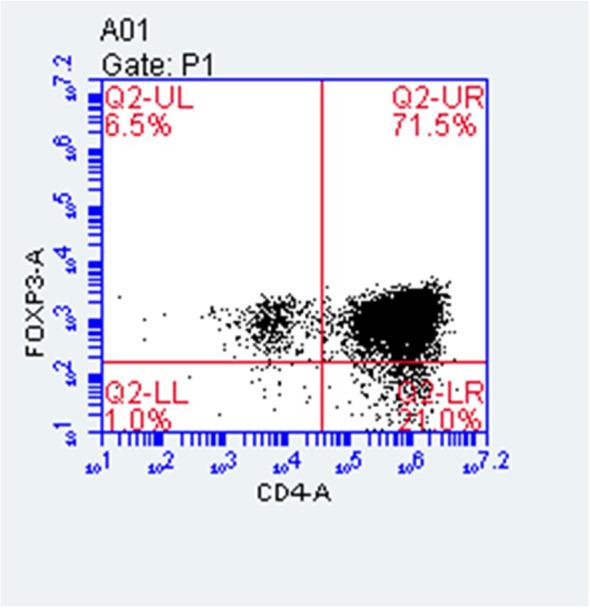
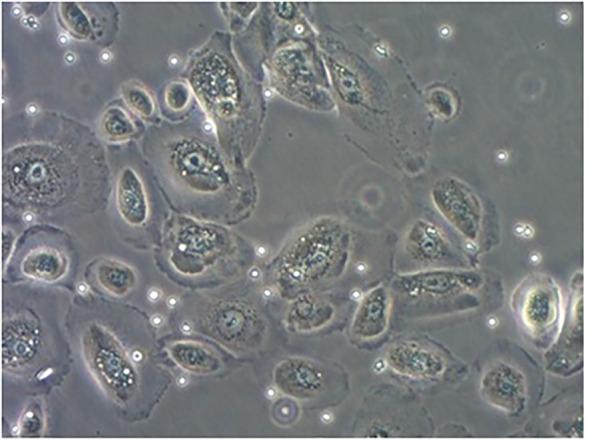
Using an human Treg-NEC co-culture system of AR and health control group, the chemokine expression profiles of NECs were examined using immunohistochemistry, RT-PCR, and ELISA, and functional surface markers of Tregs were detected using flow cytometric analysis. Correlation analysis was performed between cytokines derived from NECs and surface markers of CD4+CD8+Foxp3+ Tregs in the AR group after co-culture, including TSLP/CTLA4, CCL1/CTLA4, TSLP/CTLA4, TSLP/CCR8, and CCL1/CCR8.
RESULTS
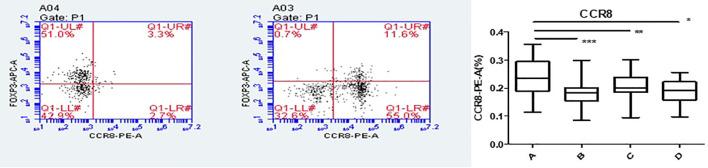
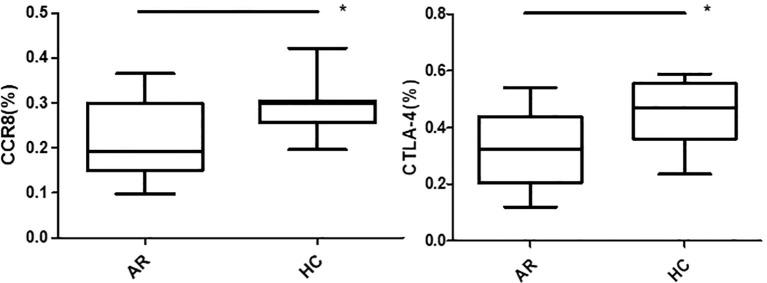
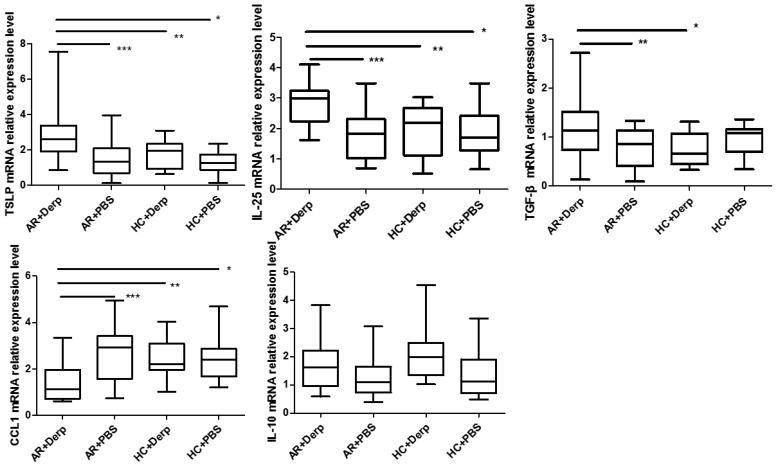
CCR8 and CTLA-4 expressions after co-culturing were higher than single culture. Following Derp1 stimulation, TSLP, IL-25 and TGF-β expressions in the AR + Derp1 group were increased. CCL1 mRNA was lower in the AR + Derp1 group than control group. In the AR + Derp1 group, TSLP was higher, and CCL1 protein levels were decreased. There were no significant differences in IL-25, TGF-β and IL-10. When Treg co-culture group added, changes were similar to that observed in pNECs. After co-culture, CCL1/CCR8 was positively correlated in AR.
CONCLUSION
Human pNECs can communicate with Tregs directly, CCL1/CCR8 may be the pathway between NECs and Tregs and may play a key role in the immune network of AR.
背景
气道上皮屏障是抵御空气过敏原的第一道防线。鼻上皮细胞(NECs)在调节变应性鼻炎(AR)的先天性和适应性黏膜免疫中至关重要。调节性T细胞(Tregs)产生变应原免疫治疗中免疫调节活动所必需的细胞因子。了解气道高反应性网络中NECs与Tregs之间的关系对于开发新的治疗方法至关重要。
方法
采用AR组和健康对照组的人Treg-NEC共培养系统,通过免疫组织化学、逆转录-聚合酶链反应(RT-PCR)和酶联免疫吸附测定(ELISA)检测NECs的趋化因子表达谱,并通过流式细胞术分析检测Tregs的功能性表面标志物。共培养后,对AR组中NECs衍生的细胞因子与CD4+CD8+Foxp3+Tregs的表面标志物进行相关性分析,包括胸腺基质淋巴细胞生成素(TSLP)/细胞毒性T淋巴细胞相关蛋白4(CTLA4)、CC趋化因子配体1(CCL1)/CTLA4、TSLP/CTLA4、TSLP/C-C趋化因子受体8(CCR8)和CCL1/CCR8。
结果
共培养后CCR8和CTLA-4的表达高于单独培养。在屋尘螨主要变应原1(Derp1)刺激后,AR+Derp1组中TSLP、白细胞介素25(IL-25)和转化生长因子β(TGF-β)的表达增加。AR+Derp1组中CCL1信使核糖核酸(mRNA)低于对照组。在AR+Derp1组中,TSLP较高,CCL1蛋白水平降低。IL-25、TGF-β和白细胞介素10(IL-10)无显著差异。当加入Treg共培养组时,变化与原代鼻上皮细胞(pNECs)中观察到的相似。共培养后,AR中CCL1/CCR8呈正相关。
结论
人pNECs可直接与Tregs沟通,CCL1/CCR8可能是NECs与Tregs之间的途径,可能在AR免疫网络中起关键作用。




 Zotero 插件