
用于癌症免疫治疗的细菌介导的肿瘤相关巨噬细胞原位工程
Bacterial-Mediated In Situ Engineering of Tumour-Associated Macrophages for Cancer Immunotherapy.
作者信息
Kuhl Gabriela Christina, Tangney Mark
机构信息
Cancer Research @UCC, College of Medicine and Health, University College Cork, T12 K8AF Cork, Ireland.
APC Microbiome Ireland, University College Cork, T12 YT20 Cork, Ireland.
出版信息
Cancers (Basel). 2025 Feb 20;17(5):723. doi: 10.3390/cancers17050723.
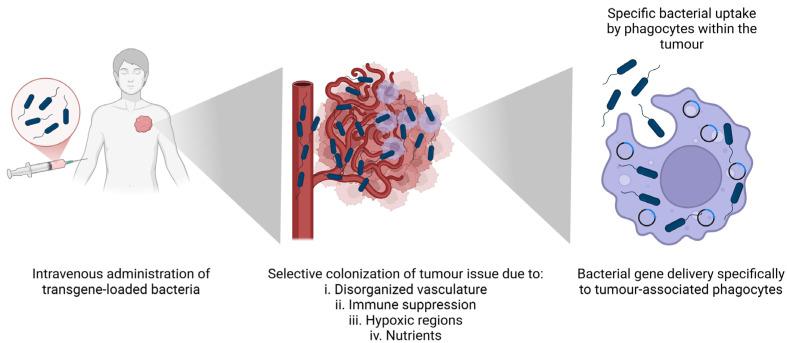
BACKGROUND/OBJECTIVES: Tumour-associated macrophages (TAMs) are critical components of the tumour microenvironment (TME), significantly influencing cancer progression and treatment resistance. This review aims to explore the innovative use of engineered bacteria to reprogram TAMs, enhancing their anti-tumour functions and improving therapeutic outcomes.
METHODS
We conducted a systematic review following a predefined protocol. Multiple databases were searched to identify relevant studies on TAMs, their phenotypic plasticity, and the use of engineered bacteria for reprogramming. Inclusion and exclusion criteria were applied to select studies, and data were extracted using standardised forms. Data synthesis was performed to summarise the findings, focusing on the mechanisms and therapeutic benefits of using non-pathogenic bacteria to modify TAMs.
RESULTS
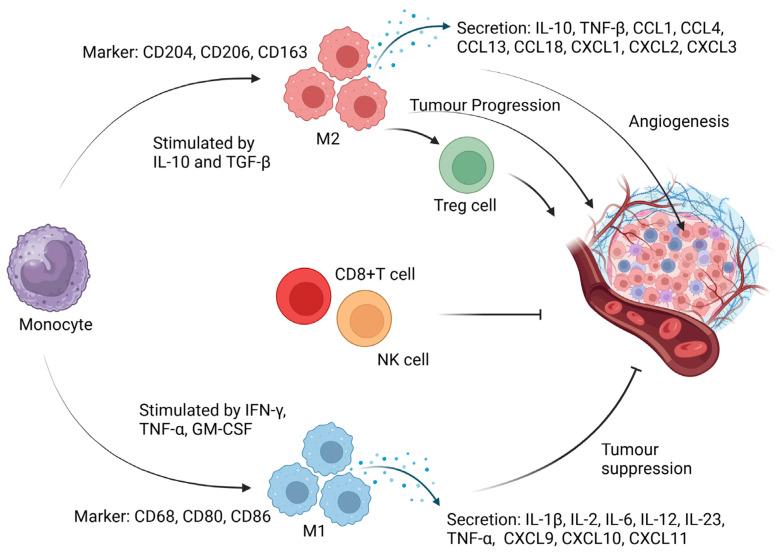
The review summarises the findings that engineered bacteria can selectively target TAMs, promoting a shift from the tumour-promoting M2 phenotype to the tumour-fighting M1 phenotype. This reprogramming enhances pro-inflammatory responses and anti-tumour activity within the TME. Evidence from various studies indicates significant tumour regression and improved immune responses following bacterial therapy.
CONCLUSIONS
Reprogramming TAMs using engineered bacteria presents a promising strategy for cancer therapy. This approach leverages the natural targeting abilities of bacteria to modify TAMs directly within the tumour, potentially improving patient outcomes and offering new insights into immune-based cancer treatments. Further research is needed to optimise these methods and assess their clinical applicability.
背景/目的:肿瘤相关巨噬细胞(TAM)是肿瘤微环境(TME)的关键组成部分,对癌症进展和治疗抗性有重大影响。本综述旨在探索工程菌在重编程TAM方面的创新应用,增强其抗肿瘤功能并改善治疗效果。
方法
我们按照预定义方案进行了系统综述。检索了多个数据库,以确定关于TAM、其表型可塑性以及使用工程菌进行重编程的相关研究。应用纳入和排除标准筛选研究,并使用标准化表格提取数据。进行数据综合以总结研究结果,重点关注使用非致病细菌修饰TAM的机制和治疗益处。
结果
该综述总结了以下研究结果:工程菌可选择性地靶向TAM,促进其从促肿瘤的M2表型向抗肿瘤的M1表型转变。这种重编程增强了TME内的促炎反应和抗肿瘤活性。各项研究的证据表明,细菌治疗后肿瘤显著消退且免疫反应得到改善。
结论
利用工程菌重编程TAM为癌症治疗提供了一种有前景的策略。这种方法利用细菌的天然靶向能力在肿瘤内直接修饰TAM,有可能改善患者预后,并为基于免疫的癌症治疗提供新见解。需要进一步研究以优化这些方法并评估其临床适用性。

 Zotero 插件