
神经退行性疾病中的身体活动与神经可塑性:运动干预、认知训练及人工智能应用的综合综述
Physical activity and neuroplasticity in neurodegenerative disorders: a comprehensive review of exercise interventions, cognitive training, and AI applications.
作者信息
Ben Ezzdine Lamia, Dhahbi Wissem, Dergaa Ismail, Ceylan Halil İbrahim, Guelmami Noomen, Ben Saad Helmi, Chamari Karim, Stefanica Valentina, El Omri Abdelfatteh
机构信息
High Institute of Sport and Physical Education of Ksar Said, University of Manouba, Manouba, Tunisia.
High Institute of Sport and Physical Education of El Kef, University of Jendouba, El Kef, Tunisia.
出版信息
Front Neurosci. 2025 Feb 28;19:1502417. doi: 10.3389/fnins.2025.1502417. eCollection 2025.
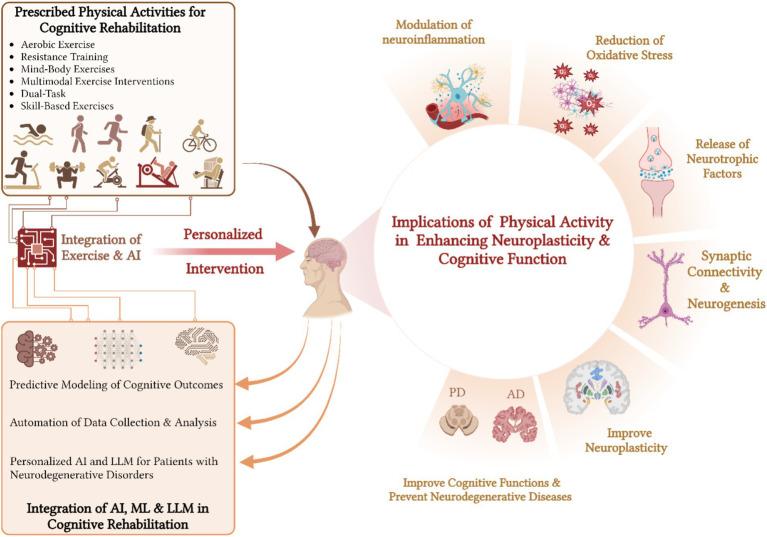
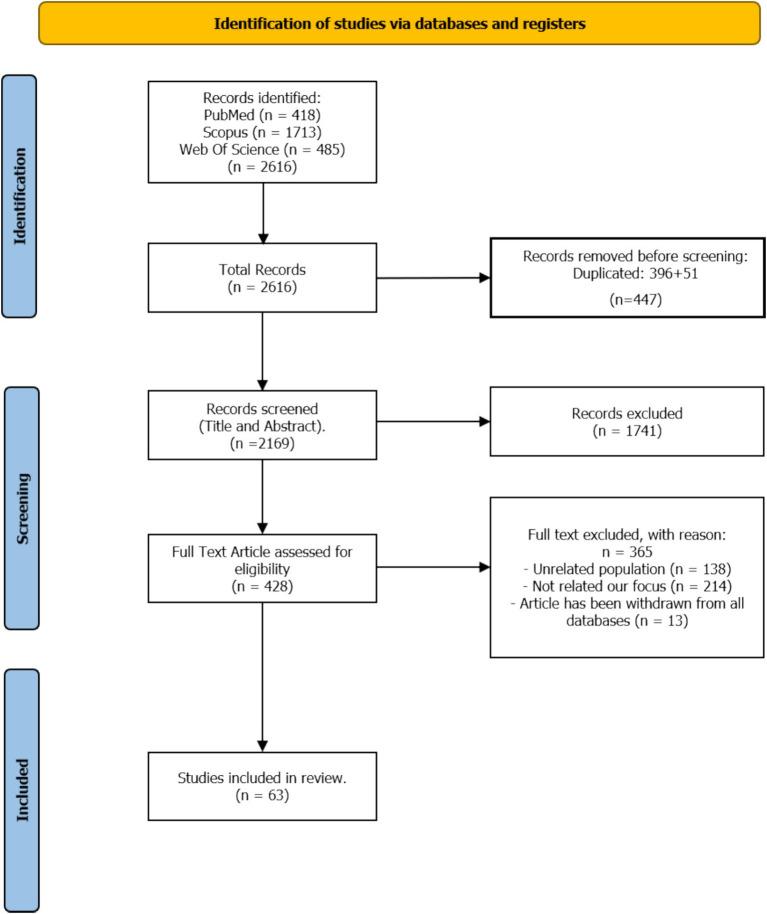
This review aimed to elucidate the mechanisms through which (i) physical activity (PA) enhances neuroplasticity and cognitive function in neurodegenerative disorders, and (ii) identify specific PA interventions for improving cognitive rehabilitation programs. We conducted a literature search in PubMed, Medline, Scopus, Web of Science, and PsycINFO, covering publications from January 1990 to August 2024. The search strategy employed key terms related to neuroplasticity, physical exercise, cognitive function, neurodegenerative disorders, and personalized physical activity. Inclusion criteria included original research on the relationship between PA and neuroplasticity in neurodegenerative disorders, while exclusion criteria eliminated studies focusing solely on pharmacological interventions. The review identified multiple pathways through which PA may enhance neuroplasticity, including releasing neurotrophic factors, modulation of neuroinflammation, reduction of oxidative stress, and enhancement of synaptic connectivity and neurogenesis. Aerobic exercise was found to increase hippocampal volume by 1-2% and improve executive function scores by 5-10% in older adults. Resistance training enhanced cognitive control and memory performance by 12-18% in elderly individuals. Mind-body exercises, such as yoga and tai-chi, improved gray matter density in memory-related brain regions by 3-5% and enhanced emotional regulation scores by 15-20%. Dual-task training improved attention and processing speed by 8-14% in individuals with neurodegenerative disorders. We also discuss the potential role of AI-based exercise and AI cognitive training in preventing and rehabilitating neurodegenerative illnesses, highlighting innovative approaches to personalized interventions and improved patient outcomes. PA significantly enhances neuroplasticity and cognitive function in neurodegenerative disorders through various mechanisms. Aerobic exercise, resistance training, mind-body practices, and dual-task exercises each offer unique cognitive benefits. Implementing these activities in clinical settings can improve patient outcomes. Future research should focus on creating personalized interventions tailored to specific conditions, incorporating personalized physical exercise programs to optimize cognitive rehabilitation.
本综述旨在阐明
(i)身体活动(PA)增强神经退行性疾病中神经可塑性和认知功能的机制;(ii)确定改善认知康复计划的特定PA干预措施。我们在PubMed、Medline、Scopus、Web of Science和PsycINFO中进行了文献检索,涵盖1990年1月至2024年8月的出版物。检索策略采用了与神经可塑性、体育锻炼、认知功能、神经退行性疾病和个性化身体活动相关的关键词。纳入标准包括关于PA与神经退行性疾病中神经可塑性之间关系的原创研究,而排除标准排除了仅关注药物干预的研究。该综述确定了PA可能增强神经可塑性的多种途径,包括释放神经营养因子、调节神经炎症、减少氧化应激以及增强突触连接和神经发生。有氧运动被发现可使老年人的海马体体积增加1 - 2%,并使执行功能评分提高5 - 10%。阻力训练可使老年人的认知控制和记忆表现提高12 - 18%。身心锻炼,如瑜伽和太极,可使与记忆相关的脑区灰质密度提高3 - 5%,并使情绪调节评分提高15 - 20%。双任务训练可使神经退行性疾病患者的注意力和处理速度提高8 - 14%。我们还讨论了基于人工智能的运动和人工智能认知训练在预防和康复神经退行性疾病中的潜在作用,强调了个性化干预和改善患者预后的创新方法。PA通过多种机制显著增强神经退行性疾病中的神经可塑性和认知功能。有氧运动、阻力训练、身心练习和双任务练习各有独特的认知益处。在临床环境中实施这些活动可改善患者预后。未来的研究应专注于针对特定情况制定个性化干预措施,纳入个性化体育锻炼计划以优化认知康复。
 Zotero 插件