
L-GABS:用于人体工程学影响评估的通用主动式腰部外骨骼的参数化建模
L-GABS: Parametric Modeling of a Generic Active Lumbar Exoskeleton for Ergonomic Impact Assessment.
作者信息
Pérez-Soto Manuel, Marín Javier, Marín José J
机构信息
IDERGO (Research and Development in Ergonomics), I3A (Instituto de Investigación en Ingeniería de Aragón), University of Zaragoza, C/María de Luna, 3, 50018 Zaragoza, Spain.
Department of Design and Manufacturing Engineering, University of Zaragoza, C/María de Luna, 3, 50018 Zaragoza, Spain.
出版信息
Sensors (Basel). 2025 Feb 22;25(5):1340. doi: 10.3390/s25051340.
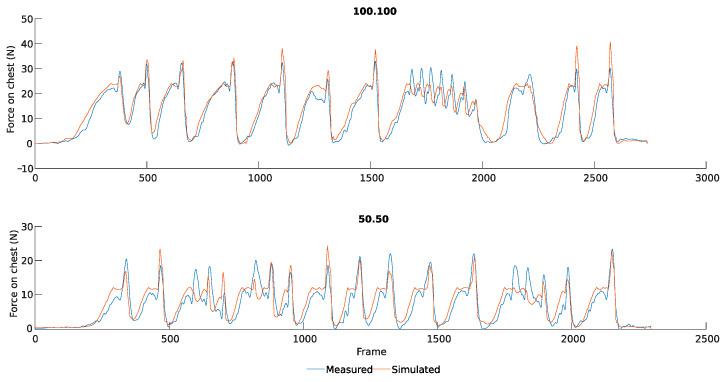
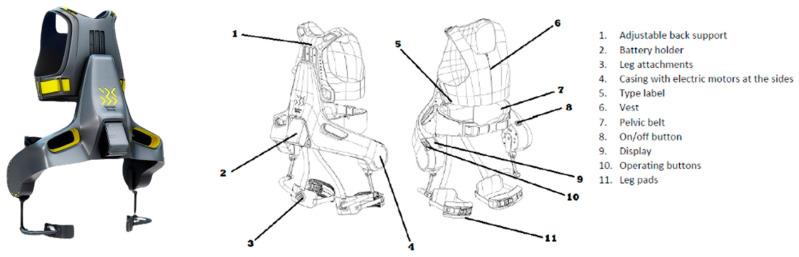
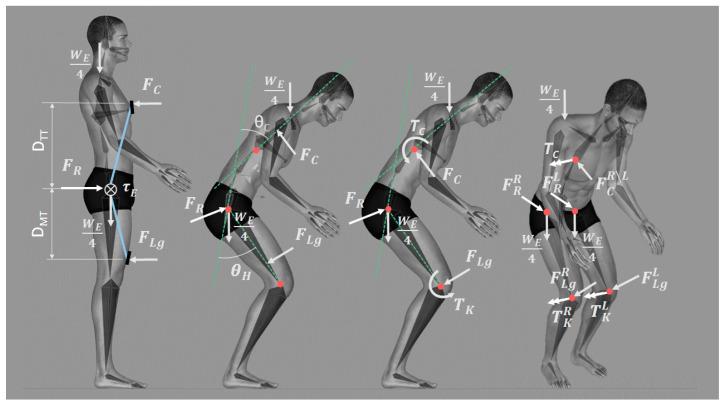
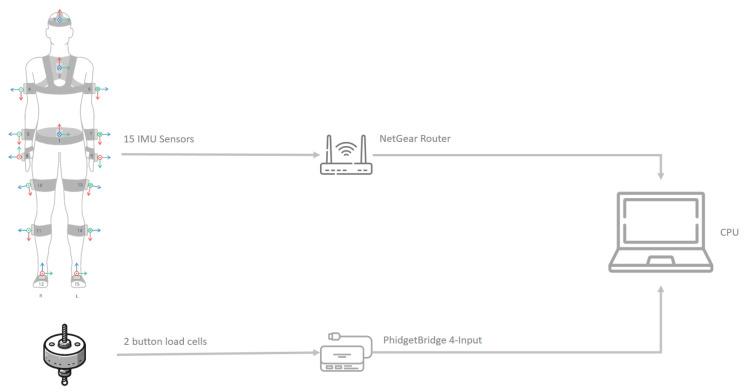
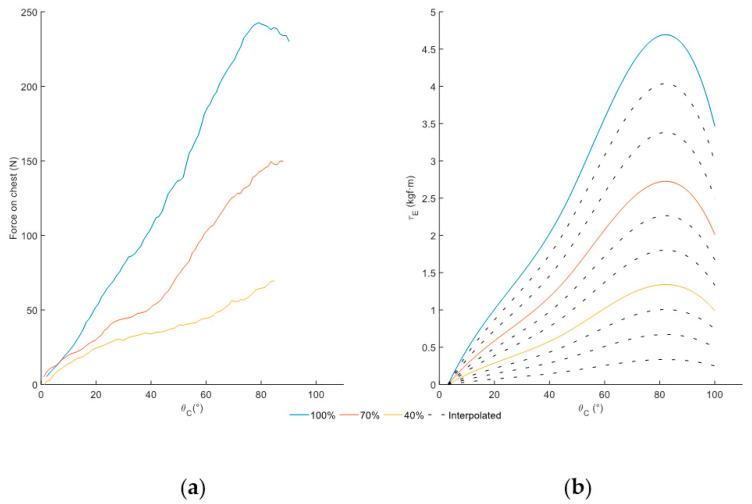
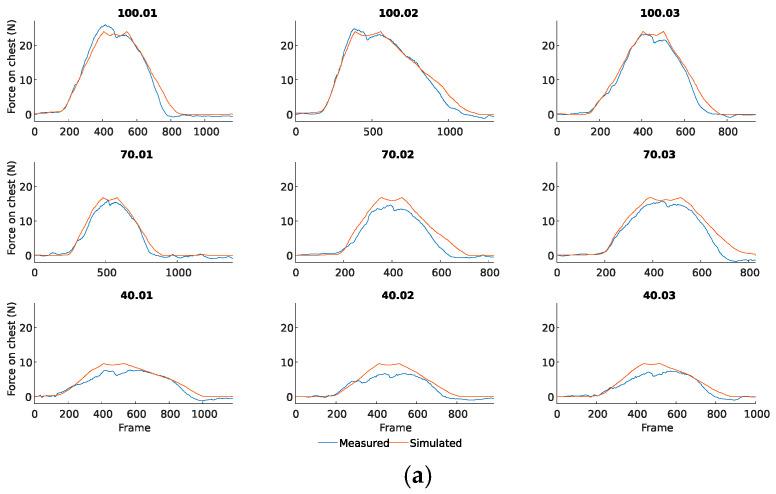
Companies increasingly implement exoskeletons in their production lines to reduce musculoskeletal disorders. Studies have been conducted on the general ergonomic effects of exoskeletons in production environments; however, it remains challenging to predict the biomechanical effects these devices may have in specific jobs. This article proposes the parametric modeling of an active lumbar exoskeleton using the Forces ergonomic method, which calculates the ergonomic risk using motion capture in the workplace, considering the internal joint forces. The exoskeleton was studied to model it in the Forces method using a four-phase approach based on experimental observations (Phase 1) and objective data collection via motion capture with inertial sensors and load cells for lifting load movements. From the experimentation the angles of each body segment, the effort perceived by the user, and the activation conditions were obtained (Phase 2). After modeling development (Phase 3), the experimental results regarding the force and risk were evaluated obtaining differences between model and experimental data of 0.971 ± 0.171 kg in chest force and 1.983 ± 0.678% in lumbar risk (Phase 4). This approach provides a tool to evaluate the biomechanical effects of this device in a work task, offering a parametric and direct approximation of the effects prior to implementation.
企业越来越多地在其生产线中采用外骨骼设备,以减少肌肉骨骼疾病。人们已经对外骨骼在生产环境中的总体人体工程学效果进行了研究;然而,预测这些设备在特定工作中可能产生的生物力学影响仍然具有挑战性。本文提出了一种使用Forces人体工程学方法对主动式腰部外骨骼进行参数化建模的方法,该方法通过在工作场所进行动作捕捉来计算人体工程学风险,并考虑内部关节力。对外骨骼进行了研究,以便使用基于实验观察的四阶段方法(第1阶段),以及通过带有惯性传感器和测力传感器的动作捕捉来收集用于提升负载动作的客观数据,从而在Forces方法中对其进行建模。通过实验获得了每个身体部位的角度、用户感受到的用力程度以及激活条件(第2阶段)。在完成建模开发(第3阶段)后,对关于力和风险的实验结果进行了评估,得出胸部力的模型与实验数据之间的差异为0.971±0.171千克,腰部风险的差异为1.983±0.678%(第4阶段)。这种方法提供了一种工具,用于评估该设备在工作任务中的生物力学影响,在实施之前对其效果进行参数化和直接近似。


 Zotero 插件