
约旦儿童和青少年中超加工食品消费与肥胖之间的关联。
Association between consumption of ultra processed foods and obesity among Jordanian children and adolescents.
作者信息
Al Hourani Huda, Shhadeh Hebah Abu, Al-Jawaldeh Ayoub
机构信息
Department of Clinical Nutrition and Dietetics, Faculty of Applied Medical Sciences, The Hashemite University, P.O. Box 330127, Zarqa, 13133, Jordan.
Regional Office for the Eastern Mediterranean, World Health Organization, Cairo, 7608, Egypt.
出版信息
Sci Rep. 2025 Mar 18;15(1):9326. doi: 10.1038/s41598-025-93506-3.
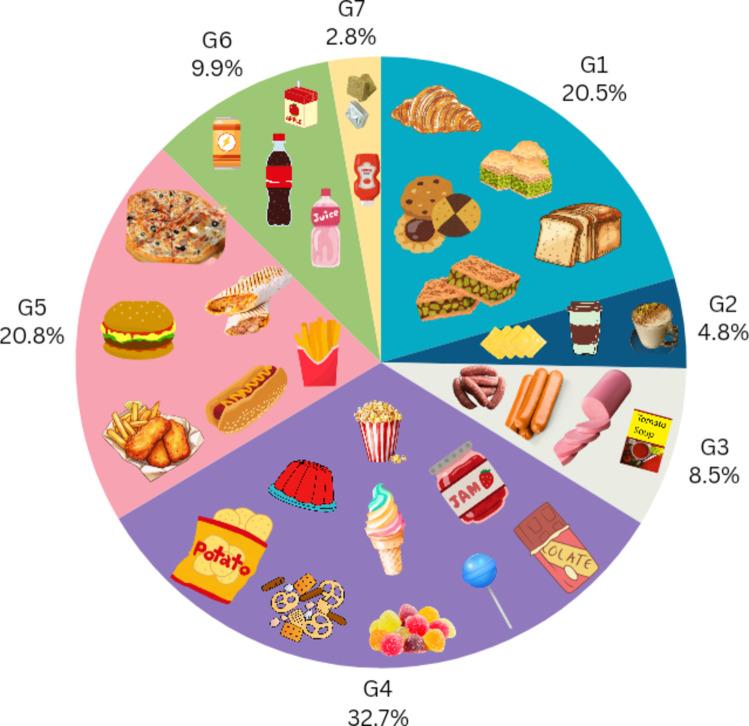
The consumption of ultra-processed food (UPF) is associated with obesity. This study aims to evaluate the contribution of UPF to total calorie intake and investigate the correlation between UPF consumption and obesity. The NOVA categorization was used to identify UPF in a single 24-hour dietary recall for participants. UPF consumption has been quantified as a percentage of total energy intake. Weight, height, and waist circumference were measured, and the Body Mass Index-for-Age Z-Score (BAZ) and waist-to-height ratio (WHtR) were computed. The prevalence of overweight and obesity was 23.9% and 13.3%, respectively. Approximately 25.5% of the participants had abnormal WHtR. The average energy intake was 1925 kcal/day, of which 40% was derived from UPF. The subgroups with the highest caloric contributions among UPF were savory snacks and sweets (13.5%), industrial grain products (8.4%), fast foods (7.8%), and sweetened beverages (4.2%). UPF consumption showed a weak but significant correlation with waist circumference (r = 0.119, P = 0.005). The remarkable finding is that 47 (7.6%) of the participants did not have any UPF. UPF's substantial contribution to daily caloric intake reflects an inadequate diet in children and adolescents. Public policies that discourage UPF use and encourage a nutritious diet are desperately needed.
超加工食品(UPF)的消费与肥胖有关。本研究旨在评估UPF对总热量摄入的贡献,并调查UPF消费与肥胖之间的相关性。采用NOVA分类法在参与者的一次24小时饮食回顾中识别UPF。UPF消费量已被量化为总能量摄入的百分比。测量了体重、身高和腰围,并计算了年龄别体重指数Z评分(BAZ)和腰高比(WHtR)。超重和肥胖的患病率分别为23.9%和13.3%。约25.5%的参与者腰高比异常。平均能量摄入量为1925千卡/天,其中40%来自UPF。UPF中热量贡献最高的亚组是咸味零食和糖果(13.5%)、工业谷物产品(8.4%)、快餐(7.8%)和含糖饮料(4.2%)。UPF消费与腰围呈弱但显著的相关性(r = 0.119,P = 0.005)。值得注意的是,47名(7.6%)参与者没有食用任何UPF。UPF对每日热量摄入的大量贡献反映了儿童和青少年饮食不均衡。迫切需要出台抑制UPF消费并鼓励营养饮食的公共政策。

 Zotero 插件