
胰高血糖素样肽-1受体激动剂在神经退行性疾病和缺血性中风治疗中的免疫调节作用。
The immunomodulatory effects of GLP-1 receptor agonists in neurogenerative diseases and ischemic stroke treatment.
作者信息
Sun Haohui, Hao Yue, Liu Hao, Gao Feng
机构信息
School of Basic Medical Science, School of Medicine, Ningbo University, Ningbo, Zhejiang, China.
出版信息
Front Immunol. 2025 Mar 11;16:1525623. doi: 10.3389/fimmu.2025.1525623. eCollection 2025.
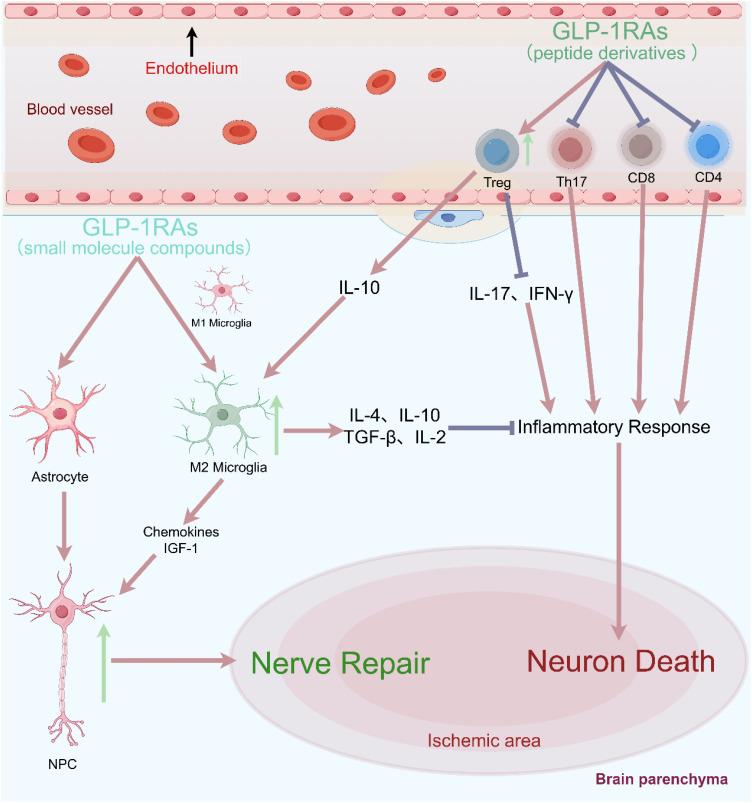
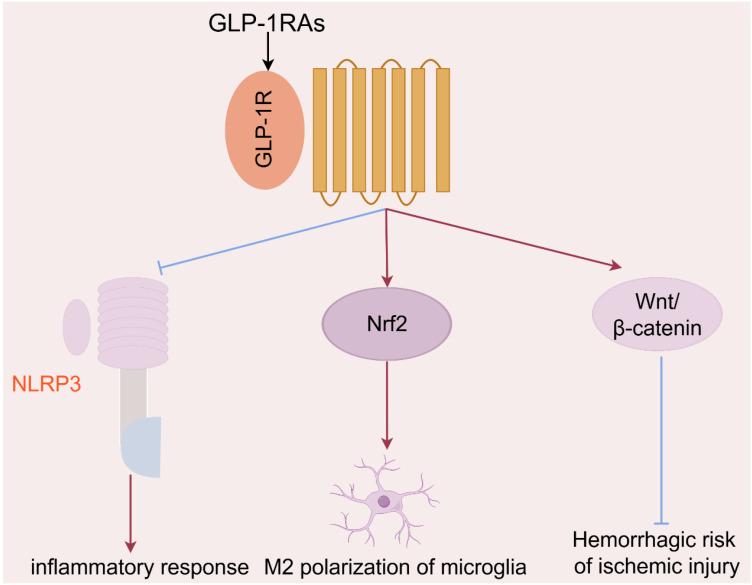
Glucagon-like peptide-1 (GLP-1) receptor is widely distributed in the digestive system, cardiovascular system, adipose tissue and central nervous system. Numerous GLP-1 receptor-targeting drugs have been investigated in clinical studies for various indications, including type 2 diabetes and obesity (accounts for 70% of the total studies), non-alcoholic steatohepatitis, Alzheimer's disease, and Parkinson's disease. This review presented fundamental information regarding two categories of GLP-1 receptor agonists (GLP-1RAs): peptide-based and small molecule compounds, and elaborated their potential neuroprotective effects by inhibiting neuroinflammation, reducing neuronal apoptosis, and ultimately improving cognitive function in various neurodegenerative diseases. As a new hypoglycemic drug, GLP-1RA has a unique role in reducing the concurrent risk of stroke in T2D patients. Given the infiltration of various peripheral immune cells into brain tissue, particularly in the areas surrounding the infarct lesion, we further investigated the potential immune regulatory mechanisms. GLP-1RA could not only facilitate the M2 polarization of microglia through both direct and indirect pathways, but also modulate the quantity and function of T cell subtypes, including CD4, CD8, and regulatory T cells, resulting into the inhibition of inflammatory responses and the promotion of neuronal regeneration through interleukin-10 secretion. Therefore, we believe that the "Tregs-microglia-neuron/neural precursor cells" axis is instrumental in mediating immune suppression and neuroprotection in the context of ischemic stroke. Given the benefits of rapid diffusion, favorable blood-brain barrier permeability and versatile administration routes, these small molecule compounds will be one of the important candidates of GLP-1RA. We look forward to the further clinical evidence of small molecule GLP-1RA intervention in ischemic stroke or T2D complicated by ischemic stroke.
胰高血糖素样肽-1(GLP-1)受体广泛分布于消化系统、心血管系统、脂肪组织和中枢神经系统。许多靶向GLP-1受体的药物已在临床研究中针对各种适应症进行了研究,包括2型糖尿病和肥胖症(占总研究的70%)、非酒精性脂肪性肝炎、阿尔茨海默病和帕金森病。本综述介绍了两类GLP-1受体激动剂(GLP-1RAs)的基本信息:基于肽的化合物和小分子化合物,并阐述了它们通过抑制神经炎症、减少神经元凋亡以及最终改善各种神经退行性疾病中的认知功能所具有的潜在神经保护作用。作为一种新型降糖药物,GLP-1RA在降低2型糖尿病患者并发中风风险方面具有独特作用。鉴于各种外周免疫细胞浸润到脑组织中,特别是在梗死灶周围区域,我们进一步研究了潜在的免疫调节机制。GLP-1RA不仅可以通过直接和间接途径促进小胶质细胞的M2极化,还可以调节T细胞亚型(包括CD4、CD8和调节性T细胞)的数量和功能,通过分泌白细胞介素-10抑制炎症反应并促进神经元再生。因此,我们认为“调节性T细胞-小胶质细胞-神经元/神经前体细胞”轴在缺血性中风的背景下介导免疫抑制和神经保护中发挥着重要作用。鉴于具有快速扩散、良好的血脑屏障通透性和多种给药途径等优点,这些小分子化合物将成为GLP-1RA的重要候选药物之一。我们期待小分子GLP-1RA干预缺血性中风或2型糖尿病合并缺血性中风的进一步临床证据。

 Zotero 插件