
用于吸附、解毒和减轻黄曲霉毒素B1毒性的绿色工程蒙脱石粘土
Green-Engineered Montmorillonite Clays for the Adsorption, Detoxification, and Mitigation of Aflatoxin B1 Toxicity.
作者信息
Oladele Johnson O, Xenophontos Xenophon, Elizondo Gustavo M, Daasari Yash, Wang Meichen, Tamamis Phanourios, Johnson Natalie M, Phillips Timothy D
机构信息
Interdisciplinary Faculty of Toxicology, Texas A&M University, College Station, TX 77843, USA.
Department of Veterinary Physiology and Pharmacology, College of Veterinary Medicine & Biomedical Sciences, Texas A&M University, College Station, TX 77843, USA.
出版信息
Toxins (Basel). 2025 Mar 11;17(3):131. doi: 10.3390/toxins17030131.
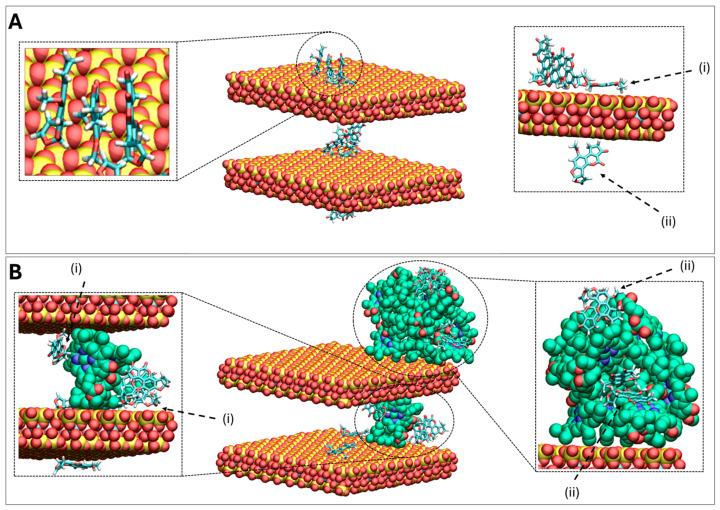
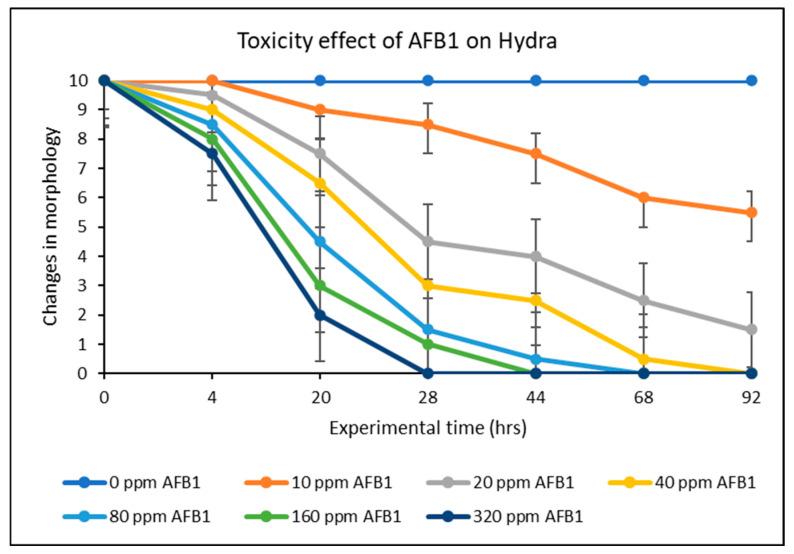
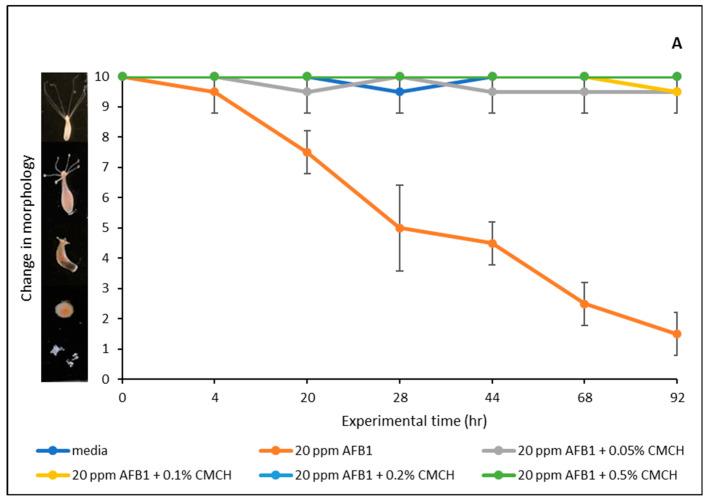
Dietary and environmental exposure to aflatoxins via contaminated food items can pose major health challenges to both humans and animals. Studies have reported the coexistence of aflatoxins and other environmental toxins. This emphasizes the urgent need for efficient and effective mitigation strategies for aflatoxins. Previous reports from our laboratory have demonstrated the potency of the green-engineered clays (GECs) on ochratoxin and other toxic chemicals. Therefore, this study sought to investigate the binding and detoxification potential of chlorophyll (CMCH and SMCH) and chlorophyllin (CMCHin and SMCHin)-amended montmorillonite clays for aflatoxin B1 (AFB1). In addition to analyzing binding metrics including affinity, capacity, free energy, and enthalpy, the sorption mechanisms of AFB1 onto the surfaces of engineered clays were also investigated. Computational and experimental studies were performed to validate the efficacy and safety of the clays. CMCH showed the highest binding capacity (Qmax) of 0.43 mol/kg compared to the parent clays CM (0.34 mol/kg) and SM (0.32 mol/kg). Interestingly, there were no significant changes in the binding capacity of the clays at pH2 and pH6, suggesting that the clays can bind to AFB1 throughout the gastrointestinal track. In silico investigations employing molecular dynamics simulations also demonstrated that CMCH enhanced AFB1 binding as compared to parent clay and predicted hydrophobic interactions as the main mode of interaction between the AFB1 and CMCH. This was corroborated by the kinetic results which indicated that the interaction was best defined by chemosorption with favorable thermodynamics and Gibbs free energy (∆G) being negative. In vitro experiments in Hep G2 cells showed that clay treatment mitigated AFB1-induced cytotoxicity, with the exception of 0.5% (/) SMCH. Finally, the in vivo results validated the protection of all the clays against AFB1-induced toxicities in Hydra vulgaris. This study showed that these clays significantly detoxified AFB1 (86% to 100%) and provided complete protection at levels as low as 0.1%, suggesting that they may be used as AFB1 binders in feed and food.
通过受污染食品摄入黄曲霉毒素的饮食和环境暴露会给人类和动物带来重大健康挑战。研究报告了黄曲霉毒素与其他环境毒素的共存情况。这凸显了迫切需要制定高效且有效的黄曲霉毒素缓解策略。我们实验室之前的报告已证明绿色工程粘土(GECs)对赭曲霉毒素和其他有毒化学物质的效力。因此,本研究旨在探究叶绿素(CMCH和SMCH)和叶绿酸(CMCHin和SMCHin)改性蒙脱石粘土对黄曲霉毒素B1(AFB1)的结合及解毒潜力。除了分析包括亲和力、容量、自由能和焓在内的结合指标外,还研究了AFB1在工程粘土表面的吸附机制。进行了计算和实验研究以验证粘土的功效和安全性。与母体粘土CM(0.34 mol/kg)和SM(0.32 mol/kg)相比,CMCH显示出最高的结合容量(Qmax),为0.43 mol/kg。有趣的是,在pH2和pH6时粘土的结合容量没有显著变化,这表明粘土可以在整个胃肠道中与AFB1结合。采用分子动力学模拟的计算机模拟研究还表明,与母体粘土相比,CMCH增强了AFB1的结合,并预测疏水相互作用是AFB1与CMCH之间的主要相互作用模式。动力学结果证实了这一点,该结果表明这种相互作用最适合用化学吸附来定义,其具有有利热力学且吉布斯自由能(∆G)为负。在Hep G2细胞中进行的体外实验表明,粘土处理减轻了AFB1诱导的细胞毒性,但0.5%(/)的SMCH除外。最后,体内结果验证了所有粘土对普通水螅中AFB1诱导毒性的保护作用。本研究表明,这些粘土能显著解毒AFB1(86%至100%),并在低至0.1%的水平提供完全保护,这表明它们可用作饲料和食品中的AFB1结合剂。


 Zotero 插件