
炎症在慢性阻塞性肺疾病与肺结核合并症发病机制中的作用
The Role of Inflammation in the Pathogenesis of Comorbidity of Chronic Obstructive Pulmonary Disease and Pulmonary Tuberculosis.
作者信息
Kotlyarov Stanislav, Oskin Dmitry
机构信息
Department of Nursing, Ryazan State Medical University, 390026 Ryazan, Russia.
Department of Infectious Diseases and Phthisiology, Ryazan State Medical University, 390026 Ryazan, Russia.
出版信息
Int J Mol Sci. 2025 Mar 7;26(6):2378. doi: 10.3390/ijms26062378.
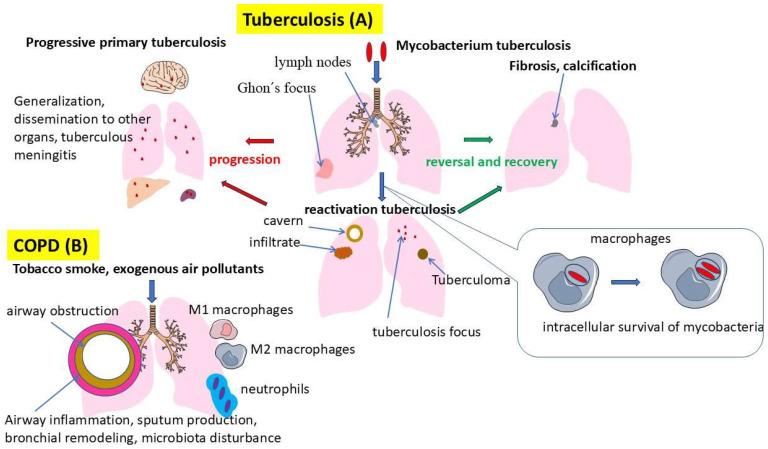
The comorbid course of chronic obstructive pulmonary disease (COPD) and pulmonary tuberculosis is an important medical and social problem. Both diseases, although having different etiologies, have many overlapping relationships that mutually influence their course and prognosis. The aim of the current review is to discuss the role of different immune mechanisms underlying inflammation in COPD and pulmonary tuberculosis. These mechanisms are known to involve both the innate and adaptive immune system, including various cellular and intercellular interactions. There is growing evidence that immune mechanisms involved in the pathogenesis of both COPD and tuberculosis may jointly contribute to the tuberculosis-associated obstructive pulmonary disease (TOPD) phenotype. Several studies have reported prior tuberculosis as a risk factor for COPD. Therefore, the study of the mechanisms that link COPD and tuberculosis is of considerable clinical interest.
慢性阻塞性肺疾病(COPD)与肺结核的合并病程是一个重要的医学和社会问题。这两种疾病虽然病因不同,但存在许多相互影响病程和预后的重叠关系。本综述的目的是探讨COPD和肺结核炎症背后不同免疫机制的作用。已知这些机制涉及固有免疫系统和适应性免疫系统,包括各种细胞间和细胞内的相互作用。越来越多的证据表明,参与COPD和肺结核发病机制的免疫机制可能共同促成与肺结核相关的阻塞性肺病(TOPD)表型。多项研究报告称既往肺结核是COPD的一个危险因素。因此,研究连接COPD和肺结核的机制具有相当大的临床意义。

 Zotero 插件