
用于检测特定第一行过渡金属离子的有机铬荧光传感器合成的现代方法。
Modern Approaches in Organic Chromofluorescent Sensor Synthesis for the Detection of Considered First-Row Transition Metal Ions.
作者信息
Aslam Samina, Kousar Iram, Rani Sadia, Zainab Isra, Bristy Sadia, Skouta Rachid
机构信息
Department of Chemistry, The Women University Multan, Multan 66000, Pakistan.
Department of Chemistry, University of Massachusetts, Amherst, MA 01003, USA.
出版信息
Molecules. 2025 Mar 12;30(6):1263. doi: 10.3390/molecules30061263.
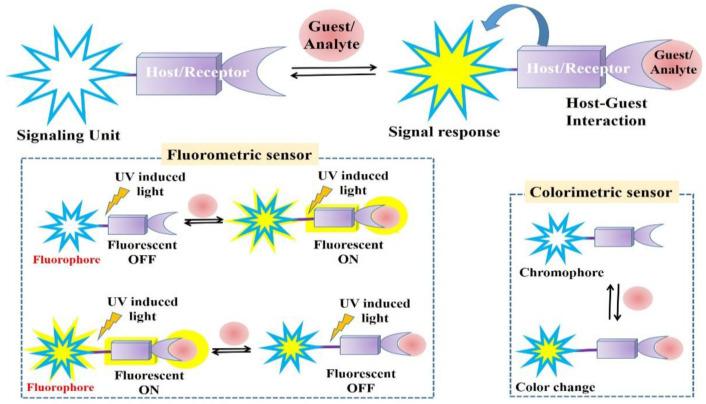
The development of optical chemosensors for the sensitive and selective detection of trace-level metal ions in aqueous solutions has drawn a lot of attention from the scientific community in recent years. Organic sensors offer a number of advantages over traditional identification techniques, including low cost, high sensitivity, selectivity, and simplicity of synthesis. We will focus on colorimetric and fluorometric sensors based on their receptors for the real-time detection of certain first-row transition metal ions like Cr, Mn, Fe, Co, Ni Cu, and Zn. The development of these sensors will aid in the rapid and simple resolution of several problems linked to the detection of potentially hazardous metal ions at trace levels in diverse biological and environmental components. This review article not only gives a comprehensive understanding of the existing techniques, but also encourages more research efforts to address the evolving demands in the field of trace transition metal ion detection.
近年来,用于灵敏且选择性地检测水溶液中痕量金属离子的光学化学传感器的发展引起了科学界的广泛关注。与传统识别技术相比,有机传感器具有许多优势,包括成本低、灵敏度高、选择性好以及合成简单。我们将重点关注基于其受体的比色和荧光传感器,用于实时检测某些第一行过渡金属离子,如铬、锰、铁、钴、镍、铜和锌。这些传感器的开发将有助于快速、简单地解决与检测各种生物和环境成分中痕量潜在有害金属离子相关的几个问题。这篇综述文章不仅全面介绍了现有技术,还鼓励更多的研究工作来满足痕量过渡金属离子检测领域不断变化的需求。












 Zotero 插件