
副干酪乳杆菌衍生的细胞外囊泡可逆转自闭症谱系障碍小鼠模型中的分子和行为缺陷。
Lactobacillus paracasei-derived extracellular vesicles reverse molecular and behavioral deficits in mouse models of autism spectrum disorder.
作者信息
Park Jin-Young, Lee Eun-Hwa, Kim Ji-Eun, Paeng Jae-Won, Paeng Jin-Chul, Kim Tae-Kyung, Kim Yoon-Keun, Han Pyung-Lim
机构信息
Department of Brain and Cognitive Sciences, Scranton College, Ewha Womans University, Seoul, Republic of Korea.
Department of Physical Education and Sport Science Institute, Korea National Sport University, Seoul, Republic of Korea.
出版信息
Exp Mol Med. 2025 Apr;57(4):788-803. doi: 10.1038/s12276-025-01429-w. Epub 2025 Apr 1.
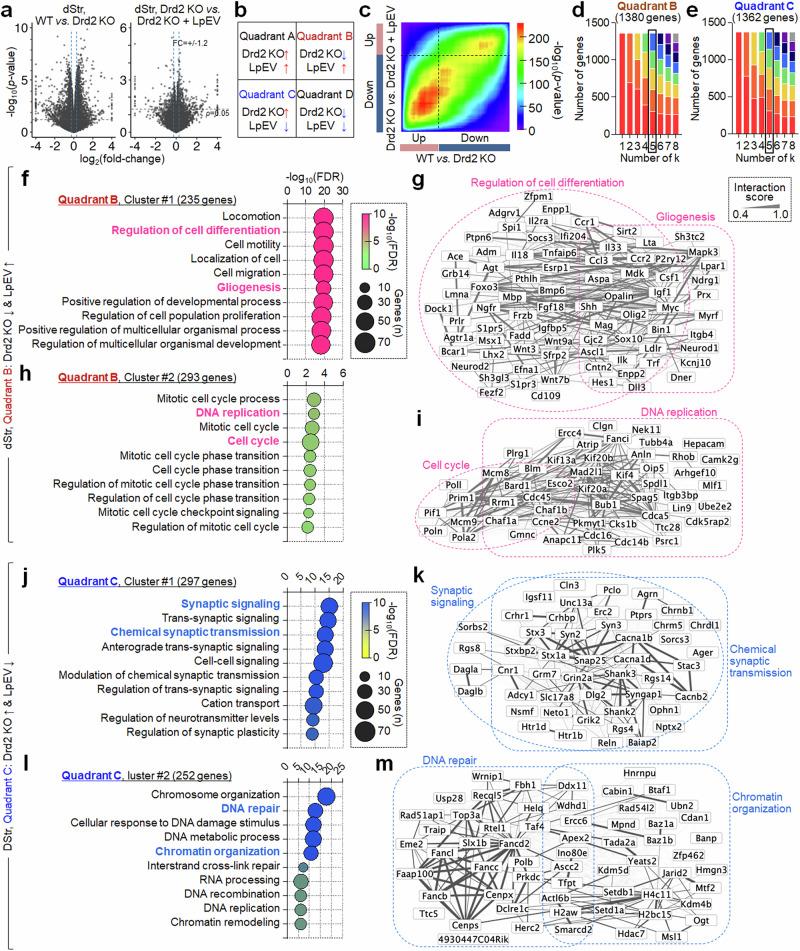
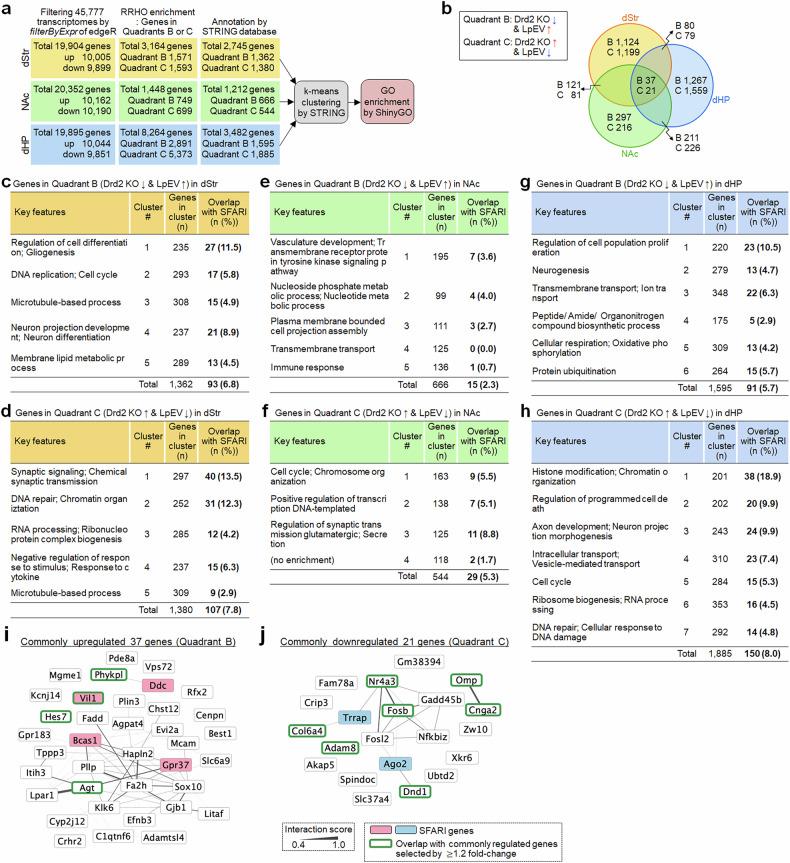
Autism spectrum disorder (ASD) is a heterogeneous group of neurodevelopmental disorders characterized by social communication deficits and repetitive behaviors. Although our current understanding the mechanisms underlying ASD is growing, effective treatment options are still underdevelopment. Extracellular vesicles derived from the probiotic Lactobacillus paracasei (LpEV) have shown neuroprotective effects in both in vitro and in vivo models. Here we investigate whether LpEV can alleviate core symptoms in genetic ASD models that exhibit accumulated developmental deficits. Dopamine receptor D2 (Drd2)-knockout (KO) mice exhibit social behavior deficits and excessive grooming, core symptoms of ASD. LpEV treatment significantly improves these autistic-like behaviors in Drd2-KO mice, suggesting that LpEVs can mitigate the persistent dysregulation of signaling pathways in these mice. RNA sequencing followed by Gene Ontology enrichment analysis of LpEV-treated Drd2-KO mice identifies distinct groups of genes altered in the brain of Drd2-KO mice, which were reversed by LpEV treatment. Notably, a high proportion of these genes overlap significantly with known ASD genes in the SFARI database, strengthening the potential of LpEV to target relevant pathways in ASD. Further investigation identifies oxytocin and oxytocin receptor (Oxtr) as potential therapeutic targets. LpEV treatment significantly improves autistic-like behaviors in Oxtr-KO heterozygous mice, adenylyl cyclase-5 KO mice and Shank3-KO mice, suggesting its therapeutic potential to target ASD through broader mechanisms beyond a single gene pathway. These results highlight the therapeutic potential of LpEV in reversing the accumulated dysregulated signaling pathways leading to ASD symptoms and improving autistic-like behaviors.
自闭症谱系障碍(ASD)是一组异质性神经发育障碍,其特征为社交沟通缺陷和重复行为。尽管我们目前对ASD潜在机制的理解不断加深,但有效的治疗方案仍在开发中。源自益生菌副干酪乳杆菌的细胞外囊泡(LpEV)已在体外和体内模型中显示出神经保护作用。在此,我们研究LpEV是否能缓解表现出累积发育缺陷的遗传性ASD模型中的核心症状。多巴胺受体D2(Drd2)基因敲除(KO)小鼠表现出社交行为缺陷和过度梳理毛发,这是ASD的核心症状。LpEV治疗显著改善了Drd2-KO小鼠的这些自闭症样行为,表明LpEV可以减轻这些小鼠信号通路的持续失调。对接受LpEV治疗的Drd2-KO小鼠进行RNA测序,随后进行基因本体富集分析,确定了Drd2-KO小鼠大脑中改变的不同基因组,而LpEV治疗可使其逆转。值得注意的是,这些基因中有很大一部分与SFARI数据库中已知的ASD基因有显著重叠,增强了LpEV靶向ASD相关通路的潜力。进一步研究确定催产素和催产素受体(Oxtr)为潜在治疗靶点。LpEV治疗显著改善了Oxtr-KO杂合小鼠、腺苷酸环化酶-5 KO小鼠和Shank3-KO小鼠的自闭症样行为,表明其通过单一基因通路以外的更广泛机制靶向ASD的治疗潜力。这些结果突出了LpEV在逆转导致ASD症状的累积失调信号通路和改善自闭症样行为方面的治疗潜力。





 Zotero 插件