
神经血管单元和血脑屏障的研究进展(综述)
Research developments in the neurovascular unit and the blood‑brain barrier (Review).
作者信息
Gong Yating, Wu Muyao, Huang Yaqian, He Xiaoyi, Yuan Jiaqi, Dang Baoqi
机构信息
Department of Rehabilitation, Zhangjiagang TCM Hospital Affiliated to Nanjing University of Chinese Medicine, Suzhou, Jiangsu 215600, P.R. China.
Department of Neurosurgery, Zhangjiagang TCM Hospital Affiliated to Nanjing University of Chinese Medicine, Suzhou, Jiangsu 215600, P.R. China.
出版信息
Biomed Rep. 2025 Mar 18;22(5):88. doi: 10.3892/br.2025.1966. eCollection 2025 May.
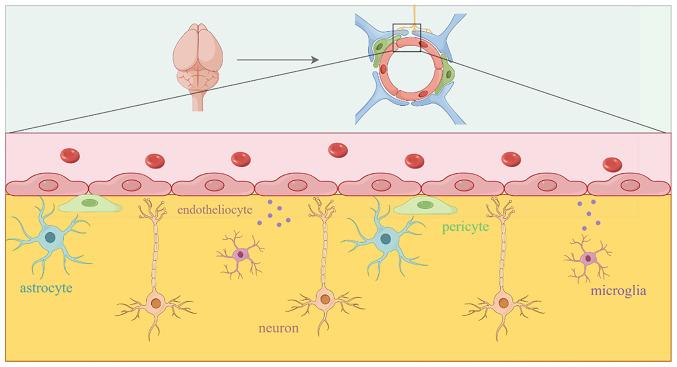
The neurovascular unit (NVU) is composed of neurons, glial cells, brain microvascular endothelial cells (BMECs), pericytes, and the extracellular matrix. The NVU controls the permeability of the blood-brain barrier (BBB) and protects the brain from harmful blood-borne and endogenous and exogenous substances. Among these, neurons transmit signals, astrocytes provide nutrients, microglia regulate inflammation, and BMECs and pericytes strengthen barrier tightness and coverage. These cells, due to their physical structure, anatomical location, or physiological function, maintain the microenvironment required for normal brain function. In this review, the BBB structure and mechanisms are examined to obtain a better understanding of the factors that influence BBB permeability. The findings may aid in safeguarding the BBB and provide potential therapeutic targets for drugs affecting the central nervous system.
神经血管单元(NVU)由神经元、神经胶质细胞、脑微血管内皮细胞(BMECs)、周细胞和细胞外基质组成。神经血管单元控制血脑屏障(BBB)的通透性,保护大脑免受有害血源物质以及内源性和外源性物质的侵害。其中,神经元传递信号,星形胶质细胞提供营养,小胶质细胞调节炎症,而BMECs和周细胞增强屏障紧密性和覆盖范围。这些细胞因其物理结构、解剖位置或生理功能,维持着正常脑功能所需的微环境。在本综述中,对血脑屏障的结构和机制进行了研究,以更好地了解影响血脑屏障通透性的因素。这些发现可能有助于保护血脑屏障,并为影响中枢神经系统的药物提供潜在的治疗靶点。
 Zotero 插件