
尿路感染与抗菌药物敏感性:加纳阿克拉女性尿路病原体的回顾性趋势分析(2019 - 2022年)
Urinary tract infections and antimicrobial susceptibility: A retrospective trend analysis of uropathogens in women in Accra, Ghana (2019-2022).
作者信息
Afeke Innocent, Adu-Amankwaah Joseph, Hamid Abdul-Wahab Mawuko, Kwadzokpui Precious Kwablah, Aninagyei Enoch, Emmanuel Glona, Deku John Gameli
机构信息
Department of Medical Laboratory Sciences, School of Allied Health Sciences, University of Health and Allied Sciences, Ho, Ghana.
Department of Physiology, Xuzhou Medical University, Xuzhou, China.
出版信息
PLoS One. 2025 Apr 4;20(4):e0321293. doi: 10.1371/journal.pone.0321293. eCollection 2025.
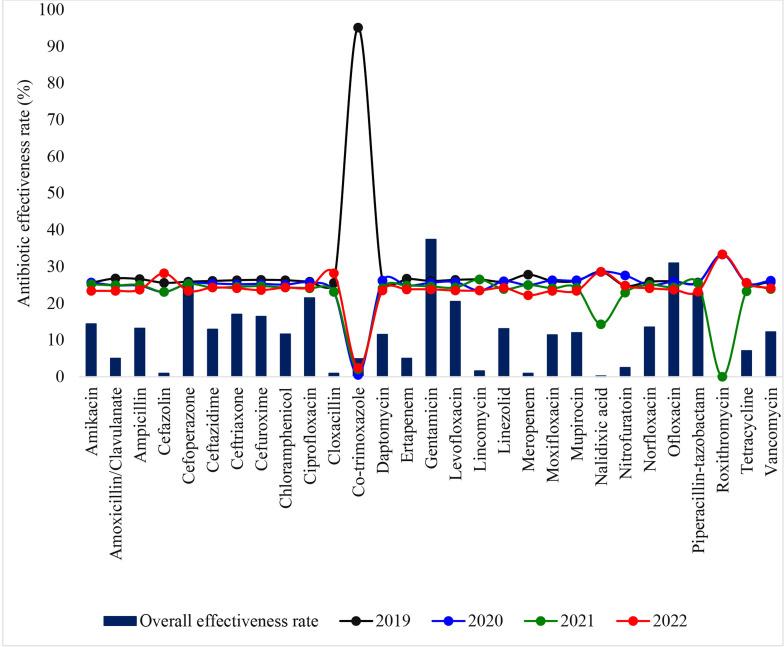
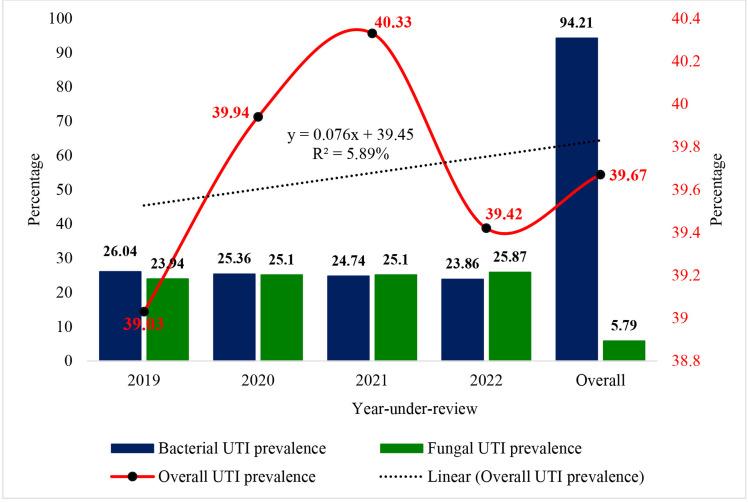
Urinary tract infections (UTIs) remain a significant public health concern, with evolving patterns in prevalence and antimicrobial resistance. This retrospective study, conducted at the Greater Accra Regional Hospital in Accra, Ghana, analyzed 11,280 urine cultures obtained exclusively from female patients from 2019 to 2022 to assess trends in UTI burden, prevalence stratified by age and month, and antimicrobial susceptibility patterns. In all, urine pathogens were isolated in 4475 (39.67%) of the samples tested. Of the total number of uropathogens isolated, majority of them were bacterial pathogens (94.21%), with an increasing proportion of fungal infections, specifically candida species (5.79%). Irrespective of the year, the highest prevalence of uropathogens were consistently recorded in the month of May, while individuals aged ≥ 90 years exhibited the greatest odds of infection in 2020 (aOR: 1.88, p = 0.039). Escherichia coli (30.51%) and Staphylococcus aureus (15.16%) were the most prevalent Gram-negative and Gram-positive pathogens, respectively. Antimicrobial susceptibility testing revealed declining antibiotic effectiveness over time, with notable exceptions for gentamicin (97.4% effectiveness against Enterococcus spp.) and ofloxacin (82.9% against Enterococcus spp.). Alarmingly, most antibiotics exhibited effectiveness rates below 20% by 2022, underscoring the growing resistance challenge. These findings, drawn from a key healthcare facility in Ghana's capital, highlight the dynamic nature of UTIs and the urgent need for targeted interventions, optimized antimicrobial stewardship, and continuous monitoring of resistance patterns to improve patient outcomes.
尿路感染(UTIs)仍然是一个重大的公共卫生问题,其患病率和抗菌药物耐药性模式不断演变。这项回顾性研究在加纳阿克拉的大阿克拉地区医院进行,分析了2019年至2022年期间仅从女性患者中获得的11280份尿培养物,以评估UTI负担趋势、按年龄和月份分层的患病率以及抗菌药物敏感性模式。总共在4475份(39.67%)检测样本中分离出尿液病原体。在分离出的所有尿路病原体中,大多数是细菌病原体(94.21%),真菌感染的比例在增加,特别是念珠菌属(5.79%)。无论哪一年,尿路病原体的最高患病率始终出现在5月份,而≥90岁的个体在2020年感染几率最高(调整后的比值比:1.88,p = 0.039)。大肠杆菌(30.51%)和金黄色葡萄球菌(15.16%)分别是最常见的革兰氏阴性和革兰氏阳性病原体。抗菌药物敏感性测试显示,随着时间的推移,抗生素有效性在下降,庆大霉素(对肠球菌属的有效性为97.4%)和氧氟沙星(对肠球菌属的有效性为82.9%)是显著例外。令人担忧的是,到2022年,大多数抗生素的有效率低于20%,凸显了耐药性挑战的日益严峻。这些来自加纳首都一家关键医疗机构的研究结果,突出了UTIs的动态性质以及针对性干预、优化抗菌药物管理和持续监测耐药模式以改善患者预后的迫切需求。
 Zotero 插件