
美国国立卫生研究院脑肿瘤研究资金分配的当前趋势。
Current trends in the allocation of National Institute of Health funding of brain tumor research.
作者信息
Nawabi Noah L A, Saway Brian F, Jha Rohan, Pereira Matheus, Mehta Neel H, Das Arabinda, Zukas Alicia, Lindhorst Scott, Strickland Ben A
机构信息
College of Medicine, Medical University of South Carolina, Charleston, South Carolina.
Department of Neurosurgery, Medical University of South Carolina, Charleston, South Carolina.
出版信息
Neurooncol Adv. 2024 Dec 4;7(1):vdae203. doi: 10.1093/noajnl/vdae203. eCollection 2025 Jan-Dec.
BACKGROUND
The National Institute of Health (NIH) provides a sizable annual budget toward brain tumor research. However, funding allocation for specific pathologies remains poorly described. We aimed to characterize the current landscape of NIH funding toward brain tumors as a function of pathology.
METHODS
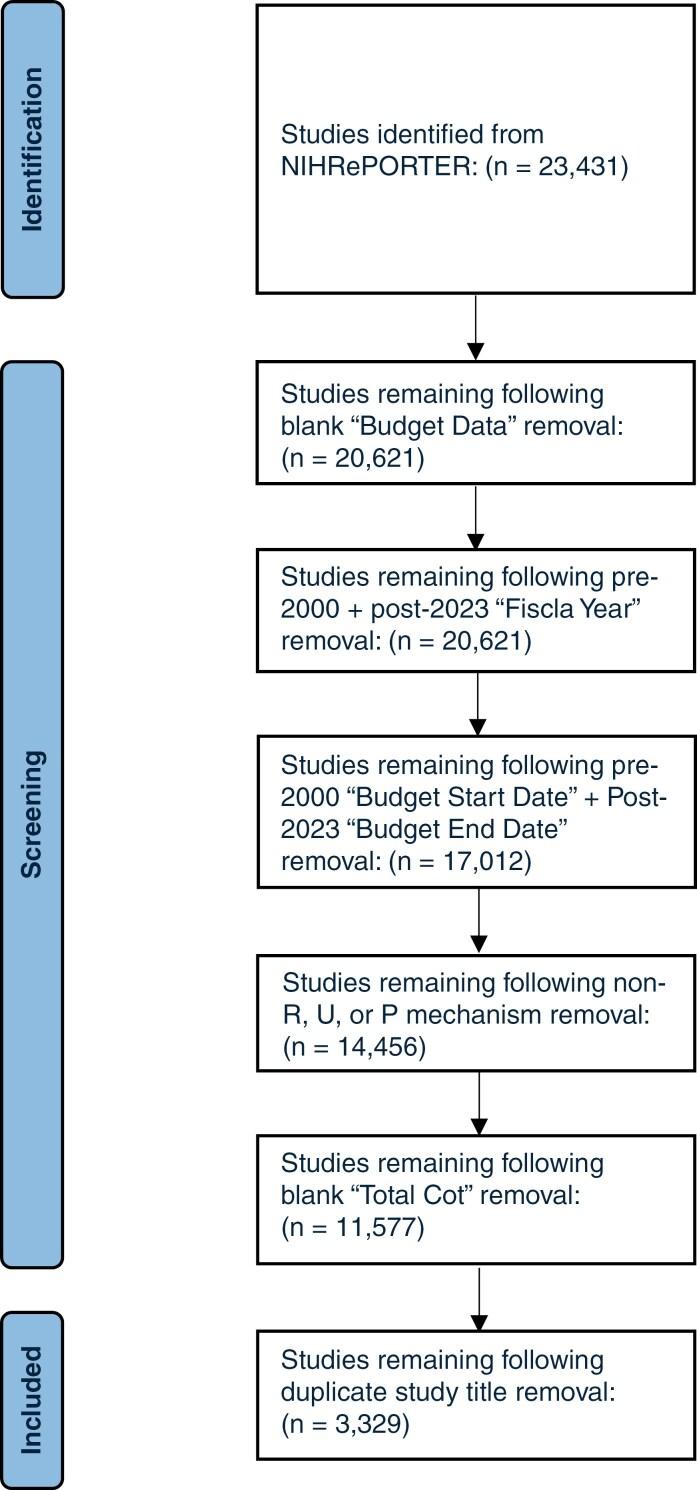
NIHRePORTER was queried to identify studies focused on glioblastoma, pediatric glioma, oligodendroglioma, brain metastasis, meningioma, pituitary adenoma, and vestibular schwannoma, from 2000 to 2023. Studies with R, U, and P funding mechanisms were included. Data were compiled and assessed according to pathology.
RESULTS
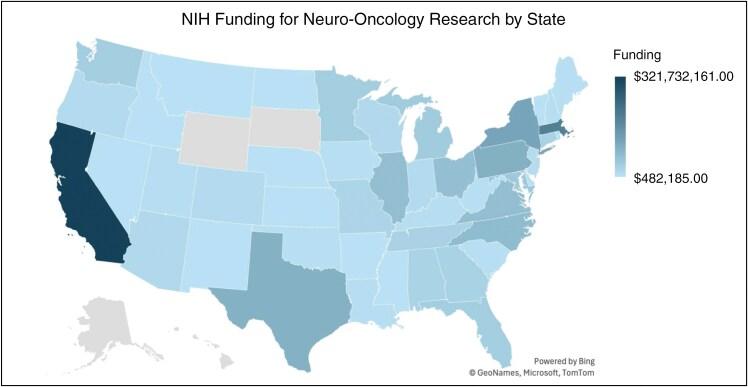
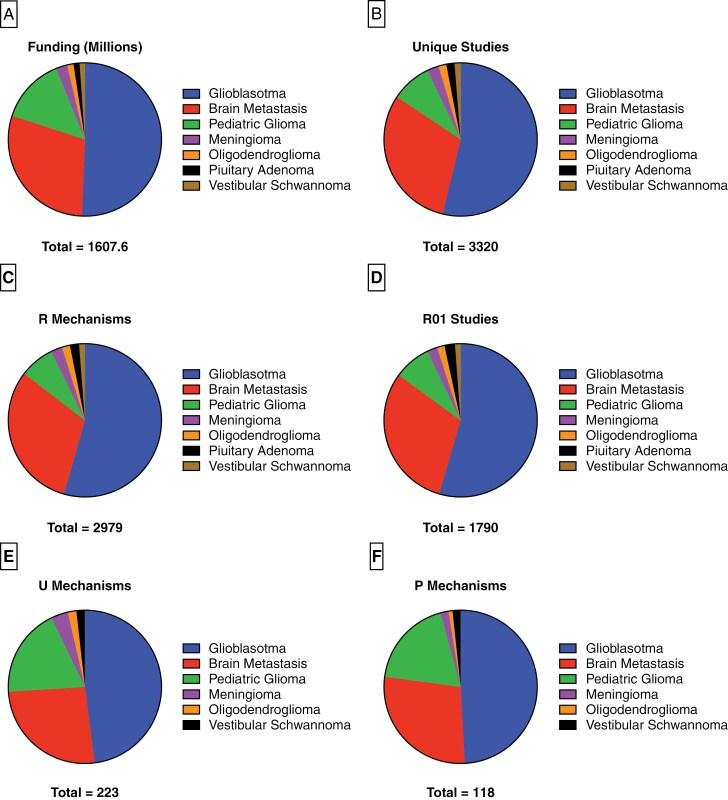
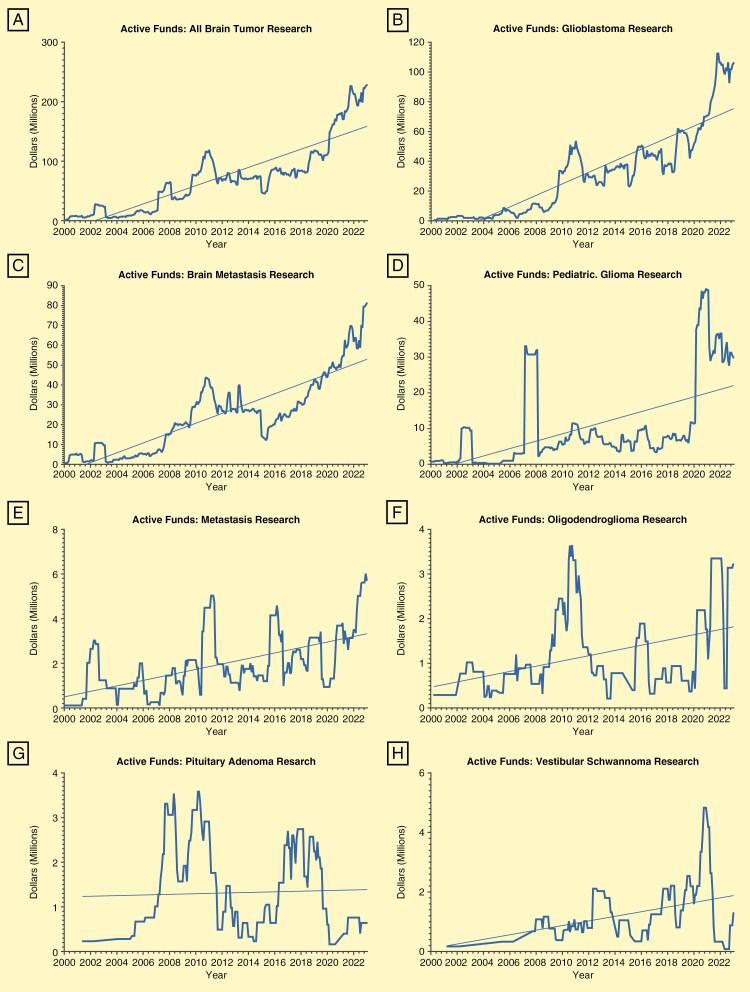
Across these 7 tumors, 3320 unique studies with R, U, or P funding mechanisms were identified from 2000 to 2023. These were conducted across 480 unique institutions. The sum of funds allocated to all studies was $1 607 662 631. Glioblastoma commanded the largest portion of funds, representing 54% of R mechanisms, 55% of R01-funded studies, 48% of U mechanisms, and 49% of P mechanisms, and accounted for 51% ($813 556 423) of total funding. Brain metastasis was the second most-funded tumor, representing 31% of all R mechanisms, 31% of all R01-funded studies, 26% of all U mechanisms, and 28% of all P mechanisms, and accounted for 29% ($472 715 745) of funding. The remaining 14% of R mechanisms, 26% of U mechanisms, and 23% of P mechanisms focused on the remaining pathologies, and accounted for 20% ($321 390 463) of funding.
CONCLUSIONS
The current landscape of NIH funding for brain tumor research indicates that awarded mechanisms prioritize malignant intra-axial malignancies. Despite their prevalence, skull base neoplasia is far less represented in NIH-funded studies.
背景
美国国立卫生研究院(NIH)每年为脑肿瘤研究提供大量预算。然而,针对特定病理类型的资金分配情况仍描述不清。我们旨在描述NIH当前针对脑肿瘤的资金分配格局与病理类型之间的关系。
方法
通过查询NIHRePORTER,确定2000年至2023年期间专注于胶质母细胞瘤、小儿胶质瘤、少突胶质细胞瘤、脑转移瘤、脑膜瘤、垂体腺瘤和前庭神经鞘瘤的研究。纳入具有R、U和P资助机制的研究。根据病理类型对数据进行汇总和评估。
结果
在这7种肿瘤中,2000年至2023年期间共确定了3320项具有R、U或P资助机制的独特研究。这些研究在480个不同的机构开展。分配给所有研究的资金总额为1607662631美元。胶质母细胞瘤获得的资金份额最大,占R机制的54%、R01资助研究的55%、U机制的48%和P机制的49%,占总资金的51%(813556423美元)。脑转移瘤是获得资金第二多的肿瘤,占所有R机制的31%、所有R01资助研究的31%、所有U机制的26%和所有P机制的28%,占资金的29%(472715745美元)。其余14%的R机制、26%的U机制和23%的P机制专注于其余病理类型,占资金的20%(321390463美元)。
结论
NIH目前用于脑肿瘤研究的资金分配格局表明,资助机制优先考虑恶性轴内恶性肿瘤。尽管颅底肿瘤很常见,但在NIH资助的研究中所占比例却小得多。
 Zotero 插件