
新辅助治疗中的PARP抑制剂;其应用原理、既往及正在进行的临床试验的全面概述
PARP Inhibitors in the Neoadjuvant Setting; A Comprehensive Overview of the Rationale for their Use, Past and Ongoing Clinical Trials.
作者信息
Habaka Minatoullah, Daly Gordon R, Shinyanbola Deborah, Alabdulrahman Mohammad, McGrath Jason, Dowling Gavin P, Hehir Cian, Huang Helen Ye Rim, Hill Arnold D K, Varešlija Damir, Young Leonie S
机构信息
Department of Surgery, RCSI University of Medicine and Health Sciences, Dublin, Ireland.
Department of Surgery, Beaumont Hospital, Dublin, Ireland.
出版信息
Curr Oncol Rep. 2025 May;27(5):533-551. doi: 10.1007/s11912-025-01669-z. Epub 2025 Apr 7.
PURPOSEOF REVIEW
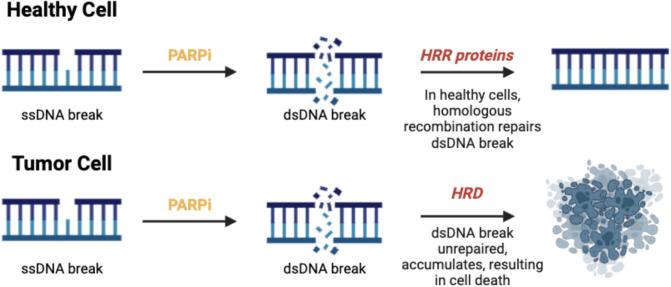
Poly (ADP-ribose) polymerases (PARPs) are enzymes essential for detecting and repairing DNA damage through poly-ADP-ribosylation. In cancer, cells with deficiencies in homologous recombination repair mechanisms often become more dependent on PARP-mediated repair mechanisms to effectively repair dsDNA breaks. As such, PARP inhibitors (PARPis) were introduced into clinical practice, serving as a key targeted therapy option through synthetic lethality in the treatment of cancers with homologous recombination repair deficiency (HRD). Though PARPis are currently approved in the adjuvant setting for several cancer types such as ovarian, breast, prostate and pancreatic cancer, their potential role in the neoadjuvant setting remains under investigation. This review outlines the rationale for using PARPi in the neoadjuvant setting and evaluates findings from early and ongoing clinical trials.
RECENT FINDINGS
Our analysis indicates that numerous studies have explored PARPi as a neoadjuvant treatment for HRD-related cancers. The majority of neoadjuvant PARPi trials have been performed in breast and ovarian cancer, while phase II/III evidence supporting efficacy in prostate and pancreatic cancers remains limited. Studies are investigating PARPi in the neoadjuvant setting of HRD-related cancers. Future research should prioritize combination strategies with immune checkpoint inhibitors and expand outcome measures to include patient satisfaction and quality-of-life metrics.
综述目的
聚(ADP - 核糖)聚合酶(PARP)是通过多聚ADP - 核糖基化检测和修复DNA损伤所必需的酶。在癌症中,同源重组修复机制存在缺陷的细胞通常更依赖PARP介导的修复机制来有效修复双链DNA断裂。因此,PARP抑制剂(PARPi)被引入临床实践,通过合成致死作用成为治疗同源重组修复缺陷(HRD)癌症的关键靶向治疗选择。尽管PARPi目前已被批准用于卵巢癌、乳腺癌、前列腺癌和胰腺癌等多种癌症类型的辅助治疗,但它们在新辅助治疗中的潜在作用仍在研究中。本综述概述了在新辅助治疗中使用PARPi的基本原理,并评估了早期和正在进行的临床试验结果。
最新发现
我们的分析表明,许多研究已将PARPi作为HRD相关癌症的新辅助治疗方法进行探索。大多数新辅助PARPi试验是在乳腺癌和卵巢癌中进行的,而支持前列腺癌和胰腺癌疗效的II/III期证据仍然有限。正在研究PARPi在HRD相关癌症新辅助治疗中的作用。未来的研究应优先考虑与免疫检查点抑制剂的联合策略,并扩大结果测量范围,将患者满意度和生活质量指标纳入其中。

 Zotero 插件