
盐酸米诺环素软膏联合替硝唑治疗慢性牙周炎的临床疗效研究:回顾性研究
Study on the Clinical Efficacy of Combined Therapy with Minocycline Hydrochloride Ointment and Tinidazole for Chronic Periodontitis: Retrospective Study.
作者信息
Wu Qirong, Cao Zhengyao, Wu Sisi
机构信息
Department of Prosthetics, Wuxi Stomatological Hospital, Wuxi, 214001, People's Republic of China.
Department of Stomatology Wuxi People's Hospital Affiliated to Nanjing Medical University, Wuxi, 214023, People's Republic of China.
出版信息
J Inflamm Res. 2025 Apr 2;18:4641-4649. doi: 10.2147/JIR.S514806. eCollection 2025.
OBJECTIVE
To analyze the clinical efficacy of combined minocycline hydrochloride and tinidazole therapy for chronic periodontitis (CP).
METHODS
A retrospective analysis was conducted on clinical data from 93 CP patients admitted to our hospital from January 2021 to January 2023. All patients met the inclusion and exclusion criteria. They were divided into a control group (n=46) and an observation group (n=47). All patients received full-mouth ultrasonic debridement. On this basis, patients in the control group received weekly subgingival minocycline hydrochloride ointment (Sunstar) injections, while patients in the observation group received combined 500 mg tinidazole tablets twice daily ×4 weeks. Periodontal parameters and gingival crevicular fluid (GCF) biomarkers were assessed at baseline and 3-month follow-up.
RESULTS
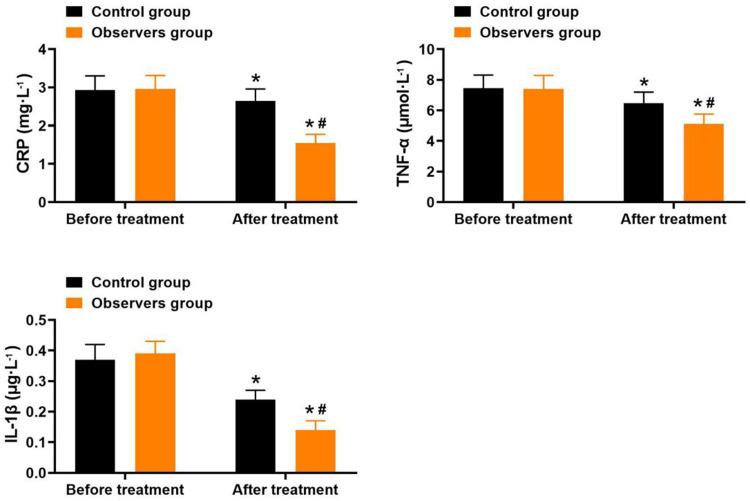
The results showed that the total effective rate of treatment in the observation group (91.49%) was significantly higher than that in the control group (73.91%) (P<0.05). The periodontal indicators (Plaque Index, Gingival Bleeding Index, Periodontal Pocket Depth), inflammatory factor indicators (C-reactive protein, Tumor Necrosis Factor-α, Interleukin-1β), Matrix Metalloproteinase-9 (MMP-9), and Secretory Immunoglobulin A (SIgA) levels of both groups decreased significantly after treatment. Moreover, these indicators in the observation group were significantly lower than those in the control group (P<0.05). There was no significant difference in the incidence of adverse reactions between the two groups (P>0.05).
CONCLUSION
The combination therapy of minocycline hydrochloride and tinidazole significantly improved the clinical efficacy for CP patients. Compared with minocycline hydrochloride alone, the addition of tinidazole further improved patients' periodontal health, reduced the inflammatory response and MMP-9, SIgA levels, and did not increase the risk of adverse reactions. This suggests good drug safety and clinical promotion value.
目的
分析盐酸米诺环素与替硝唑联合治疗慢性牙周炎(CP)的临床疗效。
方法
对2021年1月至2023年1月我院收治的93例CP患者的临床资料进行回顾性分析。所有患者均符合纳入及排除标准。将其分为对照组(n = 46)和观察组(n = 47)。所有患者均接受全口超声洁治。在此基础上,对照组患者每周接受一次龈下注射盐酸米诺环素软膏(Sunstar),而观察组患者每日两次口服500 mg替硝唑片,共4周。在基线和3个月随访时评估牙周参数和龈沟液(GCF)生物标志物。
结果
结果显示,观察组治疗总有效率(91.49%)显著高于对照组(73.91%)(P < 0.05)。两组治疗后的牙周指标(菌斑指数、牙龈出血指数、牙周袋深度)、炎症因子指标(C反应蛋白、肿瘤坏死因子-α、白细胞介素-1β)、基质金属蛋白酶-9(MMP-9)及分泌型免疫球蛋白A(SIgA)水平均显著降低。此外,观察组这些指标显著低于对照组(P < 0.05)。两组不良反应发生率无显著差异(P > 0.05)。
结论
盐酸米诺环素与替硝唑联合治疗显著提高了CP患者的临床疗效。与单独使用盐酸米诺环素相比,加用替硝唑进一步改善了患者的牙周健康,降低了炎症反应及MMP-9、SIgA水平,且未增加不良反应风险。这表明该联合用药具有良好的药物安全性和临床推广价值。


 Zotero 插件