
不同金纳米颗粒涂层对辐射和放射模拟药物敏化作用的定量单细胞比较
Quantitative Single-Cell Comparison of Sensitization to Radiation and a Radiomimetic Drug for Diverse Gold Nanoparticle Coatings.
作者信息
Howard Douglas, Turnbull Tyron, Wilson Puthenparampil, Paterson David John, Milanova Valentina, Thierry Benjamin, Kempson Ivan
机构信息
Future Industries Institute University of South Australia Mawson Lakes South Australia 5095 Australia.
Department of Nuclear Medicine University Hospital Essen Hufelandstrasse 55 45122 Essen Germany.
出版信息
Small Sci. 2024 Jun 16;4(9):2400053. doi: 10.1002/smsc.202400053. eCollection 2024 Sep.
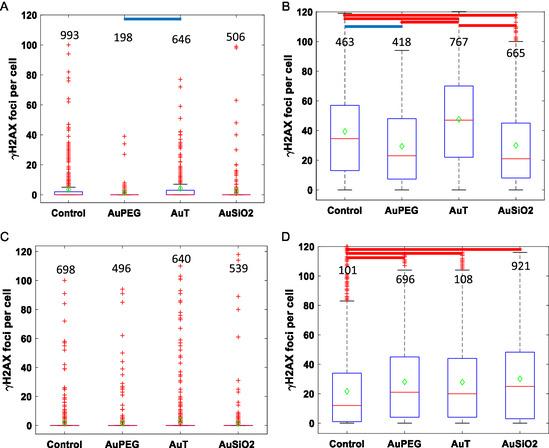
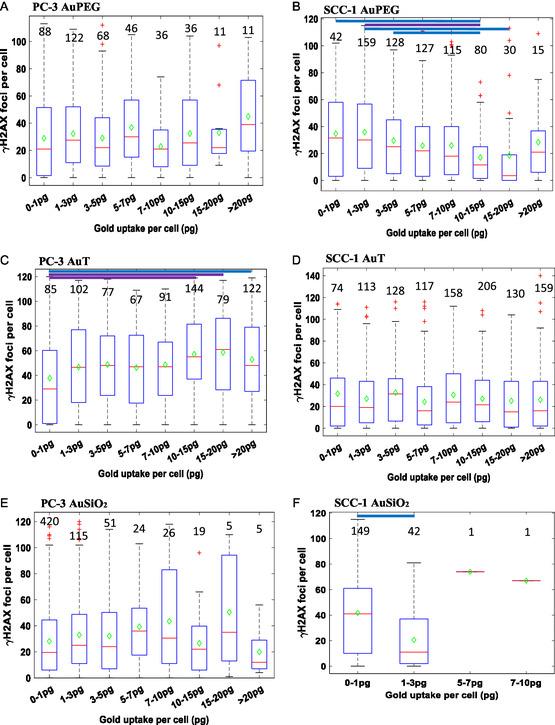
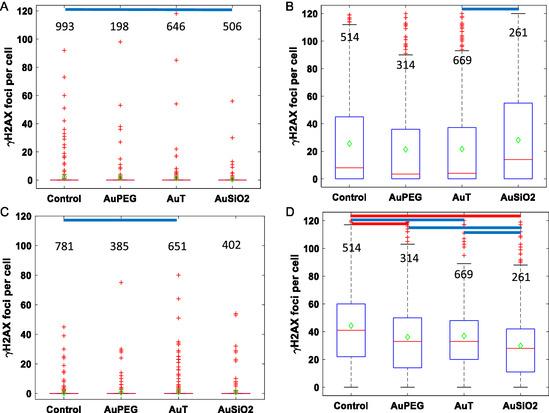
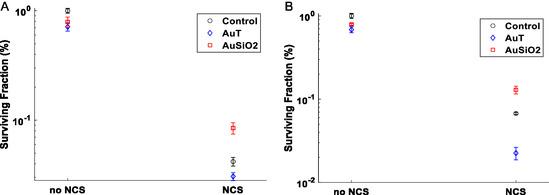
Metal-based nanoparticles (NPs) have entered clinical use for enhancing radiotherapy, but the underlying mechanisms remain ambiguous. Herein, single-cell analysis of two cell lines in response to megavolt irradiation and a radiomimetic drug, neocarzinostatin (NCS) after coculture with gold NPs with different surface coatings, polyethylene glycol (AuPEG), PEG, and transferrin (AuT) or silica (AuSiO), is reported. Different surface chemistry presents a major challenge for objective comparison between the biological impacts where major differences in cell-uptake exist. AuSiO NPs are the most efficient for promoting radiosensitization despite being associated with cells 10 times less than the actively targeted AuT NPs. Conversely, for cells exposed to NCS, AuSiO NPs impede the radiomimetic action and promote cell survival. AuT NPs enhance death of cells in combination with NCS showing that NPs can sensitize against cytotoxic agents in addition to radiation. While NPs contribute to radiosensitization (or enhancing/impeding chemotherapeutic drug activity), due to cell and cell line heterogeneity, the ultimate radiosensitivity of a cell appears to be dominated by its inherent radiosensitivity and how this cell-regulated response is manipulated by NPs. This is evidenced through comparison of radiobiological response of cells with equivalent NP association rather than equivalent coculture conditions.
金属基纳米颗粒(NPs)已进入临床用于增强放射治疗,但其潜在机制仍不明确。本文报道了两种细胞系在与具有不同表面涂层的金纳米颗粒(聚乙二醇修饰的金纳米颗粒(AuPEG)、聚乙二醇修饰的金纳米颗粒(PEG)、转铁蛋白修饰的金纳米颗粒(AuT)或二氧化硅修饰的金纳米颗粒(AuSiO))共培养后,对兆伏辐射和一种放射模拟药物新制癌菌素(NCS)的单细胞分析。不同的表面化学性质给细胞摄取存在重大差异的生物学影响之间的客观比较带来了重大挑战。尽管与主动靶向的AuT纳米颗粒相比,AuSiO纳米颗粒与细胞的结合量少10倍,但它在促进放射增敏方面效率最高。相反,对于暴露于NCS的细胞,AuSiO纳米颗粒会阻碍放射模拟作用并促进细胞存活。AuT纳米颗粒与NCS联合使用可增强细胞死亡,这表明纳米颗粒除了对辐射敏感外,还可对细胞毒性药物敏感。虽然纳米颗粒有助于放射增敏(或增强/阻碍化疗药物活性),但由于细胞和细胞系的异质性,细胞的最终放射敏感性似乎主要由其固有的放射敏感性以及纳米颗粒如何操纵这种细胞调节反应所决定。这通过比较具有等效纳米颗粒结合量而非等效共培养条件的细胞的放射生物学反应得到了证明。




 Zotero 插件