
中东和北非间皮瘤负担:对《2021年全球疾病负担研究》的32年分析
Burden of mesothelioma in the Middle East and North Africa: a 32-year analysis of the Global Burden of Diseases Study 2021.
作者信息
Ghiasvand Mohammad, Fooladi Sarabi Shahnaz, Salehi Asal, Seyedi Asl Fatemeh Sadat, AlJasem Mohamad, Yaghoubi Mohammad, Ehsani Zunuz Babak, Sanatian Zahra, Alaghi Parisa, Khadembashiri Mohammad Amin
机构信息
The University of Naples Federico II School of Medicine and Surgery, Naples, Italy.
Cancer Immunology and Immunotherapy Research Center, Ardabil University of Medical Sciences, Ardabil, Iran.
出版信息
Ann Med Surg (Lond). 2025 Feb 28;87(3):1127-1139. doi: 10.1097/MS9.0000000000003079. eCollection 2025 Mar.
BACKGROUND
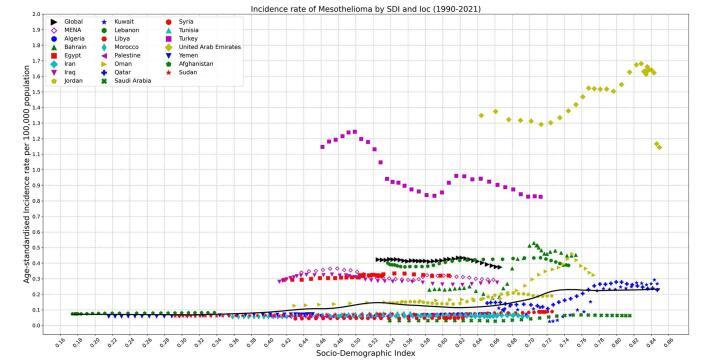
Mesothelioma, a cancer primarily caused by asbestos exposure, has been increasing in the Middle East and North Africa (MENA), raising concerns about the region's occupational and environmental health landscape. With varying Sociodemographic Index (SDI) and differing asbestos regulations across MENA, understanding mesothelioma trends over time is crucial.
METHODS
Using data from the Global Burden of Disease (GBD) Study 2021, we analyzed mesothelioma incidence, mortality, and disability-adjusted life years (DALYs) in MENA from 1990 to 2021. Age-standardized incidence rate (ASIR), mortality rate (ASMR), and disability rate (ASDR) were assessed by age, sex, and country. Trend analyses were conducted using joinpoint regression to identify significant shifts in disease burden over the study period.
RESULTS
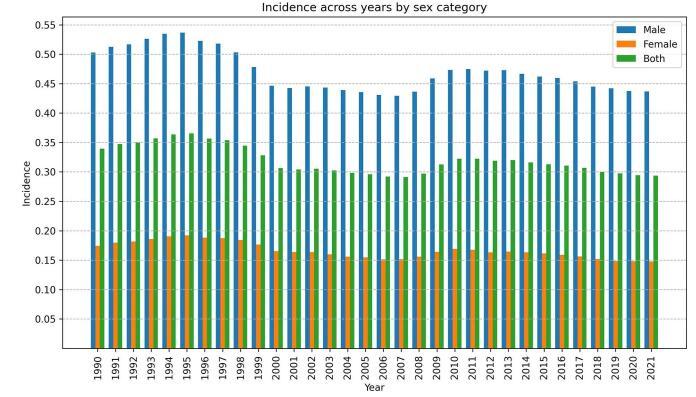
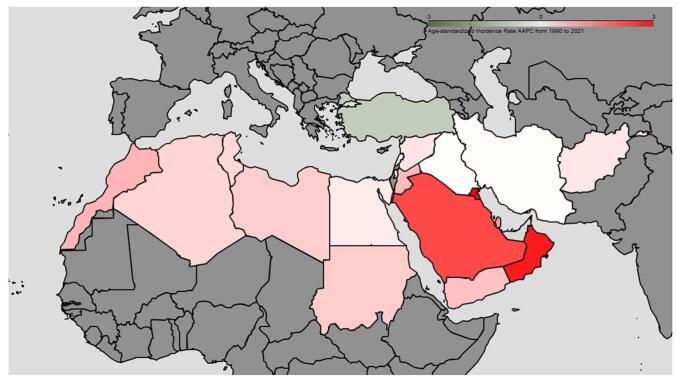
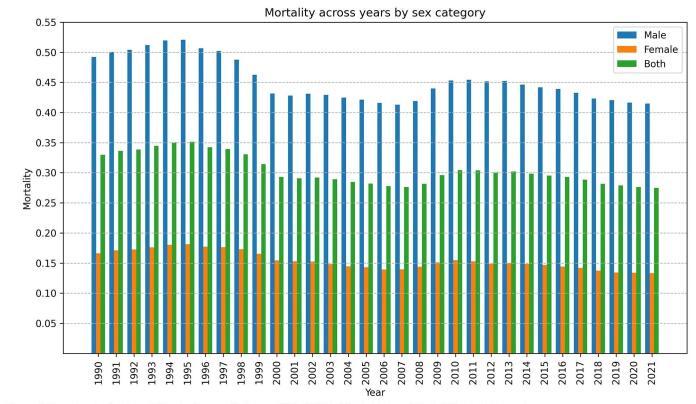
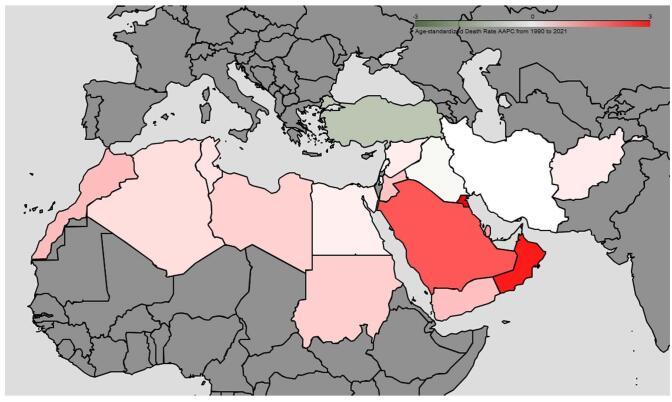
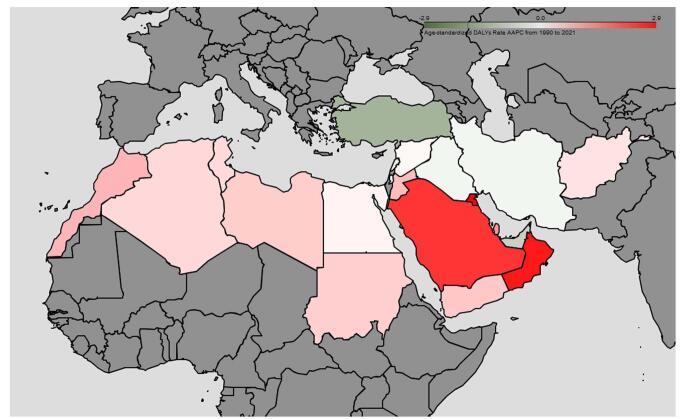
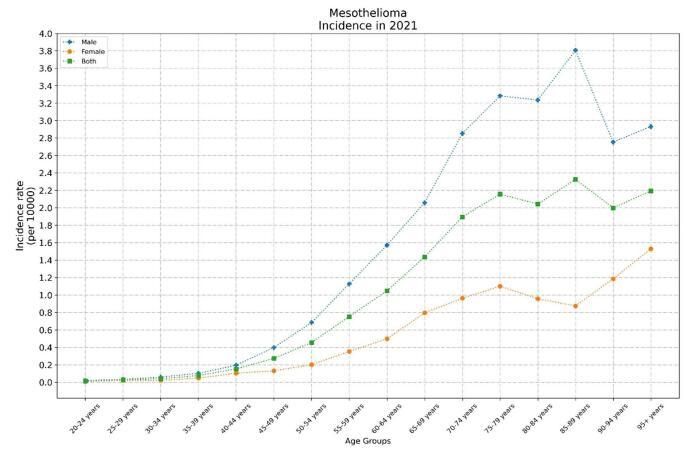
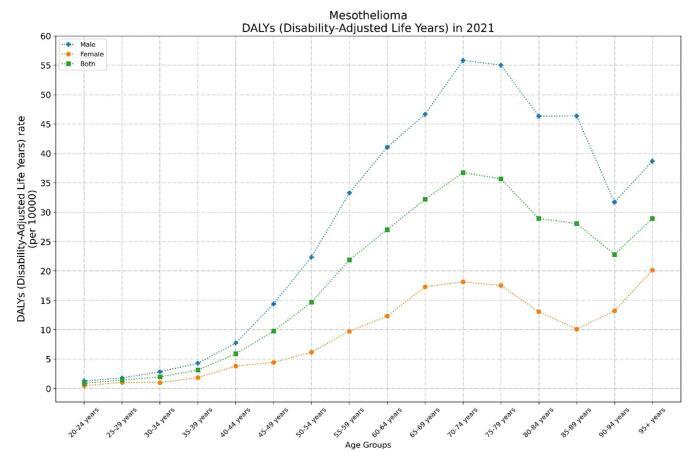
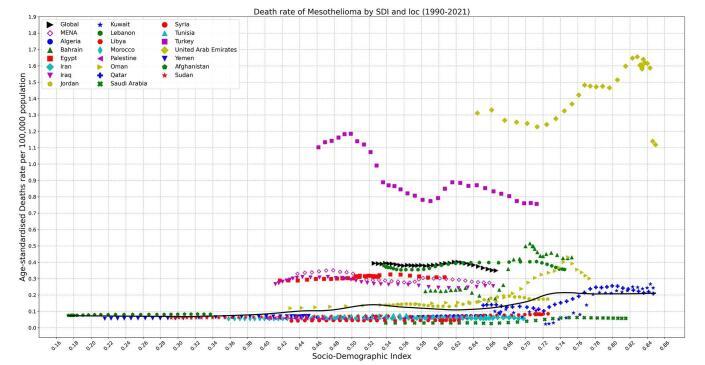
Between 1990 and 2021, mesothelioma cases rose from 597 to 1365, with ASIR declining at an average annual percent change (AAPC) of -0.49% ( < 0.001). Countries like Oman and Saudi Arabia exhibited rising burdens, while the United Arab Emirates and Turkey saw declines. Males and older age groups had higher ASIR, ASMR, and ASDR rates, indicating gender- and age-based disparities.
CONCLUSION
While the mesothelioma burden in MENA has declined overall, significant increases in certain countries highlight the need for uniform asbestos regulations and targeted health interventions, especially among high-risk demographics. Further research on occupational exposure and Sociodemographic Index (SDI) improvements could help reduce mesothelioma rates across the region.
背景
间皮瘤是一种主要由接触石棉引起的癌症,在中东和北非地区呈上升趋势,这引发了人们对该地区职业和环境卫生状况的担忧。由于中东和北非地区的社会人口指数(SDI)各不相同,石棉法规也存在差异,因此了解间皮瘤随时间的变化趋势至关重要。
方法
利用2021年全球疾病负担(GBD)研究的数据,我们分析了1990年至2021年中东和北非地区间皮瘤的发病率、死亡率和伤残调整生命年(DALY)。按年龄、性别和国家评估年龄标准化发病率(ASIR)、死亡率(ASMR)和伤残率(ASDR)。使用连接点回归进行趋势分析,以确定研究期间疾病负担的显著变化。
结果
1990年至2021年间,间皮瘤病例从597例增至1365例,ASIR以-0.49%的年均变化率下降(<0.001)。阿曼和沙特阿拉伯等国的负担有所上升,而阿联酋和土耳其则有所下降。男性和老年人群的ASIR、ASMR和ASDR率较高,表明存在基于性别和年龄的差异。
结论
虽然中东和北非地区间皮瘤的总体负担有所下降,但某些国家的显著增加凸显了统一石棉法规和有针对性的健康干预措施的必要性,特别是在高危人群中。进一步研究职业暴露和社会人口指数(SDI)的改善有助于降低该地区的间皮瘤发病率。



 Zotero 插件