
药物-药物偶联物纳米簇跨癌细胞膜共递送模拟的机制洞察
Mechanistic insights from simulations of drug-drug conjugate nanoclusters for co-delivery across cancer cell membranes.
作者信息
Choodet Cherdpong, Srikulwong Unnop, Toomjeen Pakawat, Chuaephon Adulvit, Phanchai Witthawat, Puangmali Theerapong
机构信息
Department of Physics, Faculty of Science, Khon Kaen University Khon Kaen 40002 Thailand
出版信息
RSC Adv. 2025 Apr 10;15(15):11343-11353. doi: 10.1039/d5ra00480b. eCollection 2025 Apr 9.
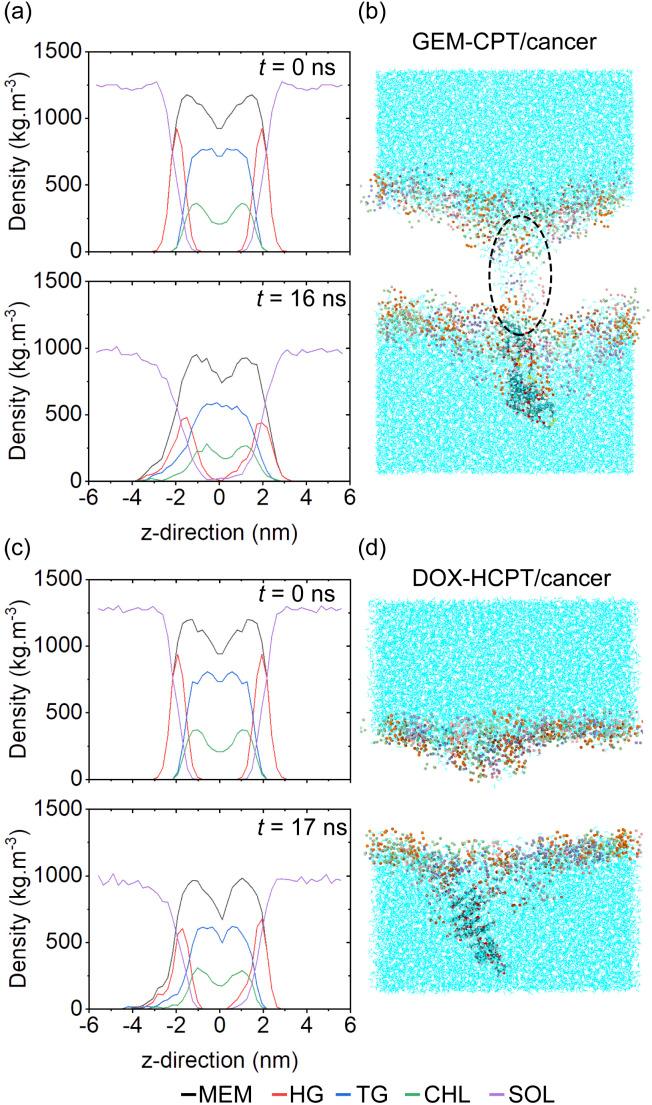
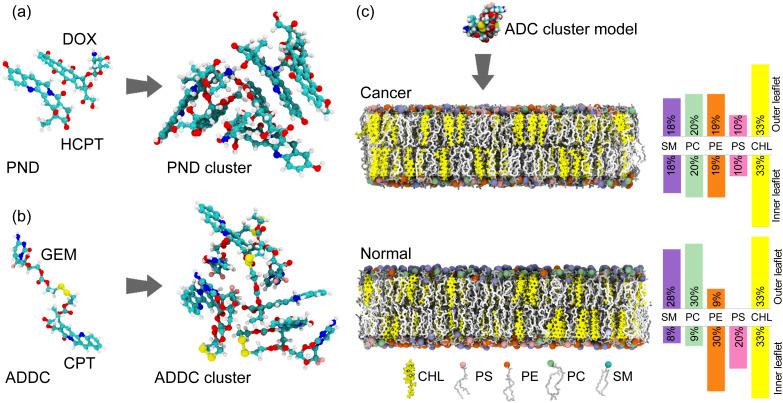
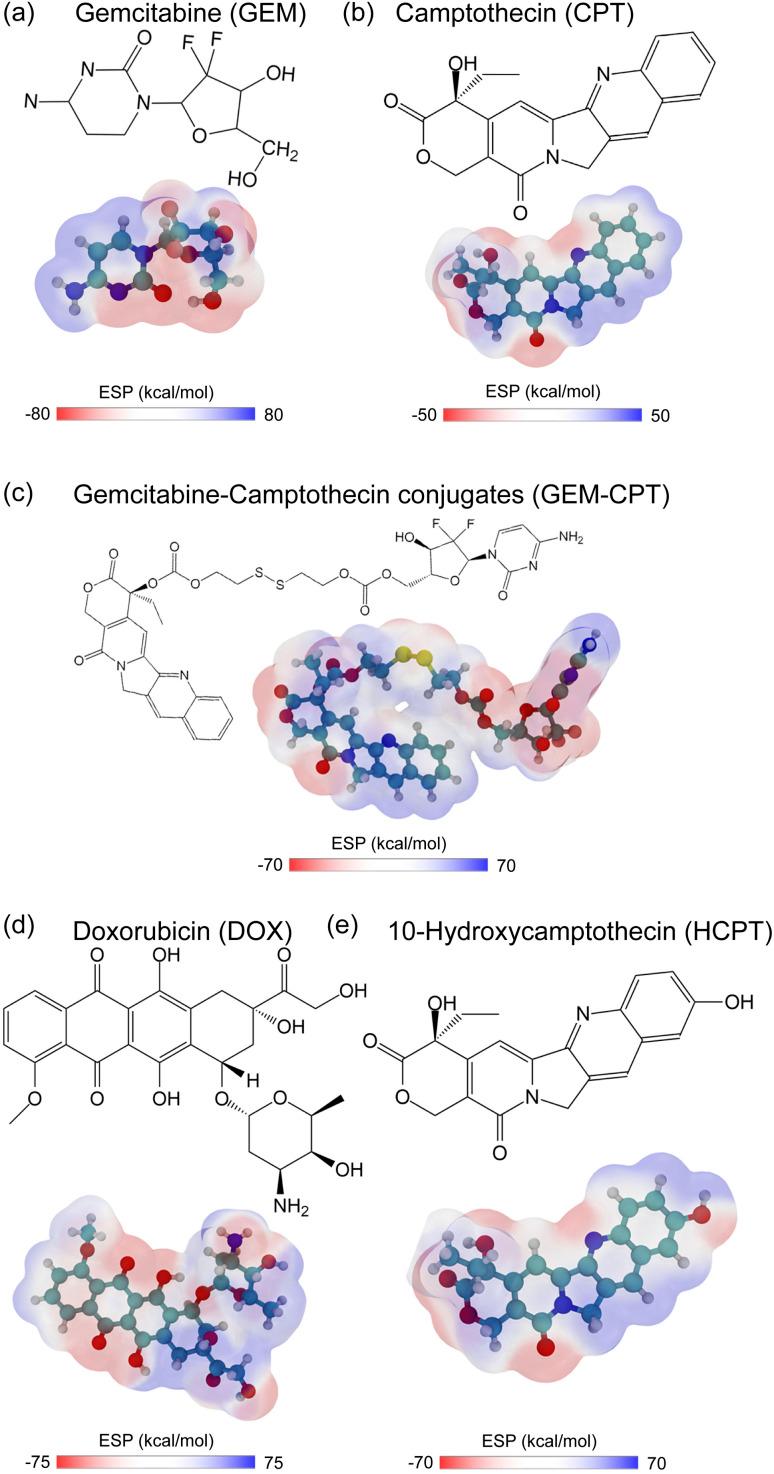
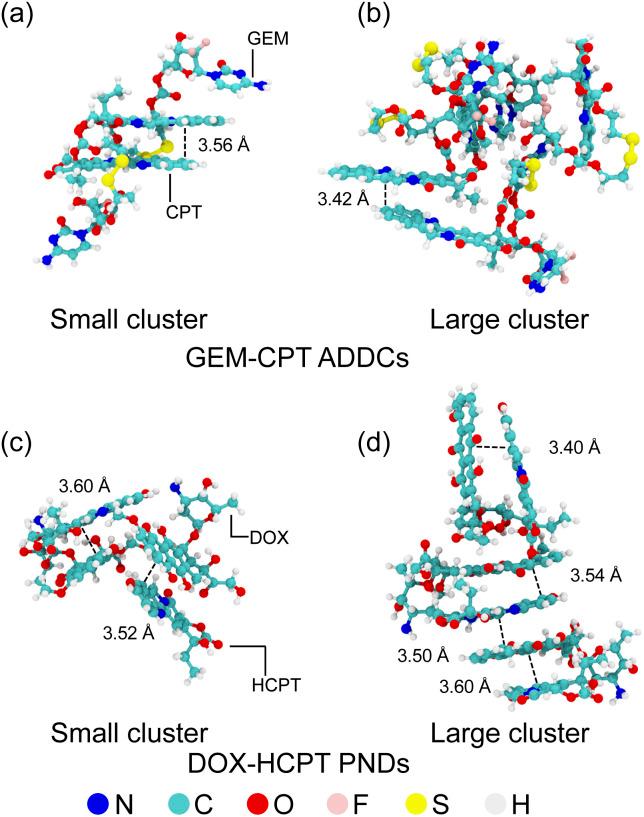
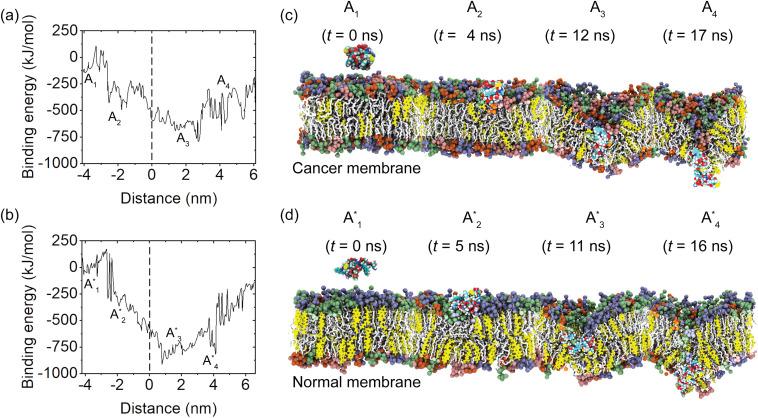
Amphiphilic drug-drug conjugates (ADDCs) such as gemcitabine-camptothecin (GEM-CPT) and doxorubicin-10-hydroxycamptothecin (DOX-HCPT) nanoclusters offer innovative solutions to overcome the limitations of conventional cancer therapies, including poor solubility and nonspecific targeting. Using molecular dynamics (MD) simulations, we explored the mechanisms by which these nanoclusters interact with and penetrate cancer and normal cell membranes. GEM-CPT exhibited enhanced membrane penetration in cancer cells through combined hydrophilic and hydrophobic interactions, along with its ability to extract cholesterol and induce membrane remodelling. In contrast, DOX-HCPT maintained structural integrity through stable π-π stacking interactions, showing selective binding to membrane head groups (HG) with minimal cholesterol interaction, particularly in normal membranes. The GEM-CPT nanocluster disrupted the cancer membrane by inducing asymmetric lipid distribution and facilitating water infiltration, whereas the hydrophobic DOX-HCPT repelled water, maintaining membrane stability. The size of the nanocluster further influenced the behaviour; larger clusters drove steric assembly and lipid reorganisation, while smaller clusters achieved deeper penetration at the cost of structural integrity. The contrasting behaviours of GEM-CPT and DOX-HCPT highlight the critical roles of size, charge, and amphiphilicity in membrane transport mechanisms. These findings provide valuable insights into the design of efficient and selective nanomedicines, paving the way for optimised drug delivery systems with reduced off-target effects.
两亲性药物-药物偶联物(ADDCs),如吉西他滨-喜树碱(GEM-CPT)和阿霉素-10-羟基喜树碱(DOX-HCPT)纳米簇,为克服传统癌症治疗的局限性提供了创新解决方案,这些局限性包括溶解度差和非特异性靶向。通过分子动力学(MD)模拟,我们探究了这些纳米簇与癌细胞膜和正常细胞膜相互作用并穿透它们的机制。GEM-CPT通过亲水和疏水相互作用的结合,以及其提取胆固醇和诱导膜重塑的能力,在癌细胞中表现出增强的膜穿透性。相比之下,DOX-HCPT通过稳定的π-π堆积相互作用维持结构完整性,显示出与膜头部基团(HG)的选择性结合,与胆固醇的相互作用最小,特别是在正常细胞膜中。GEM-CPT纳米簇通过诱导不对称脂质分布和促进水渗透来破坏癌细胞膜,而疏水性的DOX-HCPT排斥水,维持膜的稳定性。纳米簇的大小进一步影响了其行为;较大的纳米簇驱动空间组装和脂质重组,而较小的纳米簇以结构完整性为代价实现更深的穿透。GEM-CPT和DOX-HCPT的不同行为突出了大小、电荷和两亲性在膜转运机制中的关键作用。这些发现为高效和选择性纳米药物的设计提供了有价值的见解,为减少脱靶效应的优化药物递送系统铺平了道路。


 Zotero 插件