
组蛋白修饰在红细胞生成调控中的作用
Histone modifications in the regulation of erythropoiesis.
作者信息
Wu Xiuyun, Xu Hongdi, Xia Erxi, Gao Linru, Hou Yan, Sun Lei, Zhang Hengchao, Cheng Ying
机构信息
School of Life Sciences, Zhengzhou University, Zhengzhou, China.
出版信息
Ann Med. 2025 Dec;57(1):2490824. doi: 10.1080/07853890.2025.2490824. Epub 2025 Apr 11.
INTRODUCTION
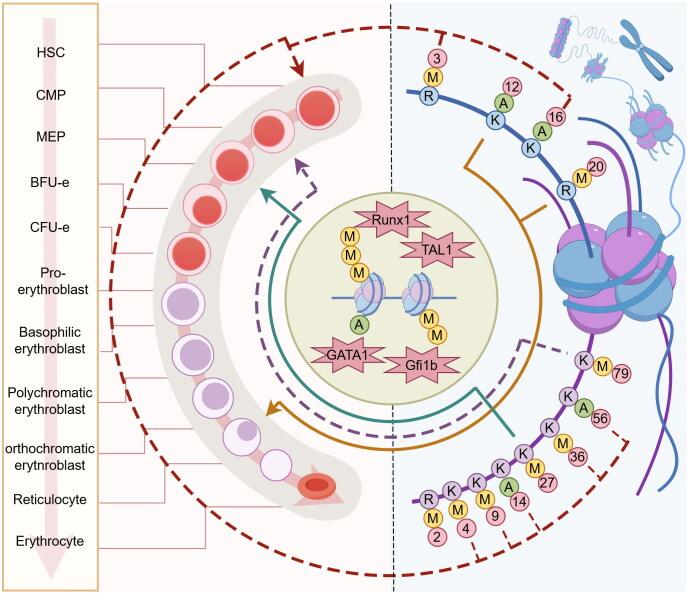
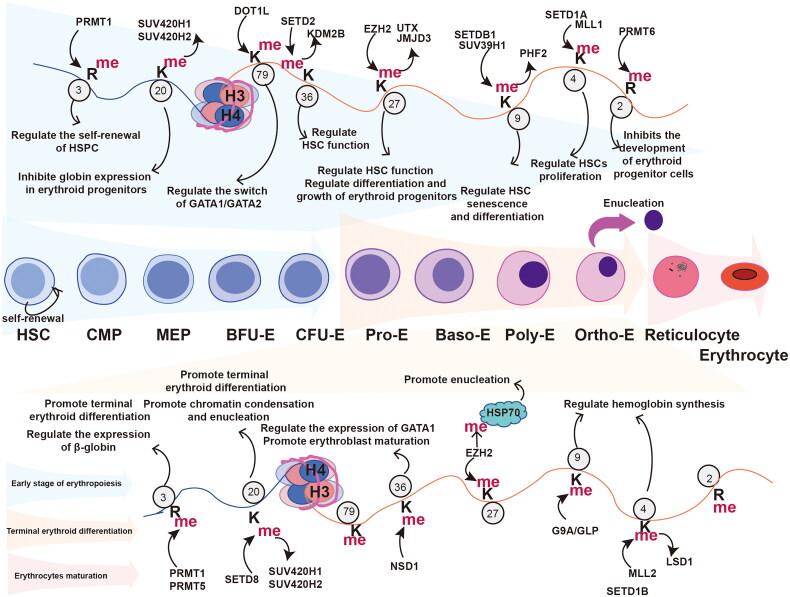
The pathogenesis of anemia and other erythroid dysphasia are mains poorly understood, primarily due to limited knowledge about the differentiation processes and regulatory mechanisms governing erythropoiesis. Erythropoiesis is a highly complex and precise biological process, that can be categorized into three distinct stages: early erythropoiesis, terminal erythroid differentiation, and reticulocyte maturation, and this complex process is tightly controlled by multiple regulatory factors. Emerging evidence highlights the crucial role of epigenetic modifications, particularly histone modifications, in regulating erythropoiesis. Methylation and acetylation are two common modification forms that affect genome accessibility by altering the state of chromatin, thereby regulating gene expression during erythropoiesis.
DISCUSSION
This review systematically examines the roles of histone methylation and acetylation, along with their respective regulatory enzymes, in regulating the development and differentiation of hematopoietic stem/progenitor cells (HSPCs) and erythroid progenitors. Furthermore, we discuss the involvement of these histone modifications in erythroid-specific developmental processes, including hemoglobin switching, chromatin condensation, and enucleation. This review summarizes the current understanding of the role of histone modifications in erythropoiesis based on existing research, as a foundation for further research the mechanisms of epigenetic regulatory in erythropoiesis.
引言
贫血及其他红系发育异常的发病机制主要仍未得到充分了解,这主要是由于对红细胞生成的分化过程和调控机制的认识有限。红细胞生成是一个高度复杂且精确的生物学过程,可分为三个不同阶段:早期红细胞生成、终末红系分化和网织红细胞成熟,而这一复杂过程受到多种调控因子的严格控制。新出现的证据凸显了表观遗传修饰,尤其是组蛋白修饰,在调节红细胞生成中的关键作用。甲基化和乙酰化是两种常见的修饰形式,它们通过改变染色质状态影响基因组的可及性,从而在红细胞生成过程中调节基因表达。
讨论
本综述系统地研究了组蛋白甲基化和乙酰化及其各自的调控酶在调节造血干/祖细胞(HSPCs)和红系祖细胞的发育与分化中的作用。此外,我们还讨论了这些组蛋白修饰在红系特异性发育过程中的参与情况,包括血红蛋白转换、染色质凝聚和去核。本综述基于现有研究总结了目前对组蛋白修饰在红细胞生成中作用的理解,为进一步研究红细胞生成中的表观遗传调控机制奠定基础。

 Zotero 插件