
膳食纤维对牙周炎小鼠模型的身体组成、血糖、炎症、微生物群和代谢组有调节作用。
Dietary Fibre Modulates Body Composition, Blood Glucose, Inflammation, Microbiome, and Metabolome in a Murine Model of Periodontitis.
作者信息
Jayasinghe Thilini, Jenkins Josie, Medara Nidhi, Choowong Phannaphat, Dharmarathne Gangani, Kong Fay, Cho Hanna, Kim Se Hun, Zhang Yuchen, Franco-Duarte Ricardo, Eberhard Joerg, Spahr Axel
机构信息
The Charles Perkins Centre, Faculty of Medicine and Health, University of Sydney, Camperdown, NSW 2050, Australia.
School of Dentistry, Faculty of Medicine and Health, University of Sydney, Surry Hills, NSW 2006, Australia.
出版信息
Nutrients. 2025 Mar 26;17(7):1146. doi: 10.3390/nu17071146.
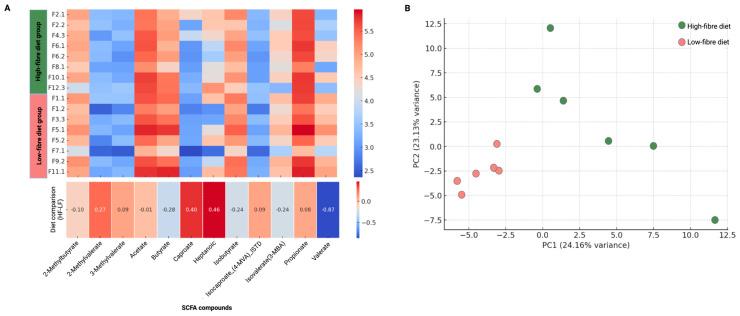
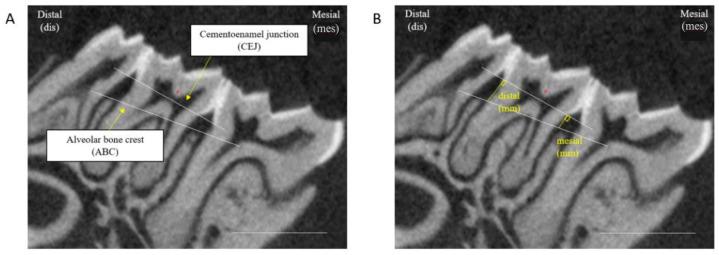
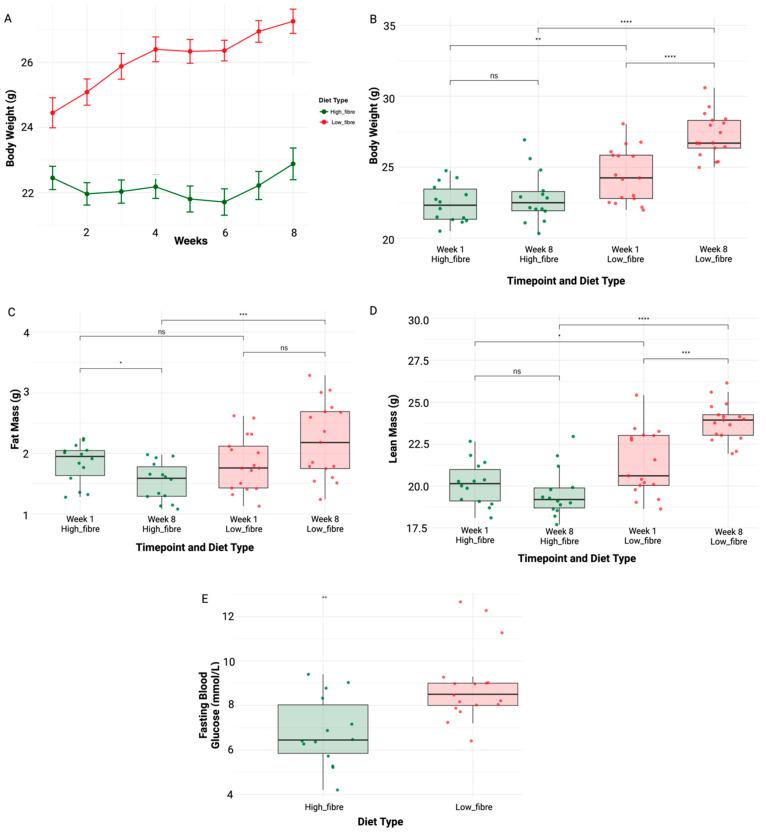
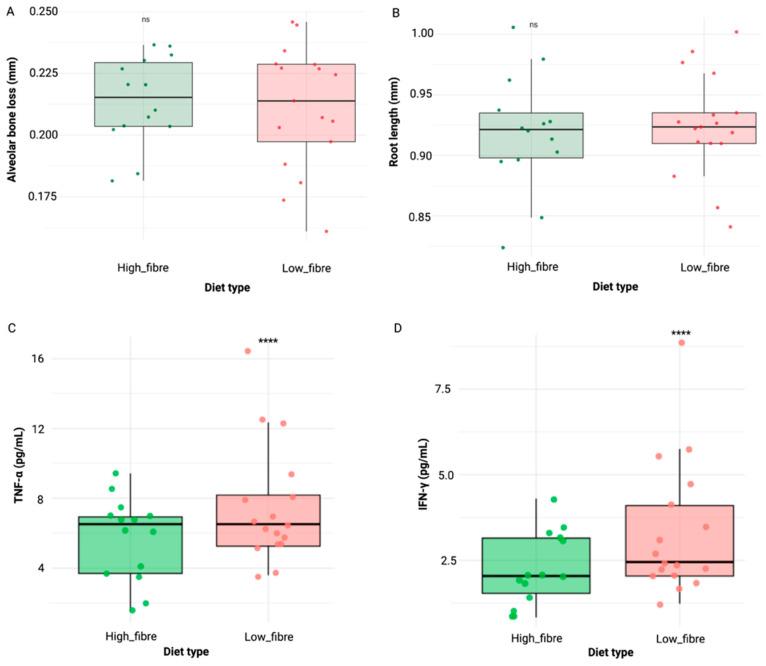
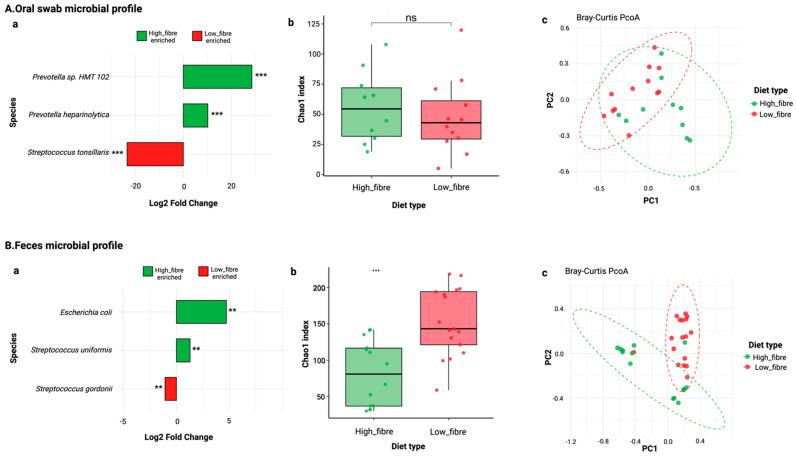
Dietary fibre plays a crucial role in metabolic regulation, inflammation, and microbiome composition. However, its impact on systemic and oral health, particularly in periodontitis, remains unclear. This study investigated the effects of high- and low-fibre diets on body composition, glycaemic control, inflammation, microbiome, and metabolome in a murine model of experimental periodontitis. Thirty-six male C57BL/6 mice were randomised to a high-fibre (40% fibre) or low-fibre (5% fibre) diet for eight weeks. Body weight, fat mass, lean mass, fasting blood glucose, serum inflammatory markers, alveolar bone loss, and root length were assessed. Oral and faecal microbiome composition was analysed using 16S rRNA sequencing. Metabolomic and short-chain fatty acid (SCFA) profiling was conducted using liquid chromatography-mass spectrometry (LC-MS). Mice on the high-fibre diet exhibited significantly lower body weight ( < 0.0001), fat mass ( = 0.0007), and lean mass ( < 0.0001) compared to the low-fibre group. Fasting blood glucose levels were significantly lower in the high-fibre group ( = 0.0013). TNF-α and IFN-γ levels were significantly elevated in the low-fibre group ( < 0.0001), suggesting a heightened pro-inflammatory state. While alveolar bone loss and root length did not differ significantly, microbiome analysis revealed distinct bacterial compositions (PERMANOVA, < 0.05), with fibre-fermenting taxa enriched in high-fibre-fed mice. Metabolomic analysis identified 19 significantly altered metabolites, indicating dietary adaptations. A high-fibre diet improves glycaemic control, reduces systemic inflammation, and alters microbial and metabolic profiles in experimental periodontitis. These findings highlight dietary fibre's role in modulating metabolic and inflammatory pathways relevant to periodontal and systemic diseases.
膳食纤维在代谢调节、炎症和微生物群组成中起着关键作用。然而,其对全身和口腔健康的影响,尤其是对牙周炎的影响,仍不清楚。本研究在实验性牙周炎小鼠模型中,研究了高纤维和低纤维饮食对身体成分、血糖控制、炎症、微生物群和代谢组的影响。36只雄性C57BL/6小鼠被随机分为高纤维(40%纤维)或低纤维(5%纤维)饮食组,为期8周。评估体重、脂肪量、瘦体重、空腹血糖、血清炎症标志物、牙槽骨丢失和牙根长度。使用16S rRNA测序分析口腔和粪便微生物群组成。使用液相色谱-质谱联用(LC-MS)进行代谢组学和短链脂肪酸(SCFA)分析。与低纤维组相比,高纤维饮食组的小鼠体重(<0.0001)、脂肪量(=0.0007)和瘦体重(<0.0001)显著降低。高纤维组的空腹血糖水平显著降低(=0.0013)。低纤维组的TNF-α和IFN-γ水平显著升高(<0.0001),表明促炎状态增强。虽然牙槽骨丢失和牙根长度没有显著差异,但微生物群分析显示细菌组成不同(PERMANOVA,<0.05),高纤维喂养小鼠中富含纤维发酵类群。代谢组学分析确定了19种显著改变的代谢物,表明饮食适应性变化。高纤维饮食可改善实验性牙周炎中的血糖控制、减轻全身炎症,并改变微生物和代谢谱。这些发现突出了膳食纤维在调节与牙周和全身疾病相关的代谢和炎症途径中的作用。

 Zotero 插件