
线粒体AKT1信号通路在代谢综合征肾小管损伤中的作用
The Role of Mitochondrial AKT1 Signaling in Renal Tubular Injury of Metabolic Syndrome.
作者信息
Lin Hugo Y-H, Chen I-Ya, Wang Tzu-Ming, Yen Chia-Hung, Chen Yumay, Chen Yen-Hua, Dai Dao-Fu, Huang Jee-Fu, Chiu Yi-Wen, Yang Ming-Yu
机构信息
Division of Nephrology, Department of Internal Medicine, Kaohsiung Medical University Hospital, Kaohsiung, Taiwan.
Department of Medicine, Kaohsiung Medical University, Kaohsiung, Taiwan.
出版信息
Kidney Int Rep. 2024 Dec 24;10(3):906-920. doi: 10.1016/j.ekir.2024.12.021. eCollection 2025 Mar.
INTRODUCTION
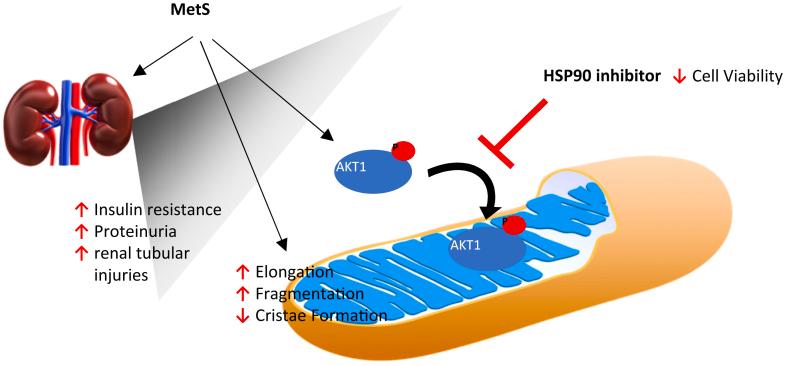
Metabolic syndrome (MetS) is increasingly recognized as a contributor to kidney disease, yet the underlying mechanisms remain poorly defined. Recent studies suggest a pivotal role for mitochondrial dysfunction in renal injury. We hypothesized that mitochondrial AKT1 signaling in renal tubules plays a critical role in MetS-related kidney injuries.
METHODS
MetS was induced in a 8-week-old C57BL/6 male mice using a high-fat diet (HFD) for 4 months compared with controls on a standard chow diet. Additional experiments were conducted in DB/DB diabetic mice and their controls (WT and DB/WT) to validate findings. Renal metabolic parameters, mitochondrial AKT1 signaling, and markers of kidney injury were assessed.
RESULTS
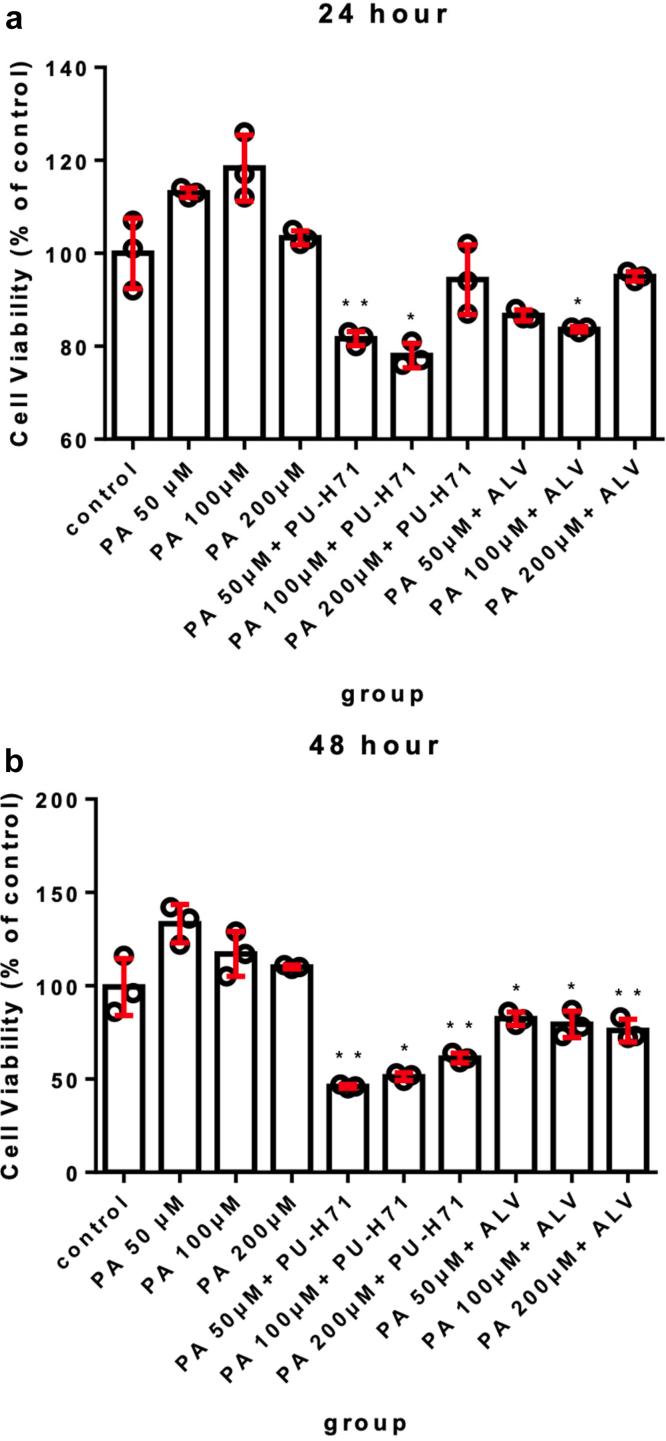
MetS mice exhibited significant weight gain, altered glucose handling, and decreased energy expenditure. Although kidney size and basic renal function (blood urea nitrogen [BUN], creatinine) were unchanged, markers of renal damage, including proteinuria ( = 0.0002) and KIM-1 ( < 0.0001) were elevated. Histological analyses showed increased tubular injury ( < 0.0001) and glomerulosclerosis ( = 0.0004). Transmission electron microscopy revealed aberrant mitochondria ( < 0.001), with reduced cristae length ( = 0.012) and numbers ( < 0.001). Immunohistochemistry, immunofluorescence, and Western blot analysis confirmed increased phosphorylated AKT1 (pAKT1) in the mitochondria of renal tubules ( = 0.0474), findings corroborated in DB/DB mice. This translocation of pAKT1 into mitochondria correlated with decreased cell viability upon inhibition of heat shock protein 90, indicating a dependency on mitochondrial AKT1 for cell survival.
CONCLUSION
These findings underscore the mechanistic link between mitochondrial AKT1 signaling and renal tubular injury in MetS. Targeting mitochondrial dysfunction may offer new avenues for preventing and treating kidney diseases in patients with MetS.
引言
代谢综合征(MetS)日益被认为是导致肾脏疾病的一个因素,但其潜在机制仍不清楚。最近的研究表明线粒体功能障碍在肾损伤中起关键作用。我们假设肾小管中的线粒体AKT1信号传导在与MetS相关的肾损伤中起关键作用。
方法
与喂食标准普通饲料的对照组相比,对8周龄的C57BL/6雄性小鼠采用高脂饮食(HFD)诱导MetS 4个月。在DB/DB糖尿病小鼠及其对照组(野生型和DB/WT)中进行了额外实验以验证研究结果。评估了肾脏代谢参数、线粒体AKT1信号传导和肾损伤标志物。
结果
MetS小鼠体重显著增加,葡萄糖处理改变,能量消耗减少。虽然肾脏大小和基本肾功能(血尿素氮[BUN]、肌酐)未改变,但包括蛋白尿(P = 0.0002)和KIM-1(P < 0.0001)在内的肾损伤标志物升高。组织学分析显示肾小管损伤增加(P < 0.0001)和肾小球硬化(P = 0.0004)。透射电子显微镜显示线粒体异常(P < 0.001),嵴长度减少(P = 0.012)和数量减少(P < 0.001)。免疫组织化学、免疫荧光和蛋白质印迹分析证实肾小管线粒体中磷酸化AKT1(pAKT1)增加(P = 0.0474),在DB/DB小鼠中也得到了证实。pAKT1向线粒体的这种易位与热休克蛋白90抑制后细胞活力降低相关,表明细胞存活依赖于线粒体AKT1。
结论
这些发现强调了线粒体AKT1信号传导与MetS中肾小管损伤之间的机制联系。针对线粒体功能障碍可能为预防和治疗MetS患者的肾脏疾病提供新途径。


 Zotero 插件