
Tasurgratinib作为一种口服可用的FGFR1-3抑制剂对ER/HER2乳腺癌临床前模型中对CDK4/6抑制剂和内分泌治疗耐药性的影响。
Effect of Tasurgratinib as an Orally Available FGFR1-3 Inhibitor on Resistance to a CDK4/6 Inhibitor and Endocrine Therapy in ER/HER2 Breast Cancer Preclinical Models.
作者信息
Kawano Satoshi, Fukushima Sayo, Nishibata Kyoko, Gejima Ryu, Miyano Saori Watanabe
机构信息
Eisai Co., Ltd., Tsukuba 300-2635, Japan.
出版信息
Cancers (Basel). 2025 Mar 24;17(7):1084. doi: 10.3390/cancers17071084.
BACKGROUND
Fibroblast growth factor (FGF) signaling plays a crucial role in several cellular functions in cancer cells. Tasurgratinib, formerly known as E7090, is an orally available FGF receptor (FGFR)1-3 selective inhibitor. Here, we present the effects of tasurgratinib on the resistance to CDK4/6 inhibitors and endocrine therapy (ET) in a preclinical model.
METHODS
Estrogen receptor (ER) breast cancer (BC) patient-derived xenograft (PDX) models harboring wild-type or mutation were used as animal models. An in vitro cell proliferation assay of ER BC cell lines treated with fulvestrant or palbociclib + fulvestrant was conducted in the presence of FGF2 and FGF10, with or without tasurgratinib.
RESULTS
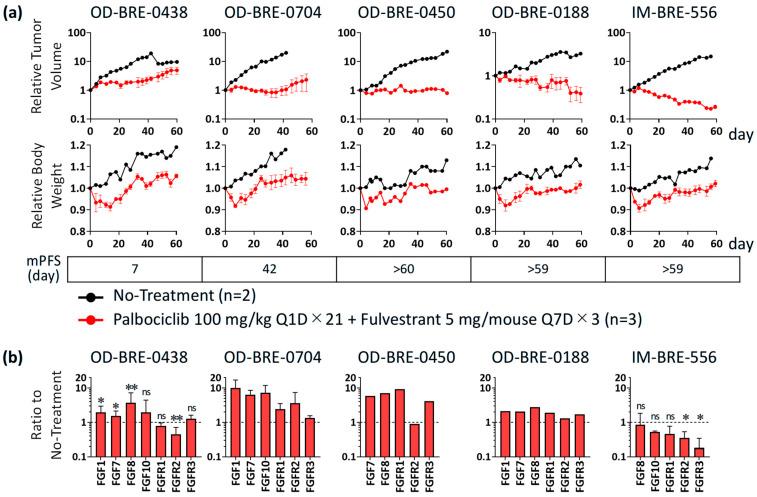
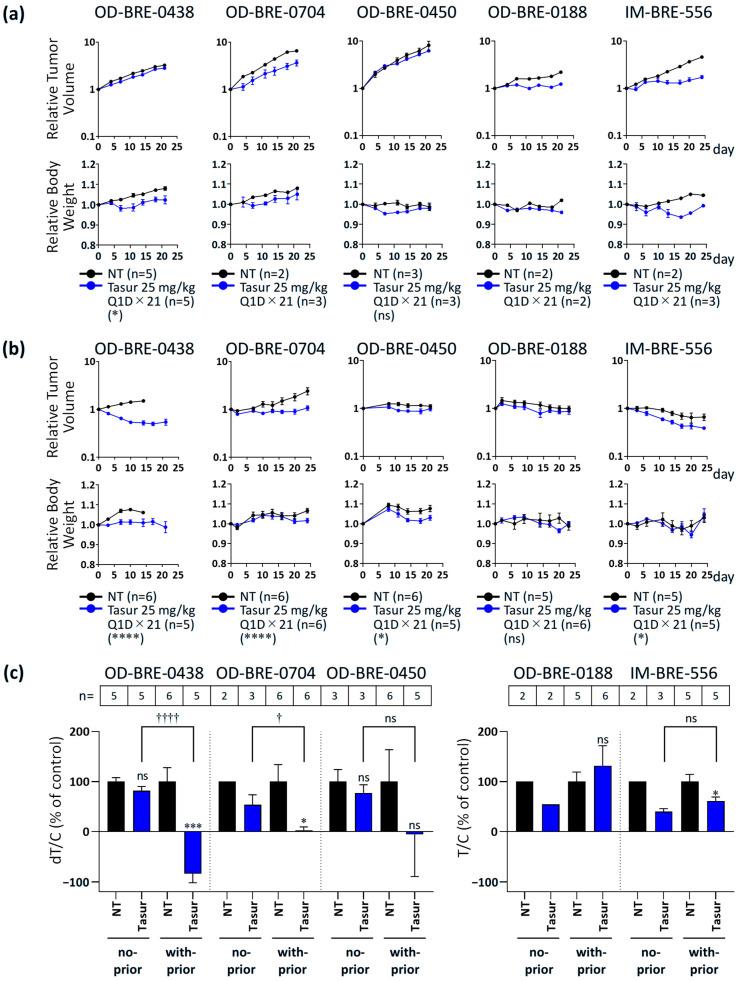
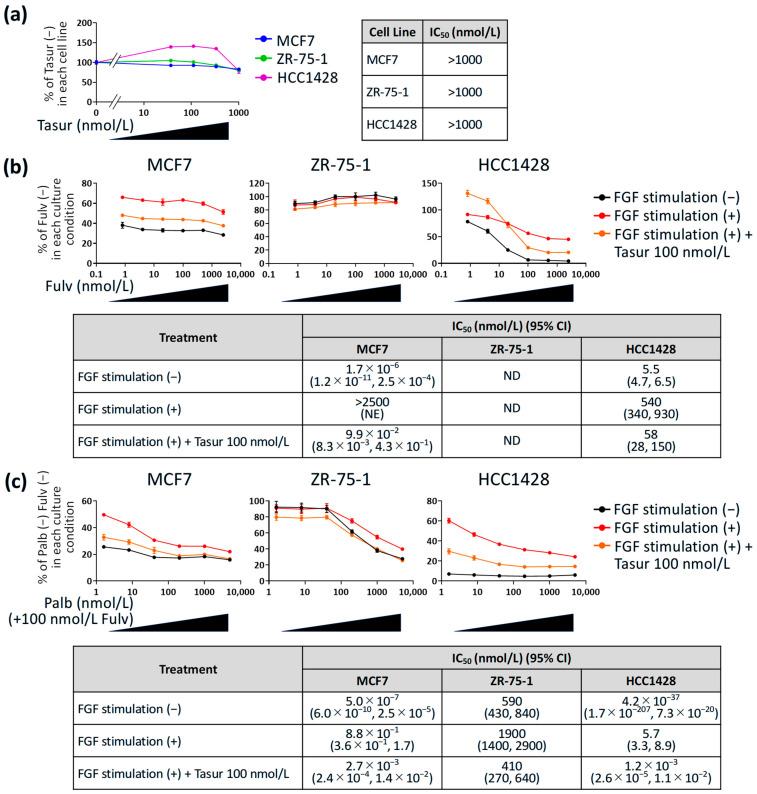
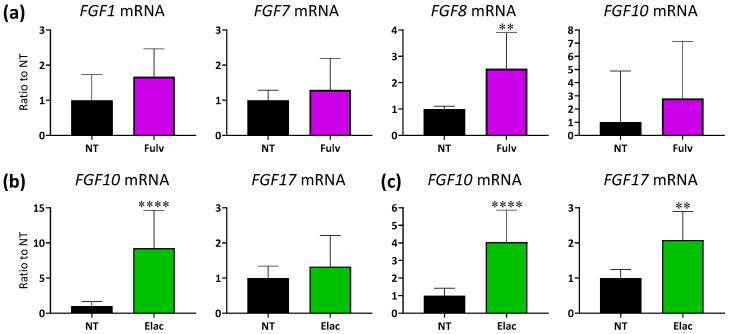
Among five ER BC PDX models, OD-BRE-0438 and OD-BRE-0704 showed higher sensitivities to tasurgratinib with prior palbociclib + fulvestrant than without it. In these models, palbociclib + fulvestrant treatment upregulated the expression of several ligand mRNAs. In vitro, FGF2 and FGF10 decreased the sensitivity to both fulvestrant and palbociclib + fulvestrant, which was restored by co-treatment with tasurgratinib. Consistently, fulvestrant + tasurgratinib and elacestrant + tasurgratinib showed antitumor activity in ER BC PDX models harboring wild-type and mutation, respectively. In these models, fulvestrant or elacestrant upregulated the expression of several ligand mRNAs.
CONCLUSIONS
FGF signaling plays a role in resistance to CDK4/6 inhibitors and ET in ER BC. Tasurgratinib has the potential to exhibit significant antitumor activity in combination with ET against ER BC via FGF signaling inhibition. These findings indicate the therapeutic potential of tasurgratinib in treating ER BC.
背景
成纤维细胞生长因子(FGF)信号传导在癌细胞的多种细胞功能中起着关键作用。他苏格拉替尼,原名E7090,是一种口服可用的FGF受体(FGFR)1-3选择性抑制剂。在此,我们展示了他苏格拉替尼在临床前模型中对CDK4/6抑制剂和内分泌治疗(ET)耐药性的影响。
方法
将携带野生型或突变型雌激素受体(ER)的乳腺癌(BC)患者来源异种移植(PDX)模型用作动物模型。在有或没有他苏格拉替尼的情况下,在FGF2和FGF10存在的条件下,对用氟维司群或帕博西尼+氟维司群处理的ER BC细胞系进行体外细胞增殖测定。
结果
在五个ER BC PDX模型中,OD-BRE-0438和OD-BRE-0704在预先接受帕博西尼+氟维司群治疗的情况下比未接受该治疗时对他苏格拉替尼表现出更高的敏感性。在这些模型中,帕博西尼+氟维司群治疗上调了几种配体mRNA的表达。在体外,FGF2和FGF10降低了对氟维司群和帕博西尼+氟维司群的敏感性,而与他苏格拉替尼联合治疗可恢复这种敏感性。同样,氟维司群+他苏格拉替尼和艾拉司群+他苏格拉替尼分别在携带野生型和突变型的ER BC PDX模型中显示出抗肿瘤活性。在这些模型中,氟维司群或艾拉司群上调了几种配体mRNA的表达。
结论
FGF信号传导在ER BC对CDK4/6抑制剂和ET的耐药性中起作用。他苏格拉替尼有可能通过抑制FGF信号传导与ET联合对ER BC表现出显著的抗肿瘤活性。这些发现表明他苏格拉替尼在治疗ER BC方面的治疗潜力。

 Zotero 插件